




MIN

Aug 21, 2023
Military Car Shipping: How to Ship Your Vehicle During PCS Move [2026]
Military car shipping is the process of transporting a service member’s personal vehicle to a new duty station during a Permanent Change of Station (PCS) move. The US military covers the cost of shipping one privately owned vehicle (POV) for eligible service members on overseas PCS orders through the Defense Personal Property System (DPS). For CONUS (continental US) PCS moves, vehicle shipping is typically not covered by the government – service members use private FMCSA-licensed carriers at their own expense, with costs ranging from $500 to $1,500 depending on distance and transport type. TruckSpot Logistics connects military members with verified carriers offering door-to-door service and flexible scheduling to accommodate military timelines.
When Does the Military Pay for Vehicle Shipping?
The US military covers POV shipment costs in specific circumstances only. The table below summarizes eligibility based on order type:
| Move Type | Government Pays? | Details |
| Overseas PCS (OCONUS) | Yes – 1 POV | Shipped via Military Surface Deployment and Distribution Command (SDDC) through DPS |
| CONUS PCS move | No | Service member arranges and pays for private transport |
| Deployment (not PCS) | No | Personal vehicle transport is not a deployment entitlement |
| Separation / ETS move | Partial in some cases | Check with installation transportation office |
| Retirement move | Yes – 1 POV (OCONUS only) | Same rules as active duty OCONUS PCS |
Key facts:
The Journey of Cross-Country Army Vehicle Transport
Shipping a personal vehicle during a PCS move involves six steps. The process differs depending on whether the move is OCONUS (government-arranged through SDDC) or CONUS (privately arranged). The steps below apply to private carrier transport for CONUS moves and self-pay OCONUS shipments.
| Transport Type | Cost (Cross-Country) | Best For |
| Open transport | $500–$1,100 | Standard vehicles, budget-conscious moves |
| Enclosed transport | $1,000–$2,000 | Luxury, classic, or high-value vehicles |
| Door-to-door | +$100–$200 vs terminal | Tight timelines, no access to terminal |
| Terminal-to-terminal | Base rate | More flexible timeline, saves cost |
By following these simple steps and partnering with an experienced company like TruckSpot Logistics, you can rest easy knowing your four-wheeled friend will get to your new digs safely and right on time.
Major Challenges and Their Solutions for Army Vehicle Shipping
Military PCS vehicle shipping has four challenges that differ from standard civilian transport: compressed timelines driven by report dates, last-minute order changes, overseas import regulations, and coordination with base access requirements for pickup and delivery.
These challenges might seem tough, but with a bit of foresight and planning, you can cruise through them. Choose a trustworthy, experienced transport company like TruckSpot Logistics, and you’ll not only overcome these challenges but will also have peace of mind throughout the journey.
The Value of Thorough Preparation for Military Auto Shipping
Preparation failures are the primary cause of delays, damage claims, and unexpected costs in military PCS vehicle shipments. The checklist below covers every required action before handing your vehicle to a carrier.
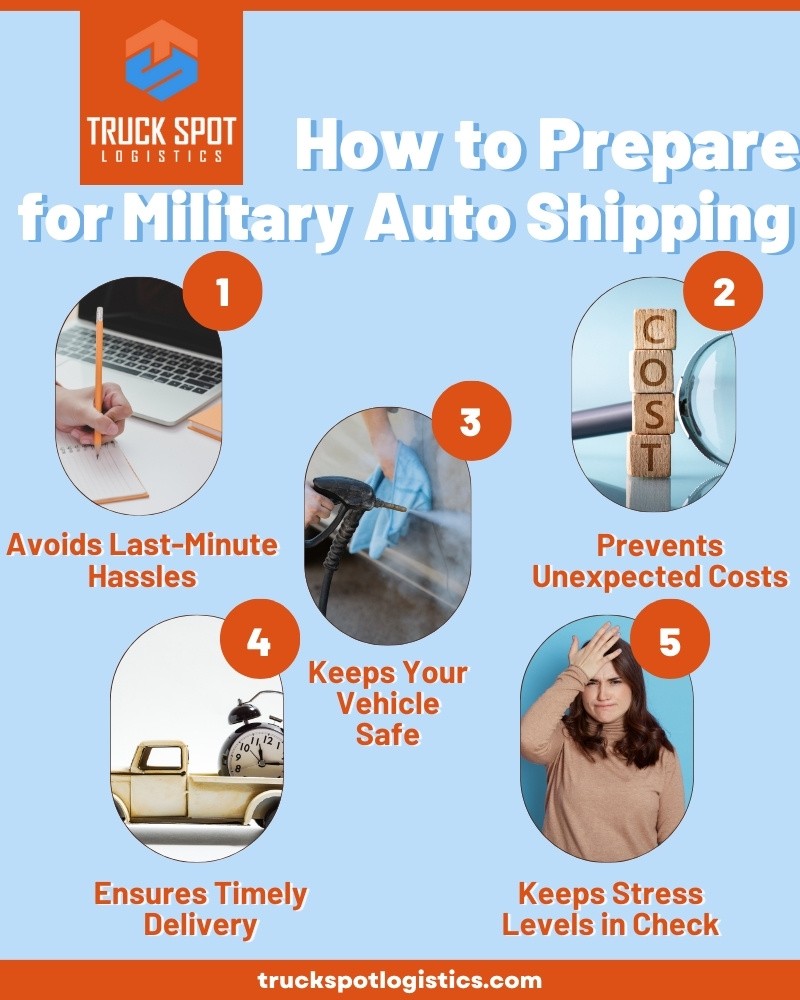
So remember, while shipping your car as a military member might seem daunting, thorough preparation can make the journey a whole lot easier. Trustworthy platforms like TruckSpot Logistics are here to help you at every step of the way, ensuring a seamless transition for you and your vehicle.
Navigating the road of military car shipping might seem like a daunting journey. But with a bit of strategic planning, a dash of careful prep, and the right transport partner, it can be smoother than a Sunday drive. Remember, each challenge is surmountable and every potential roadblock can be navigated with ease. The key is to stay ahead of the game by preparing well and choosing an experienced transport company. Platforms like TruckSpot Logistics can help simplify the process and save your time, money, and peace of mind. After all, in the fast-paced world of the military, having one less thing to worry about can be the best move you make.
Conclusion
Military PCS vehicle shipping is manageable with the right timeline and documentation. The most common mistakes are booking too late during peak PCS season, failing to document vehicle condition at pickup, and not confirming the carrier’s FMCSA credentials before signing. For CONUS moves, book 3–4 weeks out, compare at least 3 carrier quotes, and verify USDOT and MC numbers before committing.
TruckSpot Logistics works with FMCSA-licensed carriers experienced in military PCS moves, offering flexible scheduling and door-to-door service across the continental US. Get a free quote with your PCS timeline and compare vetted options before your move date.
FAQs
Does the military pay for vehicle shipping during a PCS move?
The US military covers shipment of one privately owned vehicle (POV) for service members on OCONUS (overseas) PCS orders, arranged through the Defense Personal Property System at move.mil. For CONUS (continental US) PCS moves, vehicle shipping is not a standard government entitlement – service members arrange and pay for private transport. Costs range from $500 to $1,500 depending on distance and transport type. Contact your installation transportation office to confirm your specific entitlements.
How much does military car shipping cost?
Private carrier car shipping for military members on CONUS PCS moves costs $500–$800 for regional hauls (under 500 miles) and $800–$1,500 for cross-country transport. Enclosed transport for high-value vehicles costs $1,000–$2,000 cross-country. During peak PCS season (May–August), rates are typically 15–25% higher due to demand. Booking 2–3 weeks in advance and comparing 3–5 carrier quotes reduces cost by 15–30%.
What documents do I need to ship my car during a PCS move?
Required documents for military car shipping include: a copy of your PCS orders, vehicle title or registration, current proof of insurance, and a government-issued ID. If a third party will handle pickup or delivery on your behalf, a Power of Attorney is required. For overseas shipments, additional documents include customs declaration forms and host nation-specific import requirements, which your installation transportation office provides.
What happens if my vehicle is damaged during shipping?
If your vehicle is damaged during transport, document the damage with timestamped photos at delivery before moving the vehicle from the trailer. Note all damage on the Bill of Lading before signing – do not sign a clean receipt if damage exists. File a written claim with the carrier within 24–48 hours of delivery. The carrier’s cargo insurance covers transit damage up to the policy limit. Pre-existing damage documented at pickup is excluded from claims.
Can I ship personal items inside my vehicle during military transport?
Most licensed carriers prohibit personal items inside the vehicle during transport due to DOT weight regulations and insurance exclusions – contents are not covered under the carrier’s cargo policy. Some carriers allow lightweight items up to 100 lbs stored in the trunk, but this varies by company. For military moves, household goods are shipped separately through the Defense Personal Property System (DPS) – do not use your vehicle as a substitute for HHG shipment.
How far in advance should I book car shipping for a PCS move?
Book car shipping as soon as you receive PCS orders – ideally 3–4 weeks before the required vehicle arrival date. During peak PCS season (May–August), book 4–6 weeks in advance as carrier availability drops significantly. Standard open carrier transit takes 7–14 days coast-to-coast, so factor transit time into your booking window. Last-minute bookings under 7 days during peak season cost 20–40% more and may delay vehicle arrival past your report date.
How do I verify the carrier handling my military vehicle shipment is legitimate?
Verify any carrier through the FMCSA SAFER database at safer.fmcsa.dot.gov – confirm active USDOT number, active MC operating authority, and cargo insurance of at least $100,000. Also check the carrier’s reviews on Central Dispatch (centraldispatch.com) and BBB (bbb.org). Request the carrier’s certificate of insurance before signing the transport agreement. Avoid carriers that require full payment before vehicle pickup or cannot provide proof of FMCSA registration on request.






Valuable information!