




7 MIN

May 26, 2022
Auction Auto Transport in 2026: How to Ship from Copart, IAAI & Manheim
Auction auto transport is the process of shipping a vehicle purchased at an online or physical car auction – including Copart, IAAI, Manheim, and dealer auctions – to the buyer’s location using a licensed carrier. Shipping a car from auction costs $500–$1,500 for most CONUS routes depending on distance and transport type. Auction transport differs from standard car shipping in one critical way: strict pickup deadlines. Copart charges $20/day after 7 days of storage; IAAI imposes similar fees after 5 days. Booking a carrier within 24–48 hours of winning a vehicle is standard practice to avoid storage fees.
Quick links:
Auction Storage Deadlines and Fees – Copart, IAAI, Manheim [2026]
Auction lots charge daily storage fees once the pickup deadline passes. These fees apply whether or not a carrier has been assigned – the clock starts from the day of purchase or release, not from when you book transport. The table below shows 2026 storage policies for major US auto auctions:
| Auction Platform | Free Storage Period | Storage Fee After Deadline | Notes |
| Copart | 7 calendar days | ~$20/day | Fees apply from day of purchase; varies slightly by location |
| IAAI (Insurance Auto Auctions) | 5 calendar days | ~$20–$25/day | Strictest deadline – book carrier within 24 hours of winning |
| Manheim | Varies by location | Varies | Contact the specific Manheim location for their policy |
| Local dealer auctions | Varies | Varies | Confirm deadline at time of purchase |
How to avoid storage fees: Book a carrier within 24–48 hours of winning the auction – before the vehicle is even released to the lot. Provide the carrier with the auction platform name, auction location, buyer ID, lot number, and VIN immediately at booking so they can schedule pickup before the deadline. Do not wait until the carrier has picked up the vehicle before providing the lot number – the driver cannot access the vehicle without it.
How to Ship a Car from an Auction – Step by Step
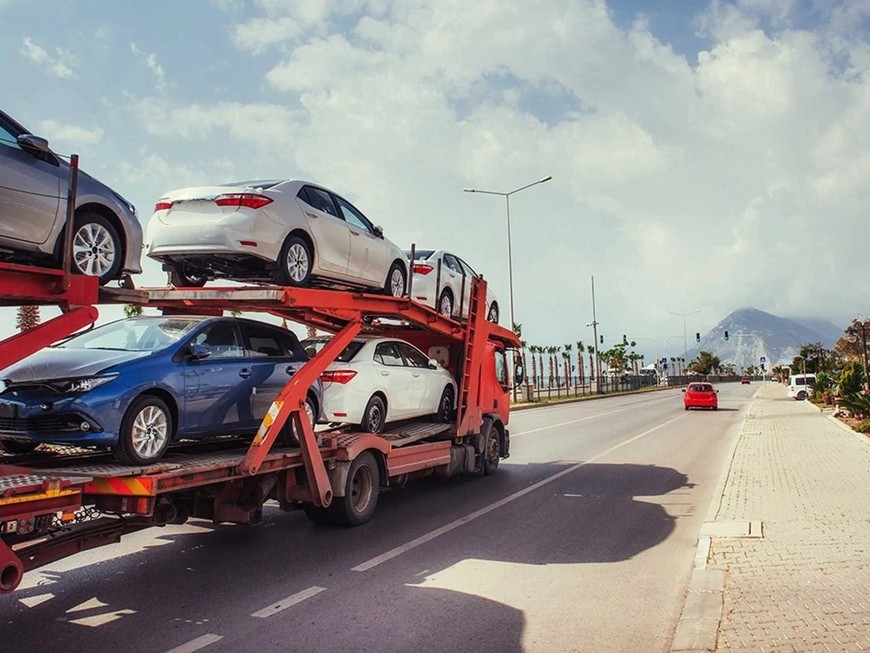
Shipping a car from an auction follows the same carrier process as standard auto transport, but with three auction-specific requirements: strict pickup deadlines, mandatory lot access documentation, and frequent inoperable vehicle handling.
Step 1 – Book a carrier within 24–48 hours of winning Do not wait for the vehicle to be released to the lot before booking. Contact a carrier immediately after winning the auction and provide: auction platform name, auction location (city and lot address), buyer ID number, lot or stock number, VIN, vehicle condition (operable or inoperable), and your delivery address and ZIP code.
Step 2 – Verify FMCSA credentials Confirm the carrier’s active USDOT number and cargo insurance at safer.fmcsa.dot.gov before booking. Auction vehicles – especially inoperable ones – require specialized loading equipment. Confirm the carrier has experience with the specific auction platform and has handled inoperable vehicles before.
Step 3 – Confirm gate pass requirements Most major auction lots – including Copart, IAAI, and Manheim – require the carrier driver to present a gate pass or authorization to access the vehicle. The buyer provides this authorization to the carrier; the carrier cannot simply arrive and collect the vehicle. Confirm gate pass requirements with the auction at the time of purchase.
Step 4 – Confirm vehicle condition before pickup Most auction vehicles are sold as-is without warranty. Before booking transport, confirm whether the vehicle is operable (starts, steers, brakes) or inoperable – this directly affects the carrier type and cost. Inoperable vehicles requiring winch loading cost $150–$300 more than operable ones.
Step 5 – Inspect and sign the Bill of Lading at delivery At delivery, inspect the vehicle carefully before signing the Bill of Lading. Note that auction vehicles are typically sold in unknown or as-described condition – focus on identifying any new damage caused during transport (scratches, dents from loading/unloading) rather than pre-auction condition. Photograph the vehicle before signing and note any new transport damage in writing on the delivery receipt.
Car auctions can be an exhilarating way to purchase your next vehicle, offering a unique mix of variety and value. To ensure you’re fully prepared for this experience, we’ve put together an insightful video with essential tips and strategies for navigating car auctions successfully.
Remember, understanding the auction process is key to securing the best deal on your dream vehicle.
Required Documentation For Auction Car Shipping
Auction car shipping requires different documentation than standard auto transport. The carrier needs auction-specific information to access the vehicle at the lot – without it, they cannot legally pick up the vehicle.
| Document / Information | Required By | What Happens Without It |
| Buyer ID number | Auction lot | Driver refused entry to lot |
| Lot or stock number | Auction lot | Driver cannot locate the specific vehicle |
| VIN | Carrier and auction | Required to confirm correct vehicle |
| Gate pass / authorization | Auction lot (Manheim, Copart, IAAI) | Driver refused lot access |
| Vehicle operational status | Carrier | Wrong equipment dispatched; surcharges or refused pickup |
| Delivery address and ZIP code | Carrier | Cannot complete booking |
| Release form (smaller auctions) | Some local auctions | Carrier cannot take possession |
Provide all of this information to your carrier at the time of booking – not after the driver is dispatched. Carriers assigned to auction pickups cannot retrieve missing information on-site; the auction lot will not release the vehicle until all authorization is in order.
To find out more about the documents required for transporting your vehicle, you can read the following article.
Shipping Non-Operable Vehicles from Auctions
Most auction vehicles – especially those from Copart and IAAI – are salvage or total-loss vehicles that may be partially or fully inoperable. The loading method depends on the specific condition of the vehicle.
| Vehicle Condition | Loading Method | Additional Cost |
| Starts, steers, brakes – won’t drive far | Winch onto trailer | $150–$250 over standard rate |
| Runs and drives but has damage | Standard drive-on | No surcharge |
| Won’t start but steers and rolls | Winch onto trailer | $150–$250 |
| Won’t steer or has locked wheels | Forklift required | $250–$400 over standard rate |
| Structurally compromised (frame damage) | Specialized flatbed | Quote separately |
Important: Disclose the exact condition of the vehicle at booking – not “inoperable” generally, but specifically which systems work and which don’t. Incorrect condition disclosure is the primary cause of additional charges and refused pickups at auction lots.
Winch
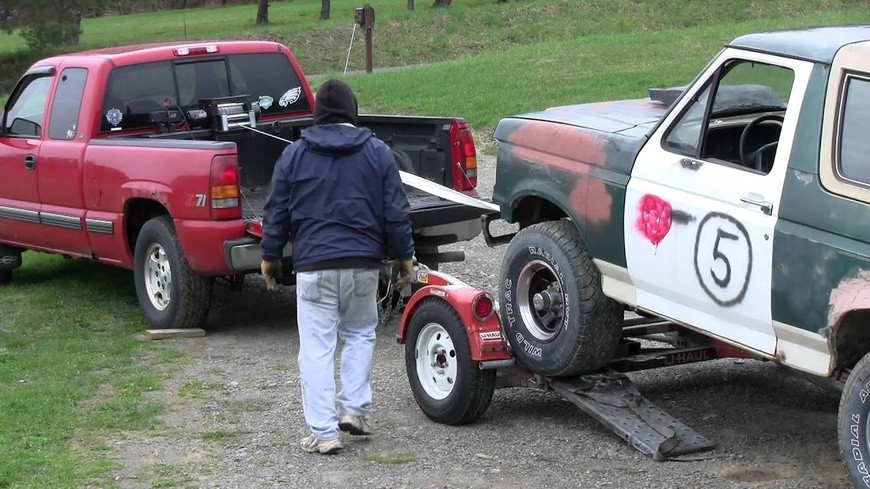
Car is loaded on the trailer by a winch when it runs, breaks, and steers but doesn’t start.
Forklift
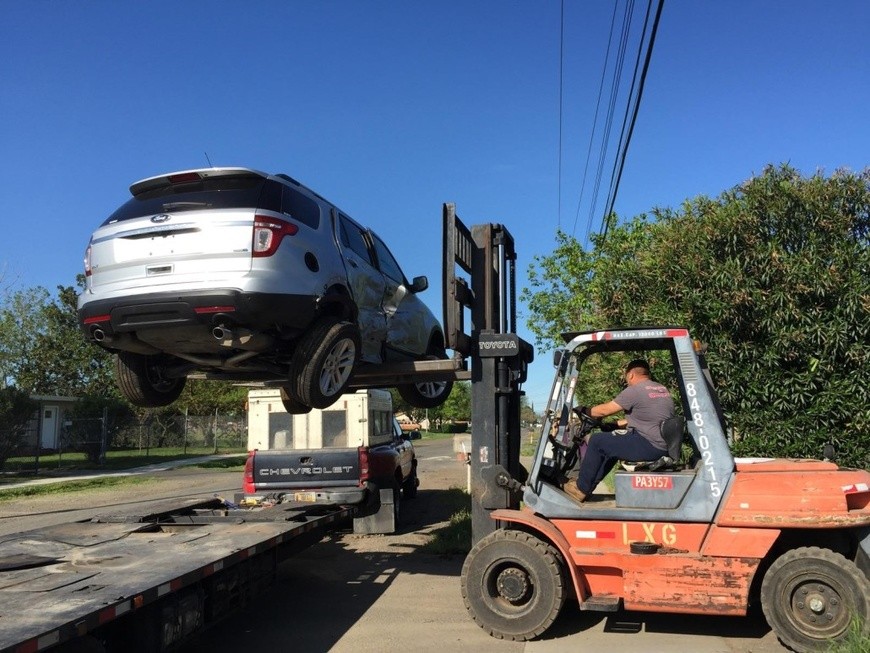
If the vehicle has wheel problems or cannot steer, the forklift is needed to load and unload the vehicle from the trailer. Although some auctions provide forklift assistance at the pick-up location, you will need a forklift after the car is shipped to your location to help the driver with unloading.
Essential Tips for Auction Car Shipping

It is clear that transporting a car from an auction is not an easy task,еhat’s why we’re going to provide you with some helpful auction auto transport tips. So read on to stay informed and ensure that your shipping experience is as pleasant as possible:
To ensure your auction car transport experience is as smooth as possible, always confirm full payment and finalize arrangements with your chosen shipping company. Verify all details, from pickup addresses to gate pass requirements, and keep a watchful eye on the clock to avoid additional storage fees.
Auction auto transport has three requirements that differ from standard car shipping: strict storage deadlines that start the day of purchase (Copart 7 days, IAAI 5 days), mandatory buyer ID and lot number for carrier lot access, and frequent inoperable vehicle handling requiring advance disclosure of vehicle condition. Book a carrier within 24–48 hours of winning, provide complete lot access documentation at booking, and factor storage fees into the total cost calculation before bidding.
Truck Spot Logistics connects auction buyers with FMCSA-licensed carriers experienced in Copart, IAAI, and Manheim pickups across all 48 contiguous states. Get a free quote with your auction platform and lot information.
FAQs
How much does it cost to ship a car from an auction?
Auction auto transport costs $500–$800 for regional routes under 500 miles and $900–$1,500 for cross-country shipments for a standard operable vehicle. Inoperable vehicles requiring winch loading add $150–$250; vehicles requiring forklift add $250–$400. Open transport is standard for auction vehicles. Factor in auction storage fees – Copart charges ~$20/day after 7 days, IAAI after 5 days – when calculating total cost from purchase to delivery.
What information do I need to give the carrier to pick up from Copart or IAAI?
To pick up from Copart, IAAI, or Manheim you must provide the carrier with: buyer ID number, lot or stock number, VIN, exact auction lot address (not just city), gate pass authorization if required by the specific lot, and vehicle operational status. Without the buyer ID and lot number, the auction will not release the vehicle. Provide all information at booking – carriers cannot retrieve it on-site.
What is a gate pass for auction car shipping?
A gate pass is written authorization from the vehicle buyer that allows a specific carrier or driver to access the auction lot and take possession of the vehicle. It is required at Manheim, Copart, and most IAAI locations. The buyer obtains the gate pass from the auction after purchase and provides it to the carrier before dispatch. Without a gate pass, the driver will be refused entry to the lot regardless of other documentation.
How long does it take to ship a car from an auction?
Carrier pickup from the auction lot typically occurs 2–5 business days after booking, depending on carrier availability on the route. Transit after pickup takes 1–3 days for regional routes and 7–14 days coast-to-coast. Total time from auction win to delivery: 5–10 days for most CONUS routes. Book the carrier the same day you win to avoid storage fees at Copart (free 7 days) and IAAI (free 5 days).
Is my auction vehicle insured during transport?
FMCSA-licensed carriers carry minimum cargo insurance of $100,000 per load during transit. However, auction vehicles are typically sold as-is – pre-existing damage from the auction is not covered by the carrier’s cargo insurance. The carrier is only liable for new damage caused during loading, transit, or unloading. Document the vehicle’s condition at auction pickup with timestamped photos before the driver loads it, and note all pre-existing damage on the pickup Bill of Lading.
What should I do if my auction vehicle arrives with damage?
Before signing the delivery Bill of Lading, compare the vehicle’s condition against photos taken at auction pickup. Note any new damage – scratches, dents, broken parts caused during loading or transit – in writing on the delivery receipt before signing. Do not sign a clean receipt if new damage is present. File a written claim with the carrier within 24–48 hours with photos as evidence. Pre-auction damage visible in the auction listing photos is not covered by the carrier.