




7 MIN

Nov 3, 2022
Enclosed Auto Transport: How It Works, 2026 Cost Ranges & When It’s Worth It
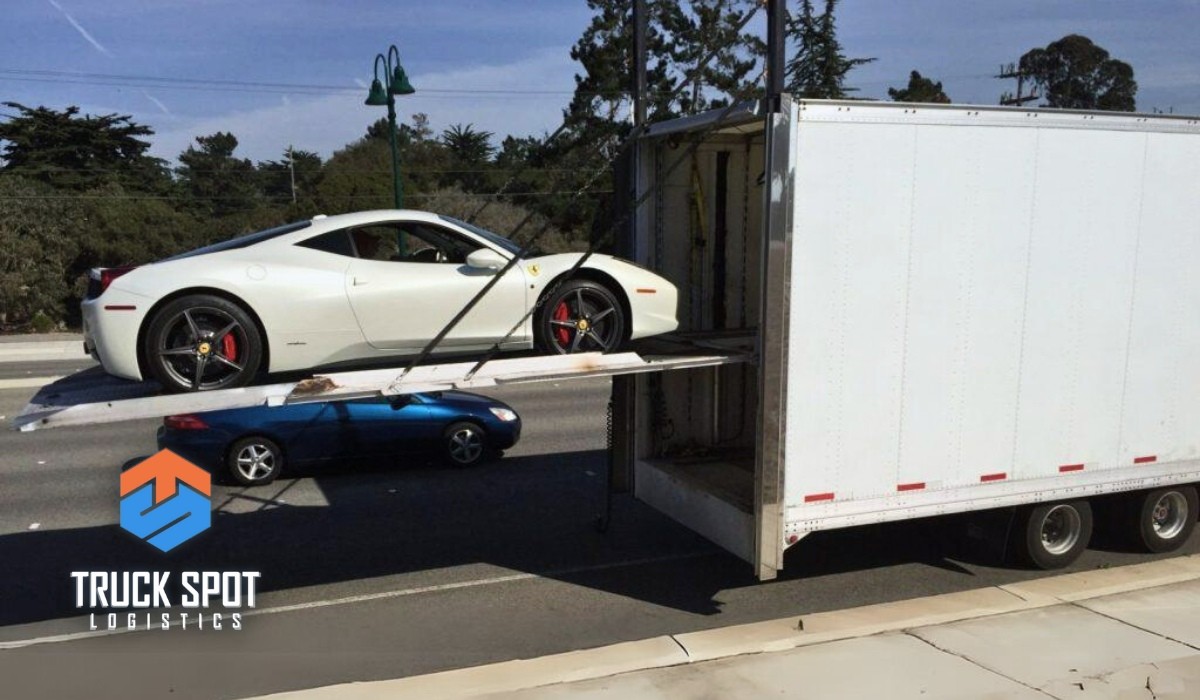
Enclosed auto transport is the process of shipping a vehicle inside a fully covered trailer – protected from weather, road debris, and UV exposure during transit. Enclosed transport costs 40–60% more than open transport on the same route: cross-country enclosed shipping runs $1,200–$2,500 for most standard vehicles, compared to $800–$1,500 for open transport. Enclosed carriers hold 2–7 vehicles simultaneously versus 8–10 on open multi-car trailers, which reduces load frequency and increases per-vehicle cost. It is the standard choice for luxury, classic, exotic, and freshly painted vehicles where paint and finish protection justifies the price premium.
Open vs. Enclosed Auto Transport
Which One to Choose
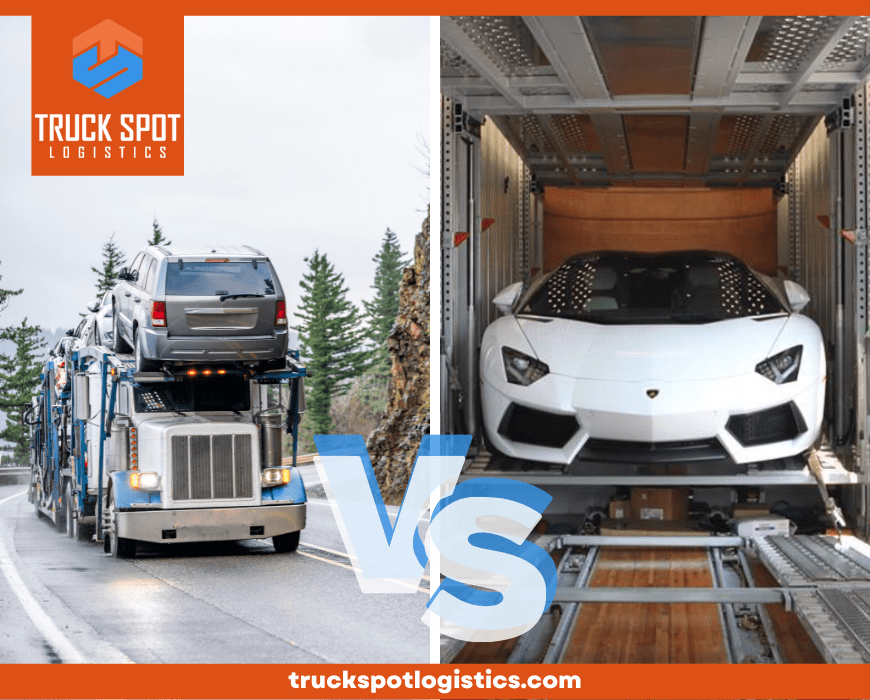
The right transport type depends on vehicle value, condition, and risk tolerance – not transport distance.
| Factor | Open Transport | Enclosed Transport |
| Cost (cross-country) | $800–$1,500 | $1,200–$2,500 |
| Vehicles per trailer | 8–10 | 2–7 |
| Weather protection | None – exposed to elements | Full – covered on all sides |
| Road debris risk | Low but present | Eliminated |
| Carrier availability | High – most common method | Lower – fewer enclosed carriers |
| Pickup window | 1–5 business days | 2–7 business days |
| Best for | Standard daily-driver vehicles | Luxury, classic, exotic, show cars |
Choose enclosed transport if: the vehicle is valued over $50,000, has custom paint or bodywork, is a classic or show car, or if any surface damage during transit would be unacceptable regardless of cost.
Choose open transport if: the vehicle is a standard daily driver in normal condition and cost is the primary consideration. Over 90% of vehicles shipped in the US use open transport without incident.
How Enclosed Auto Transport Works?
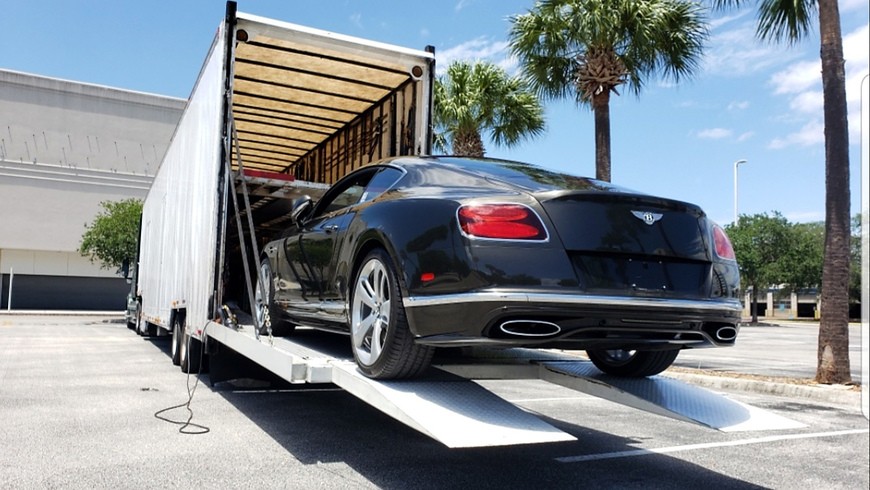
As the name suggests, vehicles are transported inside a covered trailer in enclosed auto transport. The trailer either has soft side walls or harder ones. The top of the trailer is also covered, which protects the car from the outside elements and harsh weather conditions. Only a few cars can be shipped in closed trailers at once.
Luxury car owners usually prefer enclosed car shipping as they want to protect their valuable asset, the car. The vehicles remain completely covered and protected in enclosed car transport.
The process of shipping a vehicle using an enclosed trailer is quite straightforward. You can quickly obtain an enclosed vehicle shipping quote tailored to your specific needs by simply providing a few details about your vehicle and the journey it’s about to take. Some companies send instant quotes, while others take up to 24 hours.
Once you agree to the offer, the company will contact you for confirmation of the pickup time. The driver will reach the given location to pick up your vehicle after the formal documentation. He will load the vehicle and begin the journey.
You will receive a tracking number to track the vehicle the whole time. Once the vehicle reaches the destination, the driver will contact you again and deliver the car to your doorstep if you have chosen door-to-door service. You can inspect the vehicle during transit.
Ready to give your vehicle the protection it deserves? Contact TruckSpot Logistics today for a comprehensive enclosed vehicle shipping quote and join our list of delighted customers who trust us with their most treasured vehicles.
What Trailer Types Are Used for Enclosed Transportation?
Now that we have a good idea of how enclosed auto shipping works let us dive in to see different types of transport trailers.
1. Single-car Enclosed Trailer
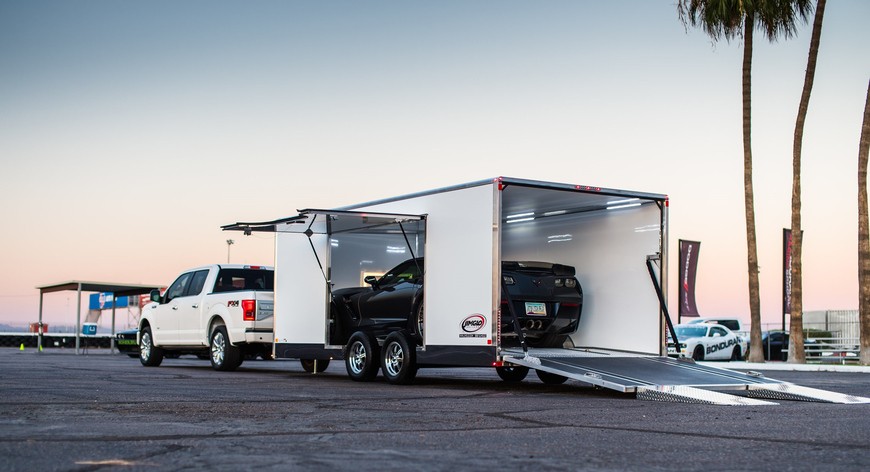
These types of trailers are effective for carrying vehicles to shorter distances. You can safely transport your valuable car to a short distance in this type of enclosed trailer. You will see either gooseneck trailers or bumper pull trailers being used as single-vehicle enclosed trailers. They are commonly pulled by a dually truck.
2. Single-level, Multi-car Enclosed Trailer
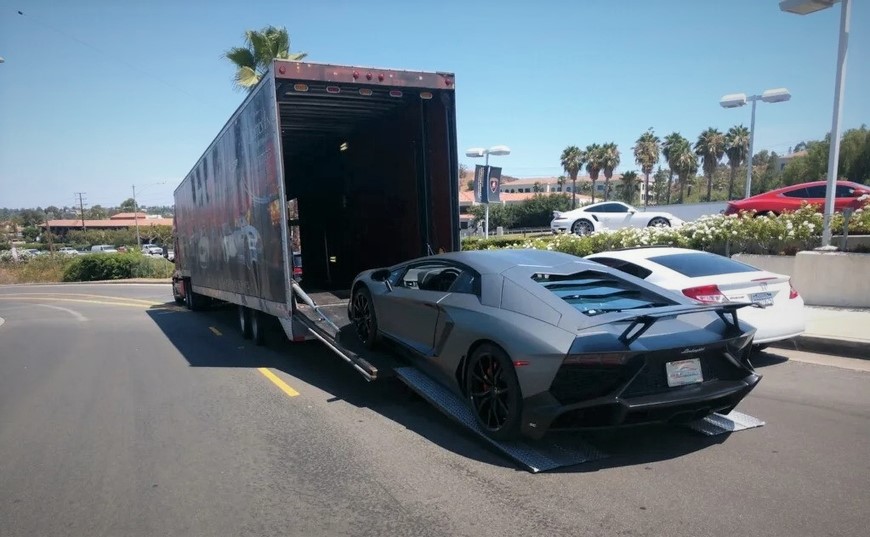
If you want to transport more than one luxury vehicle at once in a single trailer, then this one will be a perfect choice. Such trailers are pulled by semi-trucks. There’s no worry about separately booking trailers for multiple cars.
3. Multi-level, Multi-car Enclosed Trailer
| Trailer Type | Capacity | Cost vs Standard | Best For |
| Single-car enclosed | 1 vehicle | +30–50% vs multi-car | Ultra-high-value, exotic, or celebrity vehicles; no shared load |
| Single-level multi-car enclosed | 3–5 vehicles | Base enclosed rate | Luxury sedans, sports cars, classic cars |
| Multi-level multi-car enclosed | 5–7 vehicles | Base enclosed rate | Multiple vehicles, cross-country routes, dealer transport |
Single-car enclosed trailers are typically pulled by a dually pickup – suitable for regional and mid-range hauls. Multi-car enclosed trailers are pulled by semi-trucks and operate primarily on high-demand long-distance routes. Availability of single-car enclosed carriers is significantly lower than multi-car – booking 3–4 weeks in advance is recommended for single-car service.
For detailed information on how these trailer options can meet your enclosed auto transport needs, and to receive a tailored enclosed vehicle shipping quote, reach out to the specialists at TruckSpot Logistics. We’re here to ensure your vehicle’s safe, secure, and timely arrival at its destination.
Enclosed Auto Transport Rates – How Much Does It Cost?
Enclosed auto transport costs depend on distance, vehicle size, trailer type, and season. The table below shows 2026 cost ranges for standard passenger vehicles:
| Route | Distance | Sedan / Coupe | SUV / Truck | Exotic / Oversized |
| Regional (under 500 miles) | – | $700–$1,100 | $900–$1,400 | $1,200–$1,800 |
| Mid-range (500–1,500 miles) | – | $1,000–$1,600 | $1,300–$2,000 | $1,700–$2,600 |
| Cross-country (1,500+ miles) | – | $1,200–$2,000 | $1,500–$2,500 | $2,000–$3,500+ |
| Dallas → Los Angeles | ~1,400 miles | ~$1,100–$1,600 | ~$1,400–$2,000 | ~$1,800–$2,800 |
| New York → Miami | ~1,280 miles | ~$1,000–$1,500 | ~$1,300–$1,900 | ~$1,700–$2,600 |
Factors that affect enclosed transport rates:
Trailer type:
Single-car enclosed trailers cost 20–40% more than multi-car enclosed trailers due to dedicated space. Single-car is used for ultra-high-value vehicles where no other vehicle sharing the trailer is acceptable.
Vehicle size:
SUVs, trucks, and exotic cars with wide bodies take more trailer space – cost is 20–30% higher than a standard sedan on the same route.
Season:
Peak shipping season (May–August) increases rates 15–20%. January–February typically offers the lowest enclosed transport rates.
Route:
High-demand corridors (Florida–Northeast, California–Texas) have more enclosed carriers and competitive rates. Rural or remote delivery adds $150–$400 due to limited carrier availability.
Inoperable vehicles:
Non-running cars requiring winch loading add $150–$300 to the base enclosed rate.
How to Compare Enclosed Vehicle Shipping Quotes?
When comparing enclosed auto transport quotes, evaluate five factors – not just the total price.
What Documents Are Required For Enclosed Auto Transportation?
When preparing for enclosed auto transport, gathering the necessary shipping documentation is a step you cannot overlook. You may need a commercial invoice and packing list during enclosed vehicle transportation. However, the Bill of Lading and Insurance are the most important documents, which we will discuss in detail.
| Document | Purpose | What to Check |
| Bill of Lading (pickup) | Records vehicle condition before transport | All pre-existing damage listed; sign only after confirming |
| Bill of Lading (delivery) | Confirms condition at delivery | Compare against pickup BOL and pre-transport photos before signing |
| Certificate of Insurance | Confirms carrier’s cargo coverage | Coverage limit, deductible, and per-vehicle vs total coverage |
| Vehicle title or registration | Proof of ownership | Required by most carriers before accepting vehicle |
| Government-issued ID | Identity verification | Driver’s license or passport |
| Power of Attorney | Authorizes third party at pickup/delivery | Required if owner cannot be present |
For classic or exotic vehicles, some carriers and insurance companies require a vehicle appraisal document confirming current market value – especially for agreed-value coverage policies. Confirm this requirement with the carrier at booking.
Bill of Lading
You receive a detailed document from the auto transport company. This is the Bill of Lading, which contains all the essential details of the vehicle shipment and the transportation contract. This bill acts as proof that the vehicle has been delivered in the same condition as it was picked up.
Insurance
You don’t necessarily need to have your own car insurance to transport a vehicle. Auto transport insurance is provided by an insurance company that covers the vehicle in case of any damage to the car. Ensure that you pick a company that has adequate insurance to cover your car (Insurance can be checked on the FMCSA website). Auto transport companies usually don’t demand insurance from you, but most companies have this requirement.
For owners of special vehicles, like luxury or classic cars, additional documentation may be necessary. It’s always a good idea to have digital copies of these documents for easy access and as a backup.
The proper documentation not only streamlines the transport process but can also influence factors like enclosed car shipping costs. Missing or incomplete paperwork can lead to delays and potential additional fees.
Before your vehicle’s scheduled pickup, please confirm with chosen transport provider if any specific documents are required.
Enclosed auto transport is the right choice when vehicle value, paint condition, or finish quality makes any surface damage during transit unacceptable. For vehicles valued under $30,000–$40,000 in standard condition, open transport is sufficient and costs 40–60% less on any route. The three most common mistakes with enclosed transport are: not confirming per-vehicle insurance coverage limits for high-value cars, signing a clean Bill of Lading at pickup without documenting pre-existing damage, and booking too late during peak season when enclosed carrier availability drops significantly. Book 3–4 weeks in advance and compare at least 3 itemized quotes.
Truck Spot Logistics connects shippers with FMCSA-licensed enclosed carriers across all 48 contiguous states. Get a free quote with your vehicle details and confirmed insurance coverage requirements.
FAQs
How much does enclosed auto transport cost?
Enclosed auto transport costs $700–$1,100 for regional routes under 500 miles and $1,200–$2,000 for cross-country transport for a standard sedan. SUVs and exotic cars cost 20–30% more. Enclosed transport costs 40–60% more than open transport on any route due to fewer vehicles per trailer and specialized equipment. Rates are 15–20% higher during peak season (May–August). Single-car enclosed trailers cost an additional 30–50% over standard multi-car enclosed service.
How to ship my car in the cheapest way?
The cheapest method is open multi-car transport using terminal-to-terminal delivery instead of door-to-door. Terminal-to-terminal saves $100–$200 compared to door-to-door on the same route. Open transport costs 40–60% less than enclosed on any route. For enclosed transport specifically, multi-car enclosed trailers cost 30–50% less than single-car enclosed. Booking 2–3 weeks in advance and comparing at least 3 quotes from FMCSA-verified carriers typically reduces cost by 15–25%.
Can I keep personal items in my car during enclosed transport?
Most FMCSA-licensed carriers prohibit personal items inside the vehicle during transport regardless of transport type. Vehicle contents are excluded from the carrier’s cargo insurance – if items are lost or damaged, there is no coverage. Some carriers allow lightweight items up to 100 lbs in the trunk for enclosed transport, but this must be confirmed in writing before pickup. Do not assume enclosed transport means personal items are covered – they are not, regardless of trailer type.
Why is enclosed car shipping more expensive than open transport?
Enclosed transport costs 40–60% more than open because enclosed trailers carry 2–7 vehicles compared to 8–10 on open carriers – fewer vehicles means higher cost per vehicle. Enclosed trailers require specialized equipment including hydraulic lift gates, padded interiors, and climate control on premium units. Enclosed carriers are less common than open carriers, reducing competition and limiting availability on some routes. Insurance minimums for enclosed carriers specializing in luxury vehicles are also higher, contributing to the base rate.
Is enclosed auto transport worth it?
Enclosed transport is worth the 40–60% premium when the vehicle is valued over $40,000–$50,000, has custom paint or bodywork, is a classic or show car, or is being transported to or from an auto show or auction where condition documentation is critical. For standard daily-driver vehicles in normal condition, open transport is sufficient – over 90% of vehicles shipped in the US use open transport without incident. The decision is about risk tolerance relative to vehicle value, not transport distance.
Are there hidden fees in enclosed auto transport quotes?
Common hidden fees in enclosed auto transport quotes include: fuel surcharges added after booking without prior disclosure, storage fees of $25–$75/day if the vehicle is not ready at pickup, rescheduling fees of $75–$150 for changes within 48 hours, and remote location surcharges of $150–$400 for delivery outside major metro areas. Request an itemized quote that lists all fees before signing. Avoid carriers that provide only a total price without a breakdown.






[…] Here are reasons to think carefully the next time you move or ask a loved one for assistance, especially while enclosed car shipping: […]
For best results, you should get secure a quote far in advance and read reviews of different enclosed auto transport
[…] mostly prefer enclosed car transport because it is the safest method and comparatively cheaper than air freight and ocean freight. The […]
We need to provide some information to get the quote instantly. Here is a list of things that you should be ready with
Thanks for sharing this blog with us. It was a very informative post
Thanks for sharing the reason behind choosing enclosed car shipping.
Need to provide some information to get the quote instantly. Here is a list of things that you should be ready with
[…] Enclosed transport companies offer a more secure option for shipping your ATV. These companies use an enclosed trailer, which protects your ATV from the elements and potential damage during transit. Enclosed transport is typically more expensive than open transport, but it provides additional peace of mind knowing that your ATV is protected during transit. […]
[…] you don’t want exposed to fall rain and road grit. Our guides to open auto transport and enclosed auto transport cover the tradeoffs in more […]