




7 MIN

Oct 10, 2022
Open Auto Transport: How It Works, 2026 Cost Ranges & Trailer Types
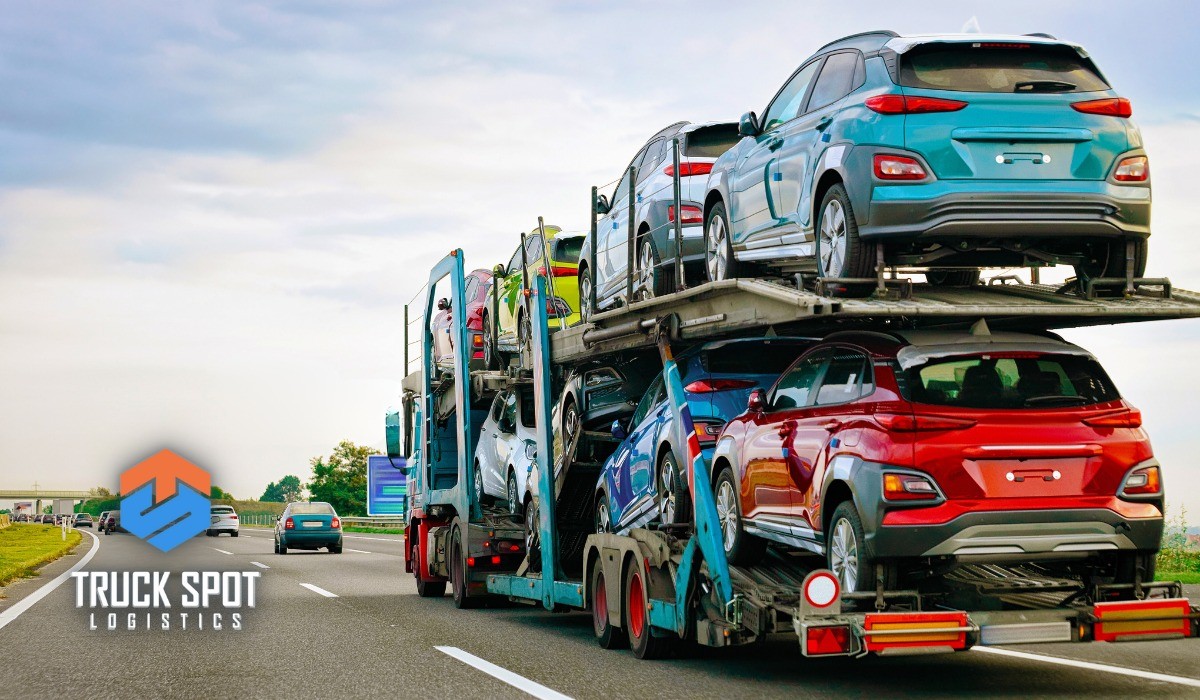
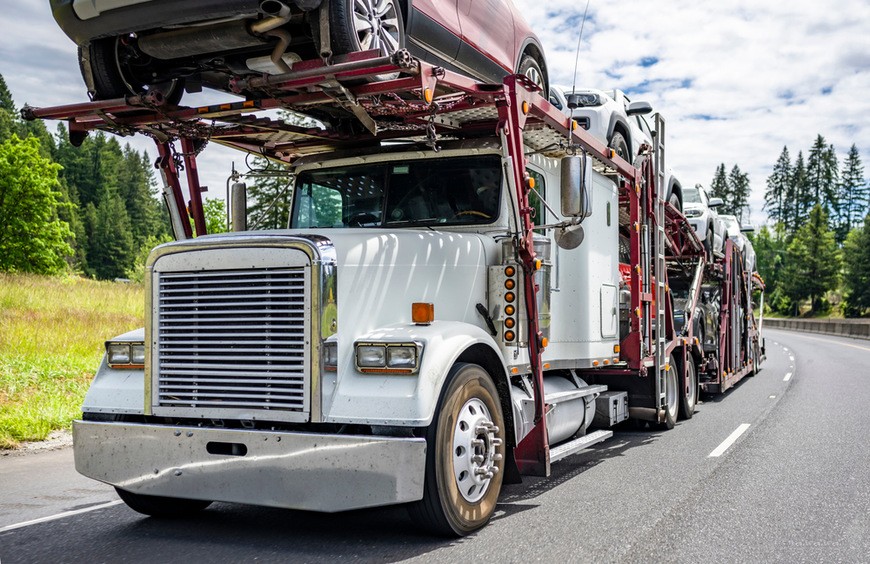
Open auto transport is the most common method of shipping a vehicle in the US – an open multi-car trailer carries 8–10 vehicles simultaneously, which distributes fuel and driver costs across all shipments and makes it the most affordable transport option.
Open transport costs $500–$1,500 for most CONUS routes, compared to $1,000–$2,200 for enclosed transport on the same routes. Vehicles are secured with wheel net straps or chains to the trailer deck and are exposed to weather and road debris during transit – which is an acceptable tradeoff for standard vehicles on most moves. For classic, luxury, or freshly painted vehicles, enclosed transport is recommended instead.
How Open Auto Transport Works?
Standard open auto transport transit times depend on distance and route. Pickup window after booking is typically 1–5 business days. Transit after pickup takes 1–3 days for regional routes under 500 miles, 3–7 days for mid-range hauls, and 7–14 days for cross-country transport. The 15–20 day figure applies only to remote routes or last-minute bookings during peak season (May–August) when carrier availability is limited. For most standard CONUS moves, door-to-door delivery is completed within 7–10 days of booking.
Open car transport can be done by both the door-to-door method and the terminal-to-terminal. Door-to-door service is the most convenient, especially for those who have a busy schedule. You have to provide the shipping services with the address to pick up and drop off your car. The car will reach its destination just as it was picked up safely.
You also have an option to drop off your car at the terminal closest and then pick up the car from the terminal closest to the delivery location after it is shipped.
Open auto transport is a straightforward, efficient, and popular method for vehicle shipping, balancing cost-effectiveness with safety. Here, in TruckSpot Logistics, we specialize in connecting clients with reliable auto transport brokers. Whether you’re looking to ship cars, motorcycles, ATVs, boats, trucks, golf carts, RVs, trailers, or heavy equipment, TruckSpot Logistics offers a platform where you can easily request quotes and find the best transport options to meet your needs.
What Trailers Are Used For Open Vehicle Transport?
Open vehicle transport uses different trailers depending upon the vehicle that is needed to transport. The only downside of open trailers is that your car will remain exposed to outside elements like rain, sunlight, dust, etc. open trailers are categorized into different types depending upon the types of vehicles they can carry. The type of open trailer used directly affects your open car transport rates, so it’s important to understand your options when getting vehicle shipping quotes.
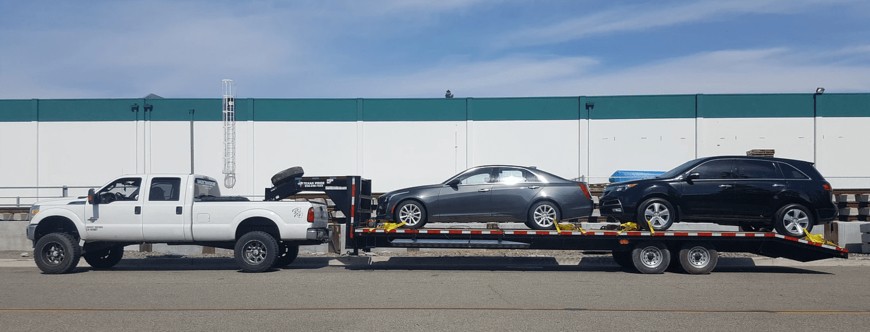
Open Flatbed Trailers
Loading vehicles onto this type of trailer is the easiest of all as it doesn’t have a cage. It comes with different capacities. Depending on the capacity, a flatbed trailer can easily carry a truck. They are completely safe for both short and long-distance transport.
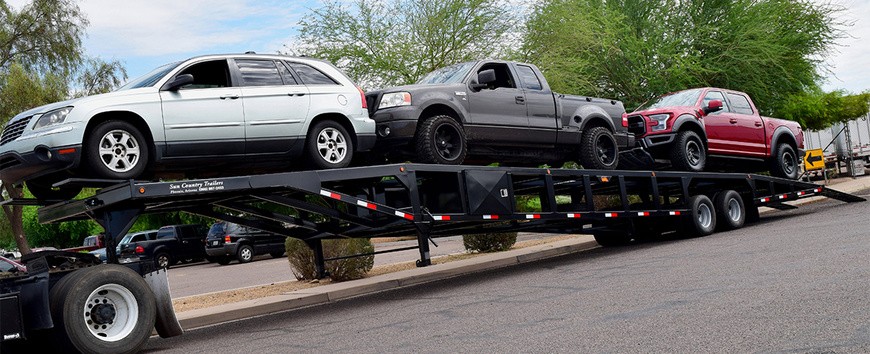
Wedge Auto Transport Trailers
Wedge trailers are common for transporting small-sized vehicles. The cars are typically secured using chains and locking mechanisms. Such trailers can hold up to four cars at once.
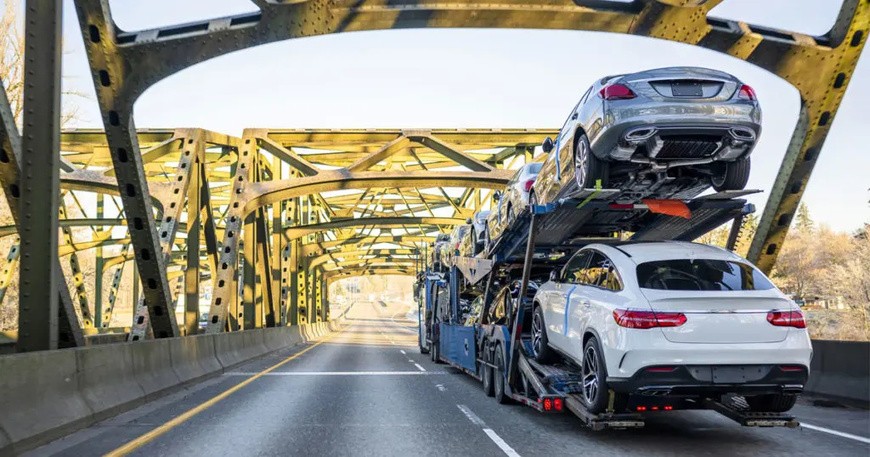
Multi-Vehicle Shipping Trailers
As the name suggests, these trailers are used for a big number of vehicles, respectively, having bigger sizes and requiring more powerful trucks to tow them. The maximum load capacity for these trailers can be up to 12-13 vehicles.
The cost of vehicle shipping on this trailer type is the lowest, but usually, such trailers drive only on the most popular routes. For example from Florida to the northern states, or from New York to Texas and California.
| Trailer Type | Capacity | Best For | Cost vs Standard |
| Multi-car carrier (8–10 vehicles) | 8–10 cars | Standard sedans, SUVs, cross-country routes | Base rate – lowest cost |
| Wedge trailer (4 vehicles) | 3–4 cars | Smaller loads, regional routes, low-clearance vehicles | +10–20% vs multi-car |
| Open flatbed | 1–2 vehicles | Trucks, SUVs, oversized vehicles, inoperable cars | +20–40% vs multi-car |
Multi-car carriers operate primarily on high-demand routes – Florida to Northeast, California to Texas, Northeast to Midwest. For moves between less-populated areas, flatbed or wedge trailers are more common and may cost more due to lower carrier availability on those routes.
So if you are moving from one populated state to another this trailer might be the best for you.
The variety of trailers used in open vehicle transport ensures flexibility and customization to meet the diverse needs of shipments. From open flatbed trailers for easy loading to wedge and multi-vehicle shipping trailers for efficient transport of multiple cars, the options are tailored to optimize cost and safety.
Open Car Transport Rates
How Much Does It Cost & What Affects Rates?
Open auto transport costs vary by route, vehicle size, and season. The table below shows 2026 cost ranges for standard passenger vehicles:
| Route | Distance | Sedan / Coupe | SUV / Truck | Minivan / Large SUV |
| Regional (under 500 miles) | – | $500–$800 | $600–$950 | $700–$1,050 |
| Mid-range (500–1,500 miles) | – | $700–$1,100 | $850–$1,250 | $950–$1,350 |
| Cross-country (1,500+ miles) | – | $900–$1,400 | $1,050–$1,600 | $1,150–$1,700 |
| Florida → New York | ~1,280 miles | ~$800–$1,050 | ~$950–$1,200 | ~$1,050–$1,300 |
| California → New York | ~2,800 miles | ~$1,050–$1,350 | ~$1,200–$1,550 | ~$1,300–$1,650 |
Factors that affect open transport rates:
Vehicle size: SUVs, trucks, and large vans take more trailer space and add weight – cost is 15–25% higher than a standard sedan on the same route.
Season: Peak shipping season (May–August) and snowbird migration routes (October–November, March–April on Florida corridors) increase rates 15–25%. January–February typically offers the lowest rates.
Route popularity: High-demand routes (Florida–Northeast, California–Texas) have more carriers and lower rates. Rural or off-highway delivery adds $100–$300 due to limited carrier availability.
Fuel surcharges: When fuel prices spike, carriers may add a surcharge to the base rate. Confirm at booking whether a surcharge applies.
Door-to-door vs terminal: Door-to-door service adds $100–$200 compared to terminal-to-terminal on the same route but eliminates the need to drop off and pick up at a carrier terminal.
How To Compare Open Auto Transport Quotes?
When comparing open auto transport quotes, evaluate four factors – not just the total price.

Verify FMCSA credentials
Go to safer.fmcsa.dot.gov and enter the carrier’s USDOT number. Confirm: active operating status, active MC authority, and cargo insurance of at least $100,000. A carrier without active FMCSA registration is operating illegally and provides no enforceable insurance coverage.

Check cargo insurance coverage
Request a certificate of insurance before signing. Confirm the per-vehicle coverage limit and the deductible amount. Some carriers carry $100,000 total cargo coverage split across 8–10 vehicles on the trailer – that means $10,000–$12,500 per vehicle, not $100,000. For high-value vehicles, confirm per-vehicle coverage specifically.

Read reviews on verified platforms
Check carrier reviews on Central Dispatch and BBB – not just the carrier’s own website. Central Dispatch is the industry’s primary load board and shows carrier ratings from other brokers and shippers.

Compare itemized quotes
A legitimate quote lists: base transport rate, fuel surcharge (if separate), insurance coverage amount, and any additional service fees. Quotes that show only a single total number without breakdown make hidden fees invisible. Compare at least 3 itemized quotes before booking.
Insurance And Bill Of Lading
For Open Vehicle Transport
Why Is It So Important?
When shipping your vehicle via open auto transport, two shipping documents are of paramount importance: the insurance policy and the Bill of Lading (BOL). These documents are not just procedural formalities; they are the pillars of security and assurance for your vehicle’s journey.

Insurance: A Shield for Your Vehicle
Selecting a company that offers comprehensive insurance is crucial. This coverage is your financial safeguard should any damage occur to your vehicle during transit. At TruckSpot Logistics, we connect you with brokers who only work with carriers that carry robust insurance policies. We believe in the adage ‘better safe than sorry,’ and as such, we advocate for you to thoroughly review the extent of the insurance coverage. This due diligence ensures that your vehicle is protected under all foreseeable circumstances while it’s being shipped.
Standard cargo insurance for FMCSA-licensed open transport carriers covers a minimum of $100,000 per load. However, this is total coverage across all vehicles on the trailer – not per vehicle. For a standard 8-car load, this averages $12,500 per vehicle. If your vehicle is worth more than $12,500, request confirmation of per-vehicle coverage limits or consider supplemental insurance through your personal auto policy. Deductibles typically range from $250 to $1,000 – confirm the deductible amount before signing the transport agreement.
Bill of Lading: The Transport’s Narrative
The BOL is an essential legal document that records the condition of your vehicle at pickup and delivery, the terms of transport, and the specific obligations of all parties involved. Think of the BOL as a narrative of your vehicle’s transport journey; it should chronicle every relevant detail. This document serves multiple purposes: it’s a receipt, a contract, and a critical piece of evidence that can be used in the event of a dispute. The transparency and accuracy of the Bill of Lading are aspects we at TruckSpot Logistics take seriously. We ensure that all customers who use our platform to request quotes are informed about the importance of the BOL and are advised to inspect it thoroughly before signing.
Why Are They So Important?
Together, insurance and the BOL offer a comprehensive safety net for your vehicle. They ensure that from the moment your vehicle is picked up to the moment it’s delivered, your interests are protected. In the unlikely event of an incident, these documents are your primary defense and recourse for claims and resolutions. =
Open auto transport is the right choice for the vast majority of standard vehicle moves – it costs 40–60% less than enclosed transport and is used by dealerships, auto auctions, and private owners for millions of shipments annually. The three most common mistakes are: accepting a quote without verifying the carrier’s FMCSA credentials, not documenting vehicle condition on the Bill of Lading at pickup, and booking too late during peak season (May–August) when rates increase 15–25% and pickup windows extend. Book 2–3 weeks before the required delivery date and compare at least 3 itemized quotes.
Truck Spot Logistics connects shippers with FMCSA-licensed open transport carriers across all 48 contiguous states. Get a free itemized quote with confirmed insurance coverage.
FAQs
How much does open auto transport cost?
Open auto transport costs $500–$800 for regional routes under 500 miles and $900–$1,400 for cross-country transport for a standard sedan. SUVs and trucks cost 15–25% more on the same routes. Enclosed transport costs 40–60% more than open on any route. Rates increase 15–25% during peak season (May–August). Comparing 3 itemized quotes from FMCSA-verified carriers 2–3 weeks before the required delivery date typically reduces cost by 15–25%.
Is there a chance of getting my car damaged with open transport?
Open transport damage rates are low – the vast majority of vehicles arrive without incident. The most common damage types are minor paint chips from road debris and dust accumulation during transit. Risk is higher for vehicles with fresh paint, low ground clearance, or aftermarket body kits. If damage occurs at delivery, document it with timestamped photos before signing the Bill of Lading and note it in writing on the delivery receipt. File a written claim with the carrier within 24–48 hours.
How do I prepare my car for open auto transport?
Clean the vehicle inside and out so pre-existing damage is clearly visible. Photograph all four sides and the undercarriage with a timestamp before pickup. Remove all personal items – contents are not covered by carrier insurance. Reduce fuel to one-quarter tank. Disable aftermarket alarm systems. Note the current mileage and document all pre-existing damage on the Bill of Lading at pickup before signing. Do not sign a clean Bill of Lading if any damage is not listed.
How are open car transport rates determined?
Open transport rates depend on five factors: distance (longer routes cost less per mile), vehicle size (SUVs and trucks cost 15–25% more than sedans), season (May–August rates run 15–25% higher), route popularity (high-demand corridors like Florida–Northeast have more carriers and lower rates), and delivery type (door-to-door adds $100–$200 vs terminal-to-terminal). Fuel surcharges may apply separately when fuel prices spike – confirm at booking.
What is the difference between open and enclosed transport?
Open transport uses an uncovered multi-car trailer – vehicles are exposed to weather and road debris but cost 40–60% less than enclosed. Enclosed transport uses a covered trailer that protects vehicles from all external elements and is recommended for classic, luxury, or high-value vehicles. Open transport is sufficient for standard daily-driver vehicles on most routes. The decision is primarily about vehicle value and paint condition, not transport distance.
Can I ship multiple vehicles at once with open transport?
Yes – open multi-car carriers transport 8–10 vehicles simultaneously, and brokers can coordinate multiple vehicles on the same carrier when origins and destinations align. Shipping 2+ vehicles with the same carrier on the same route can reduce the per-vehicle cost by 10–20% compared to booking separately. Dealerships, auto auctions, and corporate fleets regularly use this option. Confirm multi-vehicle discount availability directly with the carrier or broker when requesting quotes.
How long does open auto transport take?
Open auto transport pickup window is 1–5 business days after booking. Transit after pickup takes 1–3 days for regional routes under 500 miles, 3–7 days for mid-range hauls, and 7–14 days for cross-country transport. Total door-to-door time for most CONUS moves is 7–10 days from booking. During peak season (May–August), pickup windows may extend to 5–7 business days due to high carrier demand. Expedited pickup guaranteeing a specific date adds $150–$300 to the base rate.






[…] your situation calls for moving your car without actually driving, towing your car long distances (usual auto transport on a car hauler) is a viable option because it prevents wear and tear on your car. By towing a car […]
[…] it comes to car hauler transport, there are several common risks and precautions to keep in mind. Being aware of these risks and […]
[…] is necessary to consider that the car transport company you are going to ship your car is dependable and reliable. The company should be experienced in […]
[…] Open transport companies are the most common type of transport company for ATV shipping. These companies typically use an open trailer to transport your ATV, which is exposed to the elements during transit. While open transport is the most cost-effective option, it also comes with the highest risk of damage to your ATV during transit. […]
[…] or anything with a finish you don’t want exposed to fall rain and road grit. Our guides to open auto transport and enclosed auto transport cover the tradeoffs in more […]