




11 MIN

Nov 25, 2022
Long Distance Car Towing in 2026: Cost, Flatbed vs Dolly & How to Choose a Company
Long distance car towing – also called auto transport on a car hauler – is the process of moving a vehicle over 100+ miles on a flatbed trailer or multi-car carrier without driving it. This method prevents odometer mileage accumulation and mechanical wear, making it the standard choice for vehicle sales, cross-country relocations, and classic or luxury car transport. Long distance towing costs range from $450 to $1,200 for most CONUS routes depending on distance, vehicle size, and transport type. Flatbed transport fully lifts all four wheels off the ground; tow dolly transport leaves two wheels on the road and is only suitable for front-wheel drive vehicles on shorter hauls.
Here at TruckSpot Logistics, we get that finding reliable transport for your car, bike, or boat can be a real head-scratcher. That’s why we’ve made it our mission to link you up with the best auto transport brokers in the biz, making sure you get top-notch service without breaking the bank. In this article, we’ll break down the real talk on long-distance towing costs, give you the lowdown on picking a solid long-distance vehicle towing company, and throw in some savvy tips for prepping your vehicle.
So, whether you’re shipping a sleek motorcycle or a hefty RV, we’ve got the scoop on making sure your prized possession hits the road without a hitch. Sit tight as we dive into what makes for a smooth, wallet-friendly move for your wheels—because when it comes to long-distance towing prices and know-how, we’ve got your back!
How Long Distance Car Towing Works?
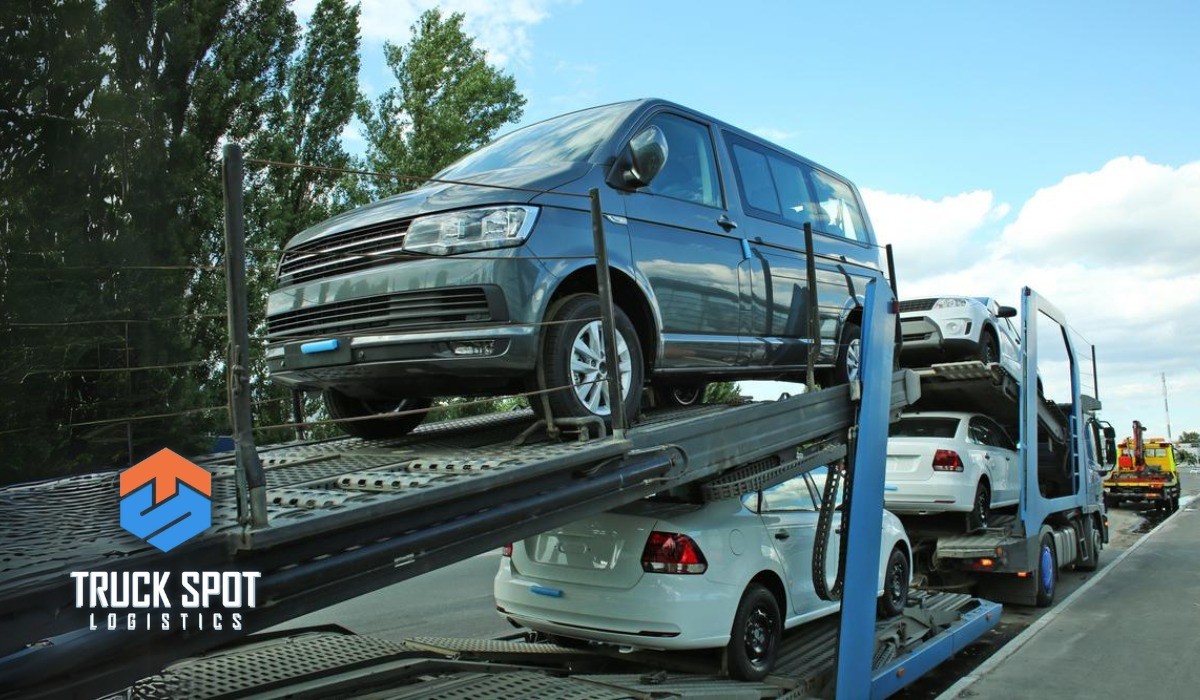
Long distance car towing uses a professional carrier – typically a flatbed truck or multi-car open carrier – to transport a vehicle over state lines or across the country without adding mileage to the odometer. This is the same service commonly called “auto transport” or “car shipping.
When your situation calls for moving your car without actually driving, towing your car long distances (usual auto transport on a car hauler) is a viable option because it prevents wear and tear on your car. By towing a car on the trailer, you do not increase the number of miles on the engine, which is great if you do not want to increase the mileage (this is especially true for those who transport a car for the purpose of selling).
Two primary transport methods:
Flatbed towing: The vehicle is loaded onto a flatbed trailer with all four wheels completely off the ground. This is the safest method for all vehicle types – it eliminates any risk of drivetrain engagement or wheel wear during transport. Flatbed is required for all-wheel drive vehicles, inoperable vehicles, and any car where rolling the wheels under load could cause damage.
Tow dolly: The front two wheels of the vehicle rest on the dolly while the rear wheels roll on the road. This method is only appropriate for front-wheel drive vehicles on shorter hauls – the rear wheels accumulate mileage and the drivetrain of AWD or RWD vehicles can be damaged by dolly towing. For long-distance transport, flatbed is strongly preferred over dolly regardless of vehicle type.
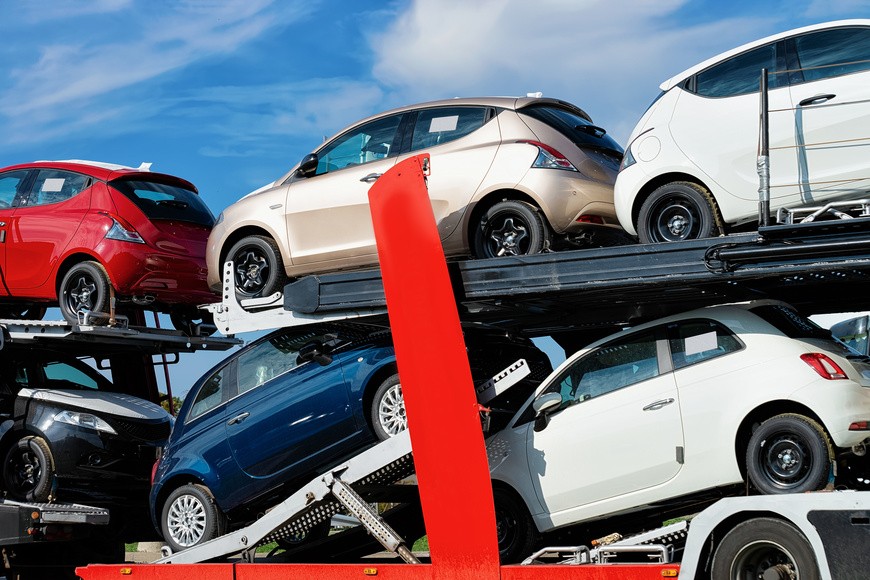
Multi-car open carrier: The standard for long distance auto transport – an 8–10 car trailer that carries multiple vehicles simultaneously. This is the most cost-effective method and accounts for over 90% of long-distance vehicle shipments in the US. Vehicles are exposed to weather and road debris but arrive without odometer miles.
For truly long distances (500+ miles), professional auto transport on a licensed carrier is significantly cheaper per mile than hiring a local tow truck for the same route – local towing rates run $3–$7 per mile while long-distance auto transport averages $0.40–$0.80 per mile.n budget wisely for your vehicle’s journey.
Long Distance Car Towing Rates.
How Much Does It Costs & What Affects Rates?
Figuring out the cost to tow your car across the country? Well, let’s break it down. Long distance towing costs aren’t just pulled out of thin air—they’re based on a mix of factors that all add up to your final bill. Here’s what you need to consider:
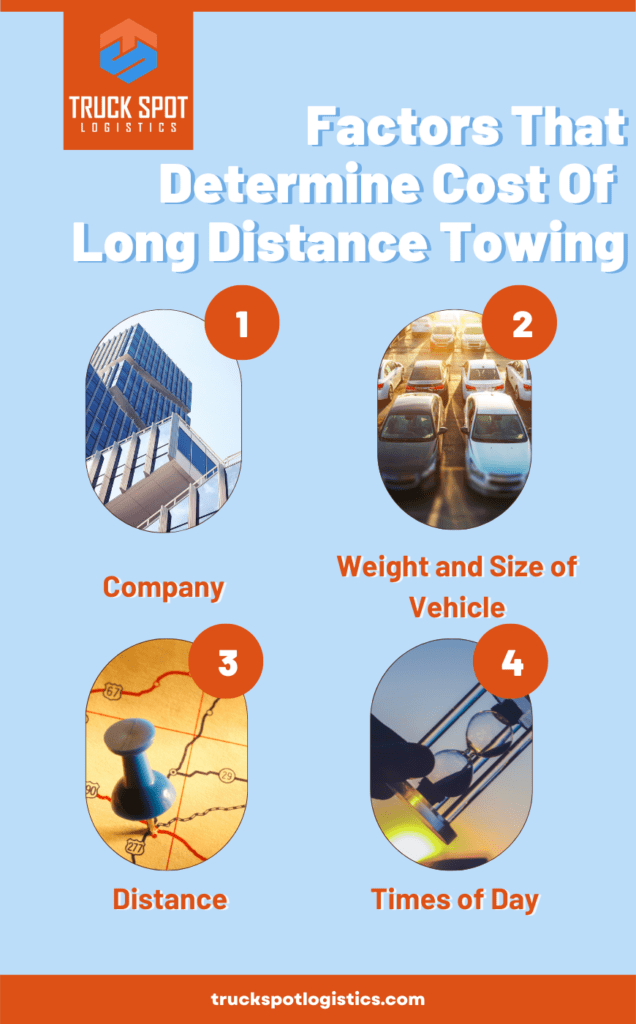
Long distance car towing costs depend on distance, vehicle size, transport type, and time of year. The table below shows 2026 cost ranges for standard sedan transport:
| Route | Distance | Open Carrier | Flatbed (Single) | Enclosed Carrier |
| Regional (under 500 miles) | – | $450–$750 | $700–$1,100 | $800–$1,300 |
| Mid-range (500–1,500 miles) | – | $700–$1,100 | $1,000–$1,500 | $1,100–$1,800 |
| Cross-country (1,500+ miles) | – | $900–$1,400 | $1,300–$2,000 | $1,500–$2,200 |
| New York → Florida | ~1,280 miles | $450–$750 | $900–$1,300 | $1,000–$1,600 |
| New Jersey → Washington State | ~2,850 miles | $1,000–$1,300 | $1,400–$1,900 | $1,700–$2,200 |
| California → Florida | ~2,750 miles | $900–$1,200 | $1,300–$1,800 | $1,600–$2,100 |
Factors that affect the final rate:
Distance: Per-mile cost decreases on longer routes. Short hauls under 200 miles cost $2–$5 per mile; cross-country routes average $0.40–$0.60 per mile on open carriers.
Vehicle size: SUVs, trucks, and vans cost 15–25% more than sedans due to additional carrier space and weight.
Transport type: Single-car flatbed costs 40–60% more than shared open carrier. Enclosed transport costs 40–60% more than open.
Season: Peak demand (May–August) increases rates 15–25%. January–February offers lowest rates.
Time of day surcharges: Emergency or after-hours pickups can add $150–$200 to the base rate. Scheduled daytime pickups during business hours have no surcharge.
How to Choose a Long-Distance Vehicle Towing Company?
Choosing the right long-distance vehicle towing company isn’t just about finding the lowest price—it’s about ensuring reliability, safety, and peace of mind. When looking for a long distance-car towing service, it’s important to weigh long-distance towing costs against the quality of service offered. When choosing it, the following criteria should be taken into account:
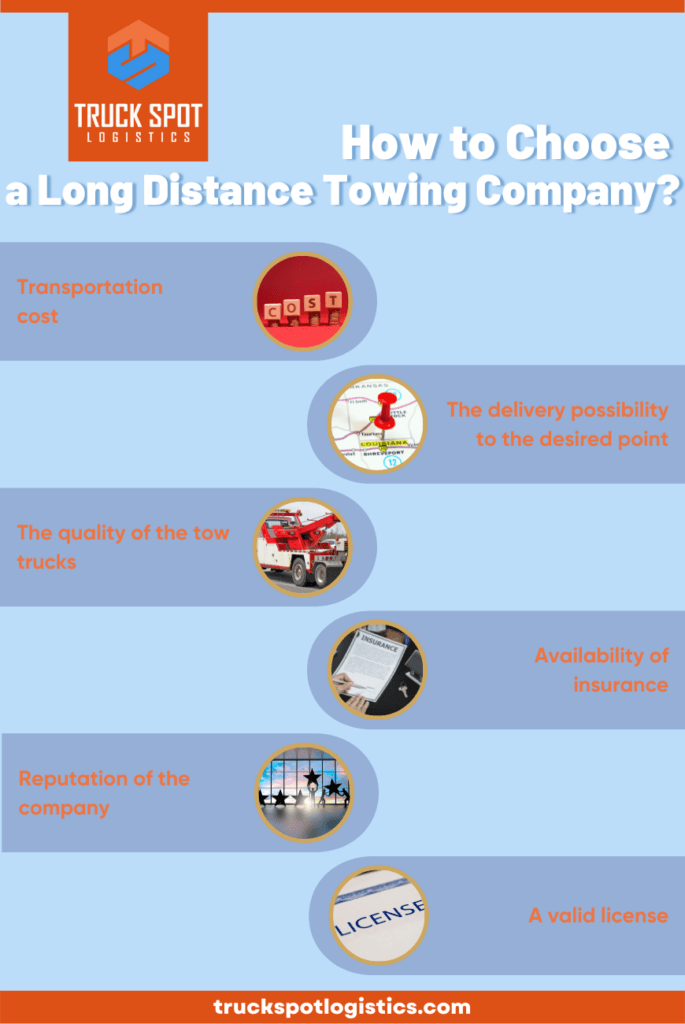
Transportation Cost
Car evacuation is a rather expensive pleasure, so you should not conclude an agreement with the first company that is found.
The Delivery Possibility
The possibility of delivery to the desired point (some companies provide delivery to a specific point and do not take into account the individual wishes of the owner of the vehicle).
The Quality of The Tow Trucks
The quality of the tow trucks used by the company. There are different types of tow trucks and they can be used for long-distance towing. However, you should work with someone who has specialized trucks to ensure that your car is not damaged in transit (for maximum safety, it is worth using covered car transporters – not all companies that provide services have them). You should look for companies with large or heavy tow trucks. Tow trucks are built strong enough to tow your car easily. They are ideal for long-haul towing as they are less likely to stall in the middle of a trip. Delays can be expected if you use low-quality tow trucks that stop on the road, as another tow truck will have to come and move the stalled tow truck.
Reputation of The Company
The reputation of the company is feedback from people who have already used the services of a particular company. To get a real understanding of the company reputation, you should check such sites as transportreviews.com or trustpilot.com.
Availability of Insurance
Ensure that car towing service long-distance is fully insured, providing protection for your vehicle during transit. All carrier companies operating in the USA according to the USA law have to have an insurance.
A Valid License
The company needs to have a license (license can be checked on this site: https://li-public.fmcsa.dot.gov/LIVIEW/pkg_carrquery.prc_carrlist).
To transport a car from one state to other, you can use various services that offer their services in this area or our long-distance car towing rates comparison service. To order a service and determine the cost of transporting a car, you need to select the brand, model of car, condition of the car, point of departure, and destination – everything is as simple and convenient as possible.
So that you can at least roughly navigate the pricing policy, here are a few examples of prices for car delivery services:
It is worth noting that long-distance rates are calculated with a regular sedan traveling to/from major cities for each location listed and can vary $100+/- depending on several factors including weather, time of year, distance from highways, urban or suburban location, and current fuel costs. Gather several quotes to compare long distance towing prices, but remember that the cheapest option may not always be the best.
After selecting a towing company that meets your standards and budget, the next step is to understand the paperwork involved. Let’s dive into the long-distance towing documents you’ll need to have in order.
What Documents Are Required For Long-Distance Towing?
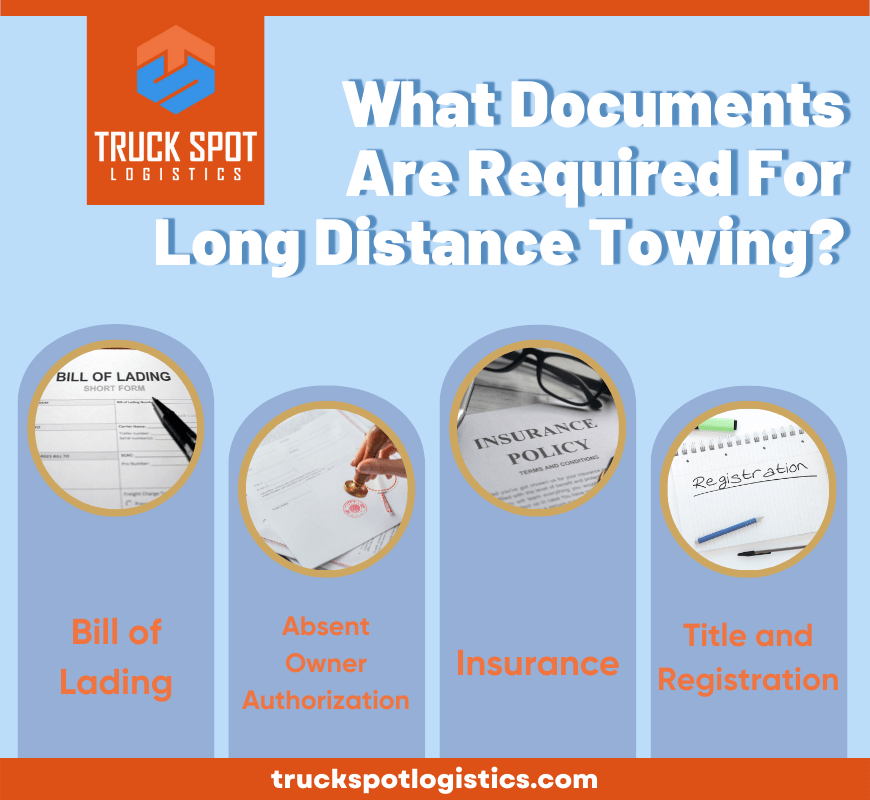
Before hitting the road, it’s critical to have all your paperwork in check to avoid any roadblocks in your long-distance towing journey. To transport a car, you need to take care of the preparation of such shipping documents as:
| Document | When Needed | Purpose |
| Bill of Lading (pickup) | At pickup | Records vehicle condition before loading; legal baseline for damage claims |
| Bill of Lading (delivery) | At delivery | Confirm vehicle condition at delivery; sign only after inspection |
| Vehicle title or registration | At booking | Proof of ownership |
| Government-issued ID | At pickup | Identity verification |
| Absent owner authorization | If owner not present | Authorizes third party to sign at pickup or delivery |
| Proof of insurance | At booking | Required by most FMCSA carriers before accepting vehicle |
Bill of Lading
The bill of lading (BOL) is a document of the established form, which is issued by the carrier (ship owner) as evidence of the fact of acceptance of the goods for transportation and the conclusion of a contract of carriage. The main functions of the bill of lading are that it contains the terms of the contract for the carriage of goods, acts as a carrier’s receipt, and acts as a document of title. Considering each of the functions of the bill of lading, the uniqueness and versatility of this document become obvious. It contains crucial information such as the names of the consignor and consignee, type of cargo, and weight.
Absent Owner Authorization
If a person other than you is picking up your vehicle from transport, you must sign this form to authorize them. A car transport company can supply an absent owner authorization form.
Insurance
Not all insurance companies cover damage that can be caused to a car during a long-distance evacuation (this point should be clarified with your insurance company, as well as with the carrier).
Title and Registration
You must bring these documents with you when dropping off or picking up your vehicle from transport. Scan them and email them to your transporter beforehand if you have them at hand.
Photo ID
A driver’s license or any government-issued ID will do. It’s just to confirm that you are who you say you are.
If you’re scratching your head wondering where to snag these docs, start with a call to your insurance agent and a quick trip to the local DMV if you need copies. And hey, a pro-tip: your long-distance vehicle towing company can often help you figure out exactly what you need for the journey.
Now, with the paperwork poised and ready, you’re almost set to send your car packing. But wait, there’s more—getting your car prepped and primed for its big trip is up next. Stay tuned as we dive into the essential tips for preparing your vehicle for long-distance towing without any surprises on the bill or the road.
Tips How To Prepare Your Car For Long-Distance Towing
Vehicle preparation is the shipper’s responsibility. Carriers secure the vehicle on the trailer but are not liable for damage caused by improperly prepared cars.
So there you have it, your car is now primed for the long haul. Follow these steps and when it’s time for a long-distance vehicle towing company to take the wheel, you can kick back knowing your car is in tip-top shape for the ride.
Long distance car towing – auto transport on a licensed carrier – is the standard method for moving vehicles across state lines without adding odometer miles. For routes over 500 miles, open multi-car carriers offer the best price ($0.40–$0.60 per mile); single-car flatbed provides maximum protection at 40–60% premium; enclosed transport is recommended for luxury or high-value vehicles. The most common mistakes are not verifying FMCSA credentials before booking, paying the full amount before pickup, and signing a clean Bill of Lading at delivery without inspecting the vehicle. Book 2–3 weeks in advance and compare at least 3 itemized quotes.
Truck Spot Logistics connects shippers with FMCSA-licensed carriers for long distance vehicle transport across all 48 contiguous states. Get a free quote with your route and vehicle details.
FAQs
Is long distance car towing the same as auto transport?
Yes – long distance car towing and auto transport refer to the same service: transporting a vehicle on a licensed carrier’s trailer over 100+ miles without driving it. Local emergency towing (under 20–30 miles, usually after a breakdown) is a separate service with different pricing ($3–$7 per mile vs $0.40–$0.80 per mile for long distance). For cross-state or cross-country vehicle moves, auto transport on an open or enclosed carrier is the standard method.
How much does long distance car towing cost?
Long distance car towing costs $450–$750 for routes under 500 miles and $900–$1,400 for cross-country transport on a shared open carrier for a standard sedan. Single-car flatbed transport costs 40–60% more. SUVs and trucks cost 15–25% more than sedans on any route. Rates are 15–25% higher during peak season (May–August). Per-mile cost decreases on longer routes – cross-country averages $0.40–$0.60 per mile vs $2–$5 per mile for short hauls.
What factors affect long distance towing costs?
Long distance towing rates depend on five factors: distance (longer routes cost less per mile), vehicle size (SUVs/trucks add 15–25% over sedans), transport type (single flatbed costs 40–60% more than shared carrier), season (May–August adds 15–25%), and time of day (after-hours pickups add $150–$200). Remote delivery locations add $100–$300 due to limited carrier availability on off-highway routes.
Are there ways to reduce long distance towing costs?
Book during off-peak season (September–February) when rates are 10–20% lower than peak summer. Choose open carrier transport over single flatbed or enclosed – open is 40–60% cheaper on any route. Use terminal-to-terminal instead of door-to-door to save $100–$200. Be flexible with pickup dates – a 2–3 day window allows carriers to fill their route efficiently, which can reduce your rate. Compare at least 3 itemized quotes from FMCSA-verified carriers.
Will my vehicle be insured during long distance towing?
FMCSA-licensed carriers carry minimum $100,000 cargo insurance per load. On a shared 8-car carrier, effective per-vehicle coverage is approximately $12,500. For vehicles valued over $15,000–$20,000, confirm per-vehicle coverage limits with the carrier before booking. Request a certificate of insurance before signing. Document vehicle condition with timestamped photos before pickup – undocumented pre-transport damage cannot support a claim at delivery.
Does my personal car insurance cover long distance towing?
Most personal auto insurance policies include roadside assistance that covers local towing (typically 5–15 miles) but do not cover long distance vehicle transport on a carrier. Some comprehensive policies include coverage for transport damage – confirm with your insurer specifically whether “vehicle in transit on a carrier” is covered. If not, the carrier’s cargo insurance is your primary coverage. Request the carrier’s certificate of insurance before booking to confirm coverage amounts.






[…] 5th wheel trailers are very popular and have ample space, it might be challenging when it comes to long distance car towing and if you are doing it for the first time. But you don’t have to worry anymore. Here are five […]
[…] on a long-distance move or need to transport a vehicle across the country? Long-distance automobile transportation can seem like a daunting task, but with the right knowledge, it can be a smooth and stress-free […]
I like the efforts you have put in this, regards for all the great content.