




7 MIN

Feb 16, 2023
Car Hauler Loading & Unloading Safety: What Happens to Your Vehicle and How to Protect It [2026]
Most vehicle damage during auto transport happens at two points: loading and unloading. Not during the drive. A vehicle that isn’t properly secured at pickup, or that’s unloaded onto an uneven surface without a proper ramp inspection, arrives with damage that could have been prevented before the truck left the lot. This guide covers what the loading and unloading process looks like, what can go wrong at each stage, and what you as the vehicle owner can do to protect your claim if something does.
Before we dive in – here’s what matters most:
Quick links to navigate this article:
Preparation for Loading Cargo
Preparation happens on both sides – the carrier’s and yours. Here’s what each party is responsible for before the vehicle goes on the hauler.
| Who | What to Do Before Loading | Why It Matters |
| Vehicle owner | Photograph all 4 sides + undercarriage with timestamp | Legal baseline for damage claims |
| Vehicle owner | Remove all personal items from the vehicle | Not covered by carrier insurance |
| Vehicle owner | Disable alarm system | Prevents battery drain during transport |
| Vehicle owner | Leave fuel tank at ¼ full or less | Reduces weight; required by most carriers |
| Carrier / driver | Inspect ramps and tie-down points for damage | Damaged equipment = carrier liability |
| Carrier / driver | Confirm 4-point tie-down minimum per vehicle | FMCSA requirement for cargo securement |
| Carrier / driver | Verify vehicle is operational or flag as inoperable | Inoperable vehicles require winch loading – see how to calculate total transport cost including inoperable surcharge |
Importance of proper planning and organization for loading a vehicle on a car hauler
Before the driver arrives, preparation on your side takes 15–20 minutes and directly affects your ability to file a damage claim if needed. Here’s what to do:
| Action | Why It Matters |
| Photograph all 4 sides + undercarriage with timestamp | Legal baseline – damage not documented before pickup cannot be claimed as transport damage |
| Remove all personal items | Explicitly excluded from carrier cargo insurance – no claim mechanism if lost |
| Disable alarm system | Prevents battery drain during transport |
| Leave fuel tank at ¼ full or less | Required by most carriers for safety and weight compliance |
| Note all pre-existing damage on the pickup Bill of Lading before signing | A signed clean BOL at pickup gives the carrier a legal defense to deny any claim at delivery |
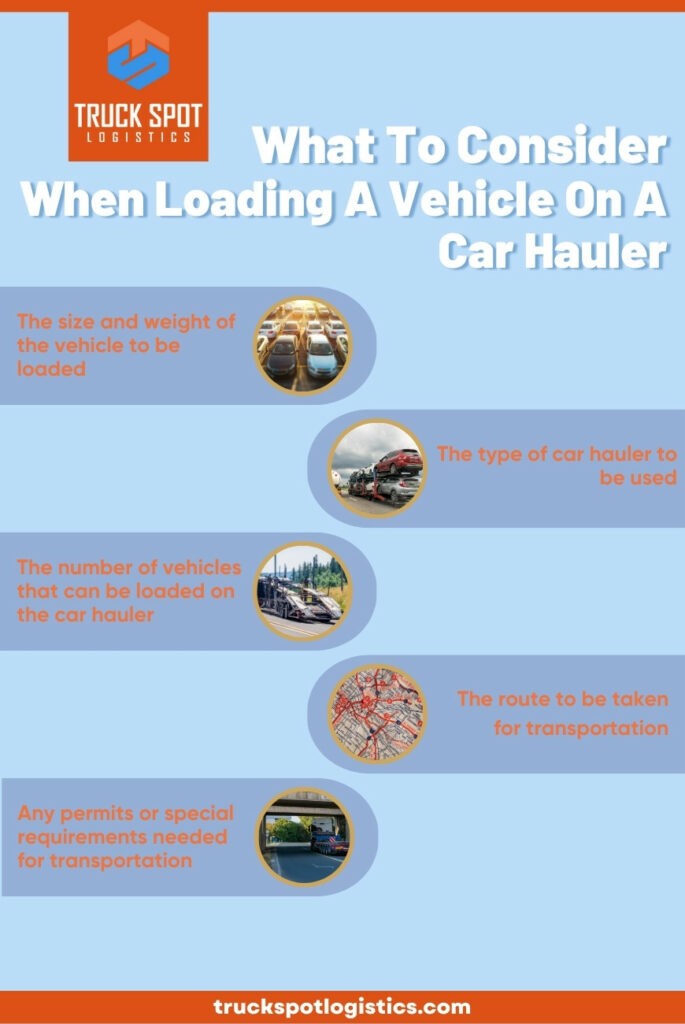
Having a plan in place can help you avoid delays, ensure that the vehicle is loaded properly, and reduce the risk of accidents during transportation.
Equipment the Carrier Should Have – and What to Check
The right equipment is crucial when loading a vehicle on a car hauler. Here are some essential pieces of equipment to consider:
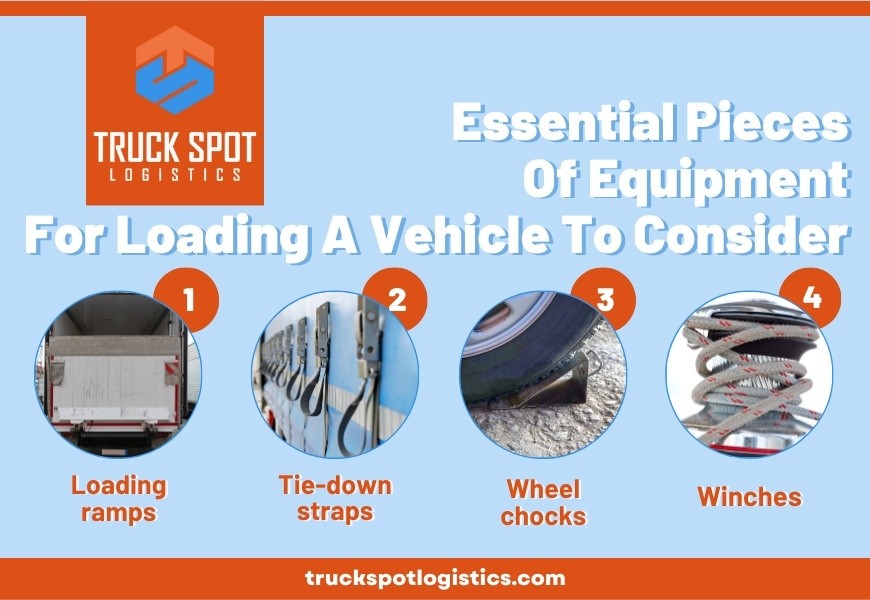
You don’t choose the carrier’s equipment – but you can verify it before signing the Bill of Lading. Here’s what a properly equipped carrier should have on site:
| Equipment | What to Check | Red Flag |
| Loading ramps | Sturdy, no visible cracks or bends, long enough for vehicle clearance | Ramp wobbles under weight, steep angle |
| Tie-down straps or chains | No fraying on straps, no rust or broken links on chains | Improvised rope or bungee cords used instead |
| Wheel chocks | In place before vehicle is positioned | Vehicle positioned without chocks on any incline |
| Winch (for inoperable vehicles) | Present if vehicle was disclosed as inoperable at booking – adds $50–$150; use our vehicle shipping cost calculator to factor this in | Driver arrives without winch for inoperable vehicle – pickup will be refused |
Properly securing the vehicle on a car hauler
Under FMCSA regulations (49 CFR Part 393), every vehicle on a car hauler requires a minimum of 4 tie-down points, each rated at 50% or more of the vehicle’s weight. Here’s what proper securement looks like – and what to confirm before the truck departs:
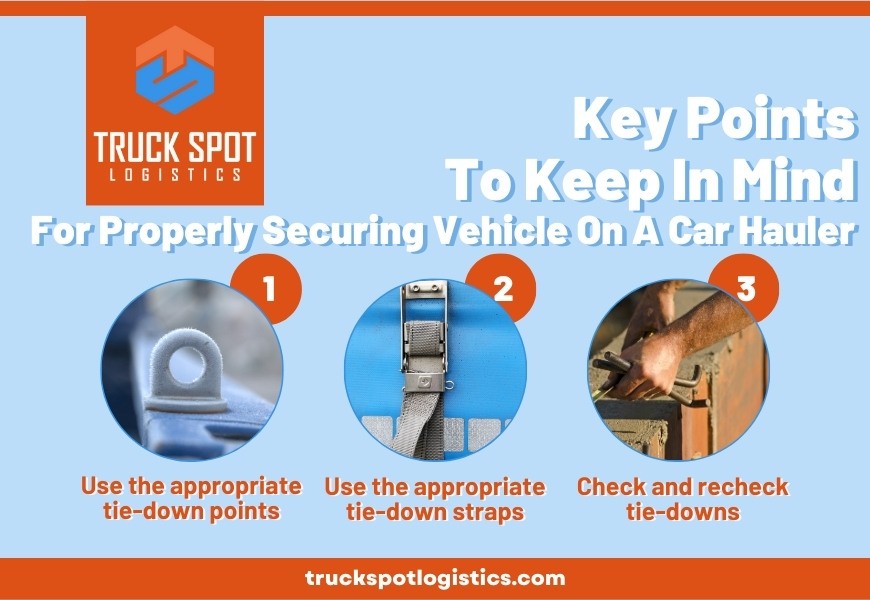
If you can observe loading, confirm all four points before the driver closes up. If not – ask for written confirmation on the Bill of Lading and request a photo of the secured vehicle. To avoid the most common vehicle shipping mistakes at this stage, never skip the BOL review before signing.
What to Do During Loading – Your Checklist as the Vehicle Owner
Here are some additional tips for loading a vehicle on a car hauler safely:
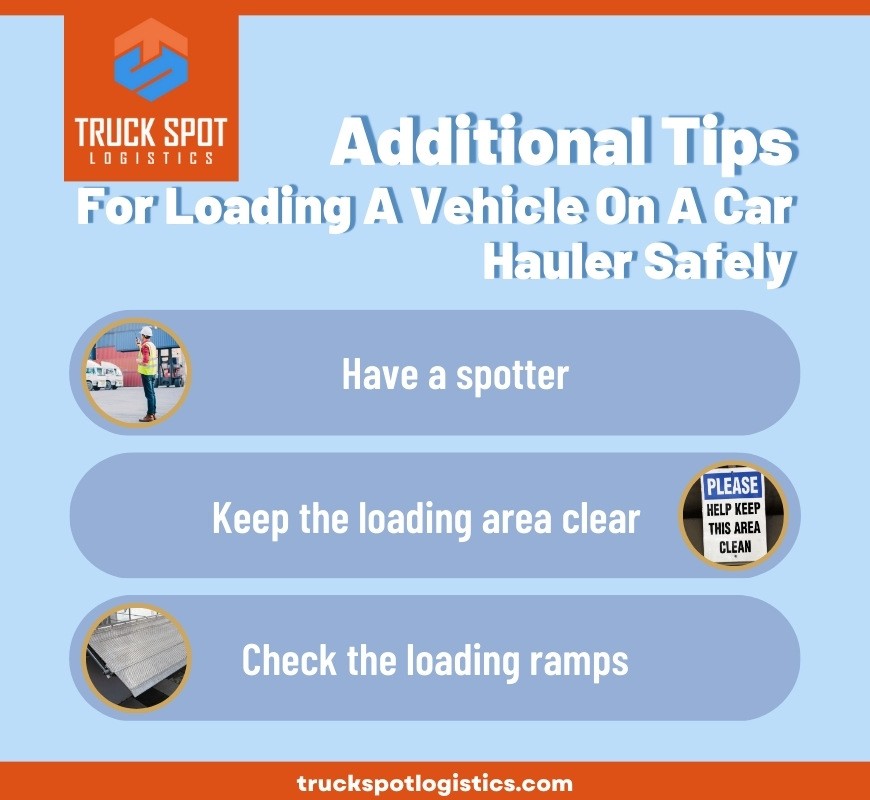
You don’t operate the equipment – but being present during loading gives you direct control over your documentation and claim protection. Here’s what to do:
Unloading Cargo Safely
Unloading cargo is just as important as loading it safely. When it comes to unloading vehicles from a car hauler, there are several key steps to take in order to do so safely and efficiently.
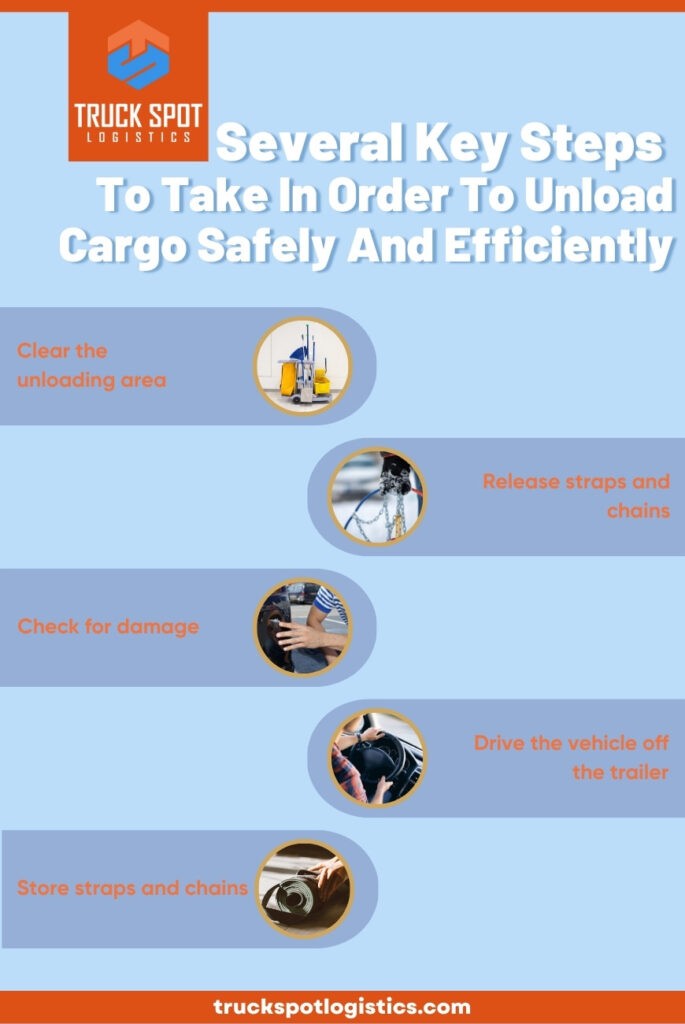
Unloading carries the same damage risk as loading – and it’s where the delivery Bill of Lading becomes critical. The sequence matters:
What the Carrier Needs for Safe Unloading – and When to Flag a Problem
Choosing the right equipment is essential when unloading a vehicle from a car hauler. For standard vehicles, unloading requires only the carrier’s ramps and the reverse of the loading procedure. Flag these situations to the carrier before unloading begins:
Your Inspection Checklist at Delivery
he delivery inspection is the last point at which you can legally document new damage. Do this before signing anything:
Simply following these steps and tips, you can make unloading your vehicle from the car hauler much safer and smoother. This highly reduces the chances of any damage or accidents according to the statistics.
Most Common Vehicle Damage During Transport – and How to Prevent It
When it comes to car hauler transport, there are several common risks and precautions to keep in mind. Being aware of these risks and taking the necessary precautions can help to prevent accidents and damage to your vehicle. Here are some of the most common risks and precautions to consider:

Understanding where damage happens helps you know what to document before pickup and what to inspect at delivery. For a broader look at what these mistakes cost financially, see car shipping mistakes that cost you money.
| Risk | How It Happens | Prevention |
| Paint scratches | Vehicle positioned too close to hauler railing or adjacent vehicle during loading | Observe positioning during loading; note in BOL if clearance looks insufficient |
| Tie-down anchor damage | Chain or strap attached to wrong undercarriage point instead of manufacturer frame points | Confirm attachment points with driver before departure |
| Rolloff during transit | Fewer than 4 tie-down points or loose tension | Request driver confirmation in writing on BOL before truck leaves |
| Ramp damage at delivery | Vehicle driven off ramp too fast or on uneven ground | Request flat unloading surface; inspect before signing delivery BOL |
| Interior damage | Personal items shift during transport | Remove all items before pickup – not covered by carrier insurance |
| Weather-related damage | Open transport in extreme rain, hail, or road debris | For high-value or classic vehicles consider enclosed auto transport; see also how weather affects vehicle shipping |
| Mechanical damage (inoperable vehicles) | Winch used improperly on vehicle not flagged as inoperable at booking | Disclose inoperable status at booking; confirm winch protocol with carrier in writing |
Most loading and unloading damage is preventable – with the right documentation before pickup and the right inspection at delivery. Photograph before handoff, confirm 4-point tie-downs, and never sign a clean Bill of Lading at delivery without checking the vehicle against your pre-transport photos. Those three steps cover the majority of damage claim situations.
Truck Spot Logistics connects shippers with FMCSA-verified carriers who follow proper loading and securement procedures across all 48 contiguous states. Get a free itemized quote with confirmed insurance coverage.
FAQ
What are some common risks during auto transportation?
Most vehicle damage during auto transport occurs at loading and unloading – not during transit. The main causes are improper tie-down placement (chains attached to wrong anchor points), insufficient tie-down tension (fewer than 4 points or loose fasteners), ramp damage during unloading on uneven ground, and vehicles positioned too close to hauler railings. Weather exposure on open carriers is an additional risk for high-value vehicles. Documenting the vehicle before pickup and inspecting at delivery are the two most effective preventive steps.
How can I ensure my vehicle is loaded and secured properly?
FMCSA regulations require a minimum of 4 tie-down points per vehicle, each rated at 50% or more of the vehicle’s weight. Chains or straps must connect to manufacturer-designated frame points – not to suspension components or bumpers. Before the truck departs, ask the driver to confirm all four attachment points and request written confirmation on the Bill of Lading. If you can be present during loading, observe tie-down placement and vehicle clearance from railings before signing.
What happens if my vehicle is damaged during transport?
Document the damage with timestamped photos before signing the delivery Bill of Lading. Note every new damage item specifically in writing on the BOL before signing – a signed clean receipt significantly limits your claim. Contact the carrier in writing within 24–48 hours with photos and the signed BOL as evidence. If the carrier does not respond within 30 days, file a complaint with the FMCSA at fmcsa.dot.gov/safety/consumer-assistance. For a full list of common vehicle shipping mistakes that lead to denied claims, see our guide.
How do I choose a reputable auto transport company?
Verify the carrier’s FMCSA registration at safer.fmcsa.dot.gov before booking – confirm an active USDOT number, active MC operating authority, and cargo insurance of at least $100,000. Request an itemized quote listing base rate and insurance coverage separately. Check customer reviews on Central Dispatch or Transport Reviews for documented loading and delivery issues. Avoid carriers that require full payment before pickup – standard structure is deposit at booking, balance at delivery. See also: car shipping mistakes that cost you money.
Can I pack personal belongings in my vehicle during transport?
Personal items inside the vehicle are explicitly excluded from carrier cargo insurance – if lost or damaged, there is no coverage and no claim mechanism. Some carriers allow up to 100 lbs of lightweight items in the trunk, but this must be confirmed in writing before booking. Remove all items from the interior, glove box, door pockets, and dashboard regardless. Items that shift during transport can also damage the interior and create weight compliance issues for the carrier.
What should I do before my vehicle is picked up for transport?
Photograph all four sides and the undercarriage with timestamp before the driver arrives – this is your legal baseline for any damage claim. Remove all personal items. Disable the alarm system. Leave the fuel tank at ¼ full or less. Review every entry on the pickup Bill of Lading before signing and note any pre-existing damage in writing. Do not sign a clean BOL if any scratch, dent, or mark is not listed – a signed clean pickup BOL gives the carrier a legal defense to deny any claim at delivery.
What is a Bill of Lading and why does it matter?
A Bill of Lading (BOL) is the legal record of your vehicle’s condition at pickup and delivery. The pickup BOL is the baseline – any pre-existing damage not listed on it cannot be claimed as transport damage. The delivery BOL is your final chance to document new damage before releasing the carrier from liability. Never sign either document without inspecting the vehicle first. A signed clean BOL at delivery is the carrier’s primary defense against any damage claim. For the full list of documents required during auto transport, see our documentation guide.
Does weather affect loading and unloading safety?
Yes – extreme weather conditions directly affect loading and unloading safety. Rain and snow make ramps slippery, increasing the risk of vehicle sliding during loading or unloading. High winds affect stability on elevated hauler decks. If weather conditions at pickup or delivery look unsafe, you have the right to delay until conditions improve – document this request in writing. For high-value or classic vehicles, enclosed auto transport eliminates weather exposure entirely. See also: how weather affects vehicle shipping.