




9 MIN

Mar 22, 2023
How to Choose the Right ATV Transport Company in 2026: What to Check Before You Book
Choosing the wrong ATV transport company costs more than just money – an unverified carrier without proper insurance means zero recovery if your ATV is damaged in transit. The difference between a reliable carrier and a problematic one comes down to five things: FMCSA registration, insurance coverage, equipment type, payment structure and Reviews. This guide covers all three transport types, the five factors that matter most when comparing carriers, and the exact questions to ask before signing anything.
Before we dive in – here’s your cheat sheet:
Quick links to navigate this article:
Types of Transport Companies
Not all transport companies handle ATVs the same way. The table below shows what each type offers – and what it costs you in protection vs. price.
| Type | Trailer | Protection Level | Typical Cost vs. Open | Best For |
| Open Transport | Open trailer | Exposed to weather and road debris | Base rate | Standard ATVs, short to mid-distance, budget-conscious shippers |
| Enclosed Transport | Enclosed trailer | Fully protected from weather and debris | +40–60% | High-value, custom, or competition ATVs; long-distance shipping |
| Specialty Transport | Specialized equipment | Highest – white-glove, door-to-door | Premium pricing | Oversized UTVs, rare or modified ATVs requiring custom handling |
For most standard ATV shipments, open transport is sufficient. For cross-country ATV transport or high-value builds, enclosed is worth the additional cost. Regardless of transport type, FMCSA verification applies to all three – unregistered carriers operate without enforceable cargo insurance.
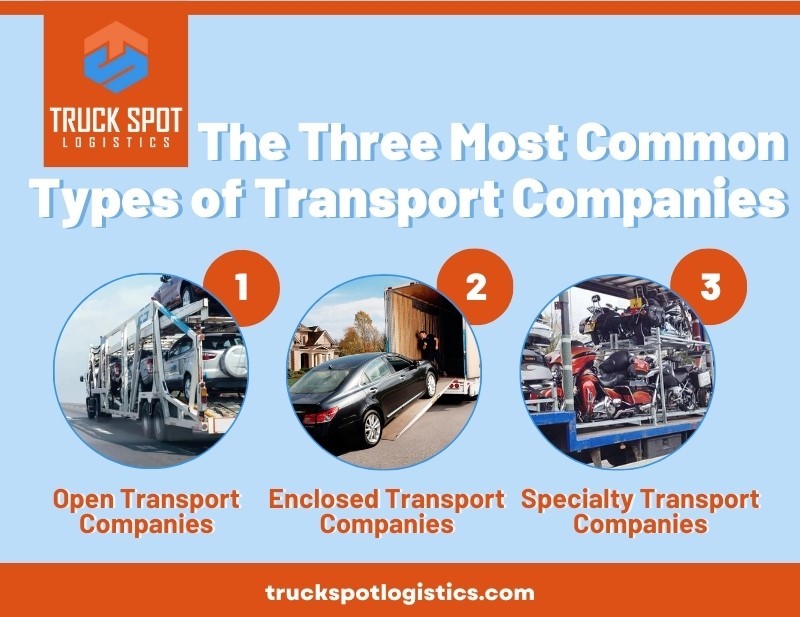
Open Transport Companies
Open transport companies are the most common type of transport company for ATV shipping. These companies typically use an open trailer to transport your ATV, which is exposed to the elements during transit. While open transport is the most cost-effective option, it also comes with the highest risk of damage to your ATV during transit.
Enclosed Transport Companies
Enclosed transport companies offer a more secure option for shipping your ATV. These companies use an enclosed trailer, which protects your ATV from the elements and potential damage during transit. Enclosed transport is typically more expensive than open transport, but it provides additional peace of mind knowing that your ATV is protected during transit.
Specialty Transport Companies
Specialty transport companies offer customized solutions for transporting your ATV. These companies may use specialized trailers or equipment to transport your ATV, and they typically offer additional services such as white-glove delivery and door-to-door service. Specialty transport companies are typically the most expensive option, but they provide the highest level of service and protection for your ATV.
When selecting a transport company for your ATV, it’s essential to consider the type of company that best fits your needs and budget. Each type of company offers different benefits and drawbacks, so it’s crucial to weigh your options carefully before making a decision.
Factors to Consider When Choosing an ATV Transport Company
Choosing the right transport company for your ATV can be a challenging task. There are several factors to consider when selecting a transport company to ensure that your ATV arrives safely and on time. These five factors separate reliable carriers from risky ones. The consequence column shows what happens when each factor is ignored.
| Factor | What to Check | Consequence If Ignored |
| FMCSA Registration | Active USDOT number + MC authority at safer.fmcsa.dot.gov | Zero legal recovery on any ATV damage |
| Insurance Coverage | Cargo insurance certificate – minimum $100,000 per load | Damage claim denied; no payout mechanism |
| Equipment Condition | Trailer type confirmed in writing; tie-down points inspected at pickup | ATV damaged in transit due to improper securement |
| Payment Structure | Deposit at booking ($0–$200); balance at delivery – never full prepayment | Full transport cost lost to fraudulent operator |
| Reviews and Track Record | Central Dispatch or Transport Reviews – look for documented ATV-specific experience | Carrier inexperienced with ATV loading and securing |
A quote $150–$300 below market rate from an unverified carrier is not a saving – it is a risk. See the most common ATV and vehicle shipping mistakes before booking.
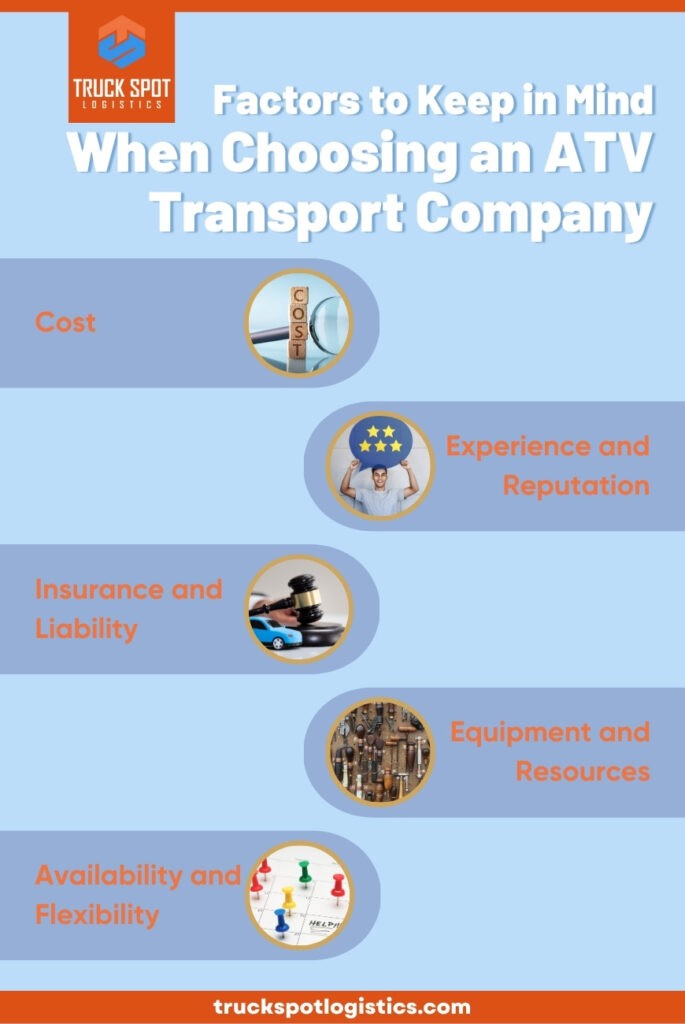
Considering these factors when choosing an ATV transport company can help ensure that your ATV arrives safely and on time at its destination. While it can be tempting to choose the cheapest option available, it’s crucial to prioritize quality and reliability to protect your investment.
Questions to Ask
When Selecting an ATV Transport Company
Asking the right questions is only useful if you know what a good answer looks like. Here’s what to ask – and what the answer should include.
| Question | What a Good Answer Includes | Red Flag |
| What trailer type do you use for ATVs? | Specific trailer name (open flatbed, enclosed, specialty); tie-down method confirmed | “We use whatever is available” |
| What is your cargo insurance coverage? | Certificate of insurance on request; minimum $100,000 per load | “We’re fully insured” without documentation |
| How do you secure ATVs during transit? | 4-point tie-down minimum; soft straps on frame, not handlebars | “We strap them down tight” without specifics |
| What is your payment structure? | Deposit at booking; balance at delivery in cash or certified funds | Full payment required before pickup |
| Are you FMCSA registered? | Active USDOT number and MC authority – verifiable at safer.fmcsa.dot.gov | Cannot provide USDOT number |
If a carrier hesitates on any of these questions or cannot provide documentation – move to the next carrier on your list.
Verify FMCSA credentials, confirm insurance in writing, check the payment structure, and photograph your ATV before handoff. Those four steps eliminate the majority of ATV shipping risks before the carrier arrives. The transport type – open, enclosed, or specialty – is a secondary decision once the carrier is verified.
Truck Spot Logistics connects ATV owners with FMCSA-verified carriers across all 48 contiguous states. Get a free itemized quote with confirmed insurance coverage and trailer type.
FAQ
How do I prepare my ATV for transport?
Clean and photograph all sides with timestamp before the driver arrives – this is your legal baseline for any damage claim. Remove mirrors, racks, and any loose accessories. Disable the alarm system. Leave the fuel tank at ¼ full or less – most carriers require this. Disconnect the battery if shipping for more than 5–7 days. Confirm with the carrier whether soft straps or chains will be used – soft straps on the frame are standard for ATVs; chains on handlebars cause damage.
How long does it take to transport an ATV?
Transit time for ATV shipping typically runs 1–2 days per 500 miles for standard routes. Cross-country shipping (2,500–3,000 miles) runs 7–10 days. Enclosed transport on the same route adds 1–3 days due to fewer carriers and less frequent routes. Expedited same-week pickup adds $100–$200 to the base rate. Peak season (May–August) extends standard transit windows by 2–5 days due to higher demand – book 3–4 weeks in advance during this period.
What is the average cost to ship an ATV?
ATV shipping costs typically run $300–$700 for regional transport (under 500 miles) and $700–$1,400 for cross-country (2,500+ miles) on open transport. Enclosed transport adds 40–60% to the base rate. Oversized UTVs over 60 inches wide may require oversize permits adding $50–$150 per state. A quote $150–$300 below these ranges from an unverified carrier is a red flag – not a saving. Use our vehicle shipping cost calculator to estimate your specific route before requesting quotes.
How do I choose the right type of transportation for my ATV?
Open transport is sufficient for most standard ATV shipments and costs 40–60% less than enclosed. Choose enclosed if your ATV is a high-value build, competition vehicle, or if shipping cross-country in winter months when road debris and weather exposure increase damage risk. Specialty transport is worth considering for oversized UTVs or modified ATVs that require custom tie-down solutions. Regardless of type – verify the carrier’s FMCSA credentials before committing to any option.
Is it safe to transport my ATV using an open trailer?
Yes – open transport is safe for most standard ATV shipments. Over 90% of ATVs are shipped on open trailers without incident. The main risks are road debris on highway routes and weather exposure on long-distance hauls. For stock ATVs under $10,000 in value, open transport is the practical choice. For custom builds, competition ATVs, or shipments through areas with heavy winter road treatment, enclosed transport eliminates weather and debris risk entirely at 40–60% additional cost.
What should I do if my ATV is damaged during transport?
Document all damage with timestamped photos before signing the delivery Bill of Lading. Note every damage item specifically in writing on the BOL before signing – a signed clean receipt significantly limits your claim. Contact the carrier in writing within 24–48 hours with photos and the signed BOL as evidence. If the carrier does not respond within 30 days, file a complaint with the FMCSA at fmcsa.dot.gov/safety/consumer-assistance. “Most reputable companies have insurance” is not protection – verify the certificate before booking.
What is the difference between open and enclosed ATV transport?
Open transport uses an exposed trailer – your ATV is visible and subject to weather, road debris, and UV exposure during transit. Enclosed transport uses a sealed trailer that fully protects the ATV from all external elements. Open transport costs 40–60% less and is sufficient for most standard ATV shipments. Enclosed is recommended for ATVs valued over $10,000, custom or competition builds, and long-distance winter shipments. Both options are available through FMCSA-verified carriers – the trailer type should be confirmed in writing before booking.
Do I need insurance when shipping my ATV?
Your carrier is required by FMCSA to carry cargo insurance – minimum $100,000 per load. However, on a shared trailer with multiple vehicles, this divides to as little as $10,000–$15,000 per ATV. For ATVs valued over $15,000–$20,000, request per-vehicle coverage confirmation or purchase supplemental transport insurance. Always request the carrier’s certificate of insurance before signing the transport agreement – do not rely on verbal assurances. Verify coverage independently.
Can I ship my ATV and a vehicle together?
Yes – multi-vehicle shipments that include an ATV and a standard vehicle are common and often more cost-effective per unit than shipping separately. The ATV is typically loaded on the upper deck of an open hauler alongside other vehicles. Confirm with the carrier that they have experience loading ATVs alongside passenger vehicles – improper positioning can cause contact damage between loads. Both the ATV and the vehicle require separate Bill of Lading documentation and independent pre-shipping photos. See also: open auto transport for how multi-vehicle loads work.