



5 MIN

Apr 13, 2023
Boat Transport Made Easy: How to Prepare Your Vessel for Safe Shipping
Boat transport is the process of moving a vessel overland on a specialized trailer, or overseas via maritime shipping. Overland boat transport costs $1.50–$3.00 per mile for boats under 30 feet and $3.00–$6.00+ per mile for larger vessels requiring wide-load permits. A cross-country overland shipment of 2,500 miles typically costs $3,000–$8,000 depending on boat size and trailer type. Boats exceeding 8.5 feet wide, 13.5 feet tall, or 80,000 lbs require oversize load permits – costs range from $15–$150 per state. Maritime transport for international moves uses RoRo or container shipping and costs $2,000–$10,000+ depending on destination and vessel size.
Boat Transport Options – Methods & Cost Comparison
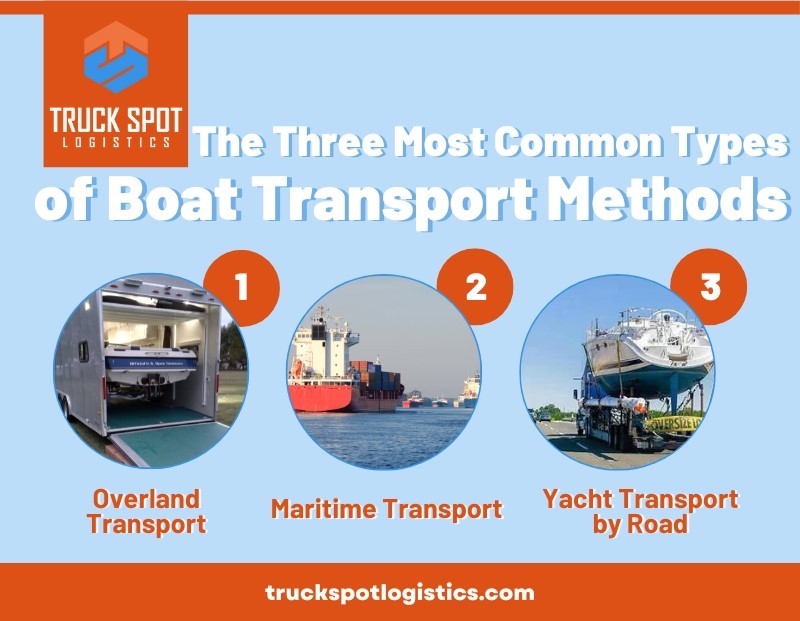
When you’re gearing up to transport your boat, it’s crucial to know the various transport options at your disposal. This way, you can ensure a safe and efficient journey for your prized vessel. The right transport method depends on boat size, destination, and budget. The table below compares the three main options:
| Method | Best For | Cost Range | Transit Time |
| Overland (flatbed/trailer) | Boats up to ~50 ft, CONUS moves | $1.50–$6.00/mile | 3–14 days depending on distance |
| Maritime (RoRo) | Large vessels, international moves | $2,000–$10,000+ | 2–6 weeks depending on destination |
| Maritime (container) | High-value or sensitive vessels | $3,000–$15,000+ | 3–8 weeks |
Overland transport is the standard method for recreational boats under 50 feet moving within the continental US. Trailer types used include standard boat trailers (up to ~30 ft), step-deck trailers (30–45 ft), lowboy trailers (for heavy or low-clearance vessels), and hydraulic trailers for very large or irregular hulls.
Maritime RoRo is most cost-effective for large vessels that can be driven or floated onto the ship. Fixed departure schedules mean advance booking of 4–6 weeks is required.
Container shipping provides maximum protection but costs significantly more than RoRo. Most recreational boats require either a custom cradle or specialized blocking inside the container, adding $500–$1,500 to the base rate.
To choose the best transport option for your boat, think about factors like its size, the distance it needs to travel, and your budget. By weighing these considerations, you can make an informed decision that meets your specific needs.
Boat Transport Cost by Size [2026]
Overland boat transport costs scale with boat size, weight, and whether the load requires oversize permits. The table below shows 2026 cost ranges for cross-country transport (2,000–2,500 miles):
| Boat Type / Size | Typical Width | Permit Required? | Cost (Cross-Country) |
| PWC / Jet Ski | Under 8.5 ft | No | $800–$1,500 |
| Fishing boat / Jon boat (under 20 ft) | Under 8.5 ft | No | $1,200–$2,500 |
| Bowrider / deck boat (20–26 ft) | 8–10 ft | Often yes | $2,000–$4,000 |
| Pontoon boat (22–28 ft) | 8–12 ft | Yes | $2,500–$5,000 |
| Cabin cruiser (26–36 ft) | 10–14 ft | Yes | $3,500–$7,000 |
| Sailboat (mast removed, 30–45 ft) | 10–14 ft | Yes | $4,000–$8,500 |
| Large yacht (45–65 ft) | 14–20 ft | Yes + escorts | $7,000–$15,000+ |
Permit and escort costs: Boats wider than 8.5 feet require oversize load permits at $15–$150 per state. Loads wider than 12 feet typically require one pilot car escort; loads wider than 14 feet require front and rear escorts at $1.50–$4.00 per mile per vehicle. A cross-country move through 8 states can add $200–$800 in permit fees alone.
Step-by-Step Guide to Prepare Your Boat for Shipping
Preparation failures are the primary cause of transit damage and disputed claims in boat transport. Carriers secure the vessel on the trailer but are not responsible for damage caused by improperly prepared boats.
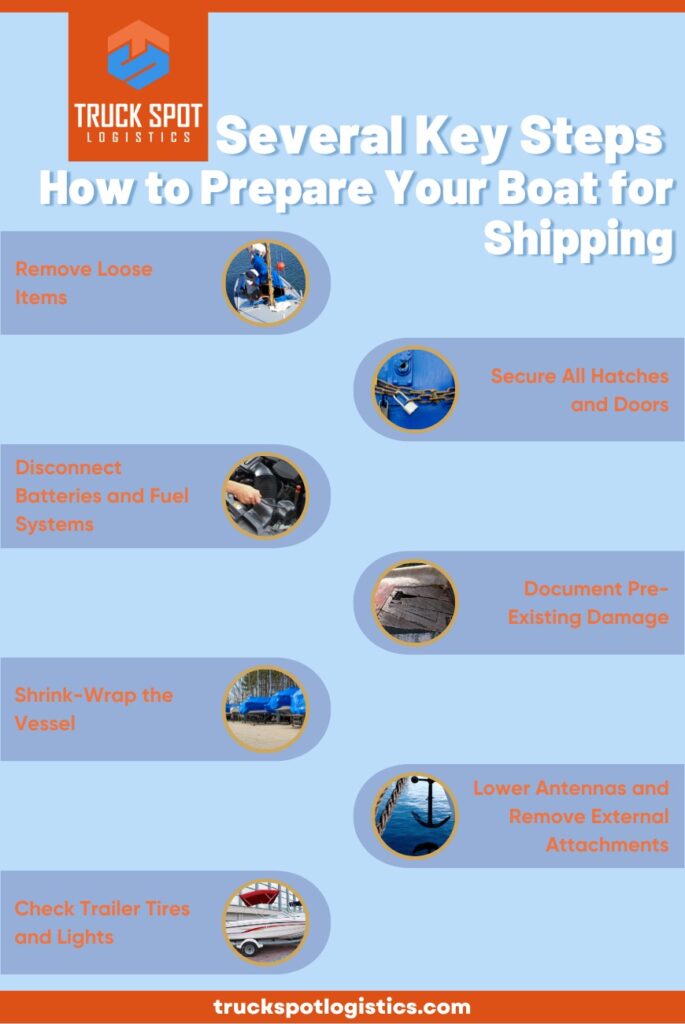
Document and sign the Bill of Lading At pickup, the driver will inspect the vessel and document its condition on the Bill of Lading. Review every entry before signing – confirm all pre-existing damage (scratches, gel coat cracks, hardware damage) is listed. Do not sign a clean Bill of Lading if any damage is not documented. Photograph the entire boat with a timestamp immediately before the driver arrives. At delivery, inspect the vessel against your pre-transport photos before signing the delivery receipt.
Dealing with the legal and documentation aspects of boat transport can be a bit tricky, but it’s crucial for a smooth and compliant shipping experience. Here are some key points to help you tackle the process:
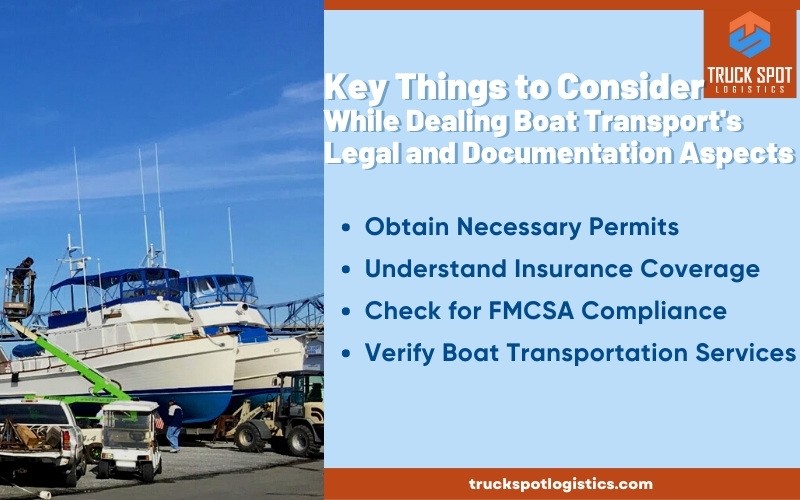
Obtain Necessary Permits
If your boat is large or the route it will travel requires it, you might need to get special permits for oversized loads or to meet specific state regulations. Collaborate with your chosen boat transportation service to figure out if any permits are necessary and how to acquire them promptly.
Understand Insurance Coverage
Before shipping your boat, take a good look at your current insurance policy to grasp the coverage it offers during transport. Often, your existing policy might provide limited or no coverage while your boat is being shipped. Talk this over with your boat transportation service, as they may have additional coverage options or recommend purchasing short-term transport insurance to make sure your boat is fully protected.
Check for FMCSA Compliance
When picking a boat transportation service, ensure the company complies with Federal Motor Carrier Safety Administration (FMCSA) regulations. You can confirm their registration and safety records by verifying the carrier’s USDOT number and MC number on the FMCSA website. This step will help you choose a reputable and trustworthy transporter for your boat.
Verify Boat Transportation Services
Before settling on a boat transportation service, check their reviews and ratings on reliable websites like Transport Reviews and the Better Business Bureau (BBB). This will give you a sense of the company’s performance, customer satisfaction, and dependability. Doing your research will help you make an informed decision and ensure a successful boat transport experience.
| Document | Required? | Notes |
| Vessel title or registration | Yes | Proof of ownership; must be lien-free for interstate transport |
| Government-issued ID | Yes | Owner’s driver’s license or passport |
| Bill of Lading (pickup) | Issued by carrier | Review and sign only after all pre-existing damage is documented |
| Oversize load permit | If boat exceeds 8.5 ft wide | $15–$150 per state; carrier typically handles procurement |
| USCG documentation (if federally documented vessel) | Yes for documented vessels | Certificate of Documentation required in addition to state registration |
| Import/export documents | International moves only | Customs forms, destination country import requirements |
Permit cost reference: A cross-country overland move through 8–10 states for a boat requiring oversize permits typically adds $200–$800 in permit fees. Boats requiring escort vehicles add $1.50–$4.00 per mile per escort vehicle on top of permit fees. Confirm whether permit procurement and escort coordination are included in the carrier’s quoted price – some carriers bill these separately.
By taking care of these legal and documentation aspects, you can rest assured that your boat transport will be carried out safely and in accordance with all relevant regulations. Investing time in navigating this process will help you sidestep potential issues and provide peace of mind throughout your boat’s entire transportation journey.
Boat transport is straightforward once the method, cost, and preparation requirements are matched to the vessel’s size and destination. The most common mistakes are: not documenting vessel condition on the Bill of Lading at pickup, underestimating permit costs for wide boats, and not confirming the carrier’s FMCSA credentials before booking. For overland transport, book 2–3 weeks in advance for standard moves and 3–4 weeks for boats requiring oversize permits and escort coordination. Compare at least 3 itemized quotes from FMCSA-licensed carriers with boat-specific experience.
Truck Spot Logistics connects boat owners with FMCSA-licensed carriers experienced in overland vessel transport across all 48 contiguous states. Get a free quote with your boat dimensions and required delivery date.
FAQs
How much does it cost to transport a boat?
Overland boat transport costs $1.50–$3.00 per mile for boats under 30 feet and $3.00–$6.00+ per mile for larger vessels. A cross-country move of 2,500 miles costs $3,000–$8,000 for most recreational boats. PWCs and small fishing boats cost $800–$2,500 cross-country; large cabin cruisers and sailboats cost $4,000–$8,500+. Boats wider than 8.5 feet require oversize permits ($15–$150 per state) and potentially escort vehicles, adding $200–$1,500 to the total depending on route.
How long does boat transport take?
Overland boat transport takes 3–5 days for regional routes under 500 miles and 7–14 days for cross-country shipments. Pickup window after booking is 2–5 business days. Maritime transport for international moves takes 2–6 weeks for RoRo and 3–8 weeks for container shipping depending on destination and vessel departure schedule. Book 4–6 weeks in advance for international maritime moves to align with fixed vessel departure dates.
Are there legal requirements for transporting a boat overland?
Boats wider than 8.5 feet, taller than 13.5 feet, or heavier than 80,000 lbs gross require oversize load permits for each state on the route – costs range from $15 to $150 per state. Boats wider than 12 feet typically require one pilot car escort; loads over 14 feet wide require front and rear escorts. Some states restrict oversize moves at night or on weekends. Most experienced boat transport carriers handle permit procurement as part of the service – confirm this is included in the quoted price before booking.
Is my boat insured during transport?
FMCSA-licensed overland transport carriers carry minimum cargo insurance of $100,000. For high-value vessels, confirm per-unit coverage limits with the carrier before booking – total cargo coverage shared across a load may not fully cover a $200,000+ yacht. Check whether your existing marine insurance policy provides supplemental coverage during overland transport. Document all pre-existing damage on the Bill of Lading at pickup – undocumented damage cannot be claimed at delivery regardless of coverage amount.
Can I transport my boat internationally?
Yes – international boat transport uses RoRo (roll-on/roll-off) or container shipping. RoRo is the most cost-effective for large vessels that can float or roll onto the ship; costs range from $2,000–$6,000 for most recreational boats to major European or Caribbean destinations. Container shipping costs $3,000–$15,000+ but provides full enclosure and weather protection. International moves require vessel title, customs declaration forms, and destination country import documentation – confirm requirements with the carrier 6–8 weeks before departure.
What should I look for in a boat transport company?
Verify FMCSA credentials – confirm active USDOT number, active MC authority, and cargo insurance of at least $100,000. Ask specifically about experience with boats of your size and type – carriers without boat-specific experience risk improper cradle setup or tie-down that causes hull damage. Confirm whether permit procurement and escort vehicles are included in the quoted price or billed separately. Check reviews on BBB and request references from recent boat shipments of similar size.