





7 MIN

Sep 12, 2023
How to Check a USDOT Number: Verify Any Carrier in 3 Steps [2026]
A USDOT number is a unique identifier assigned by the Federal Motor Carrier Safety Administration (FMCSA) to commercial carriers operating in interstate commerce. To verify any carrier’s USDOT number, go to safer.fmcsa.dot.gov, enter the number in the search field, and review the carrier’s operating status, insurance, and safety rating. A legitimate auto transport carrier must have an active USDOT number, active MC number, and cargo insurance of at least $100,000. Verification takes under 2 minutes and is free.
If you’re diving into auto transport – whether shipping the family car or a fleet for your business – it’s crucial to ensure you’re working with legit transporters.
No jargon, no fluff; this guide will break down the whole USDOT number thing and show you exactly how to check it.
Understanding the USDOT Number
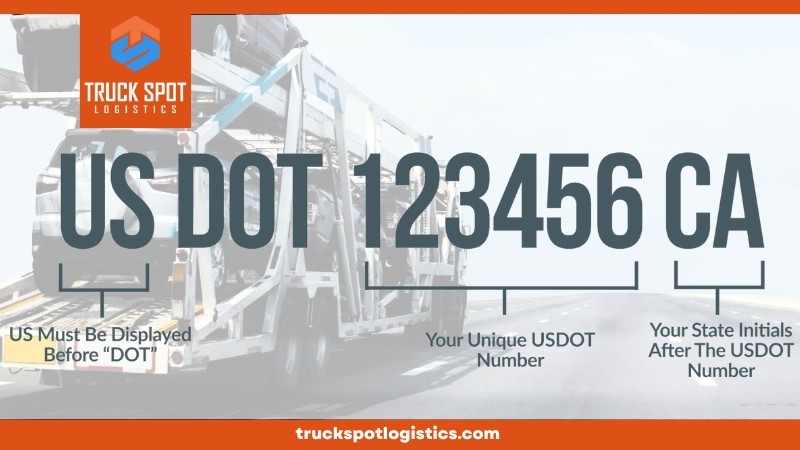
A USDOT number is a unique numeric identifier issued by the FMCSA to commercial motor carriers. It is required for any carrier that operates commercial vehicles in interstate commerce meeting the following criteria: vehicles with a gross vehicle weight rating (GVWR) over 10,001 lbs, vehicles transporting hazardous materials, or vehicles designed to transport 9+ passengers for compensation.
This identifier plays a pivotal role in ensuring public safety on the roads. Managed and issued by the Federal Motor Carrier Safety Administration (FMCSA), the USDOT Number aids in the monitoring of carriers. The FMCSA uses it to track a carrier’s safety record, compliance with regulations, and other essential data.
The presence of a USDOT Number signifies that a transporter has met specific federal requirements and is operating within established safety guidelines. However, due diligence is crucial. Ensuring that a transporter’s USDOT Number is not only present but also valid, is an essential step in ensuring a secure and reliable transport service.
| Identifier | Issued By | Purpose | Required For |
| USDOT Number | FMCSA | Safety tracking and compliance monitoring | All interstate commercial carriers over 10,001 lbs GVWR |
| MC Number | FMCSA | Operating authority for for-hire carriers | Carriers transporting regulated commodities or passengers for hire |
| State DOT Number | State agency | Intrastate commerce tracking | Carriers operating only within a single state (varies by state) |
Key fact: An auto transport carrier must have both an active USDOT number AND an active MC number to legally transport vehicles for hire across state lines. A USDOT number alone does not authorize for-hire interstate transport – the MC number grants operating authority. Always verify both.
Step-by-Step: How to Verify a USDOT Number
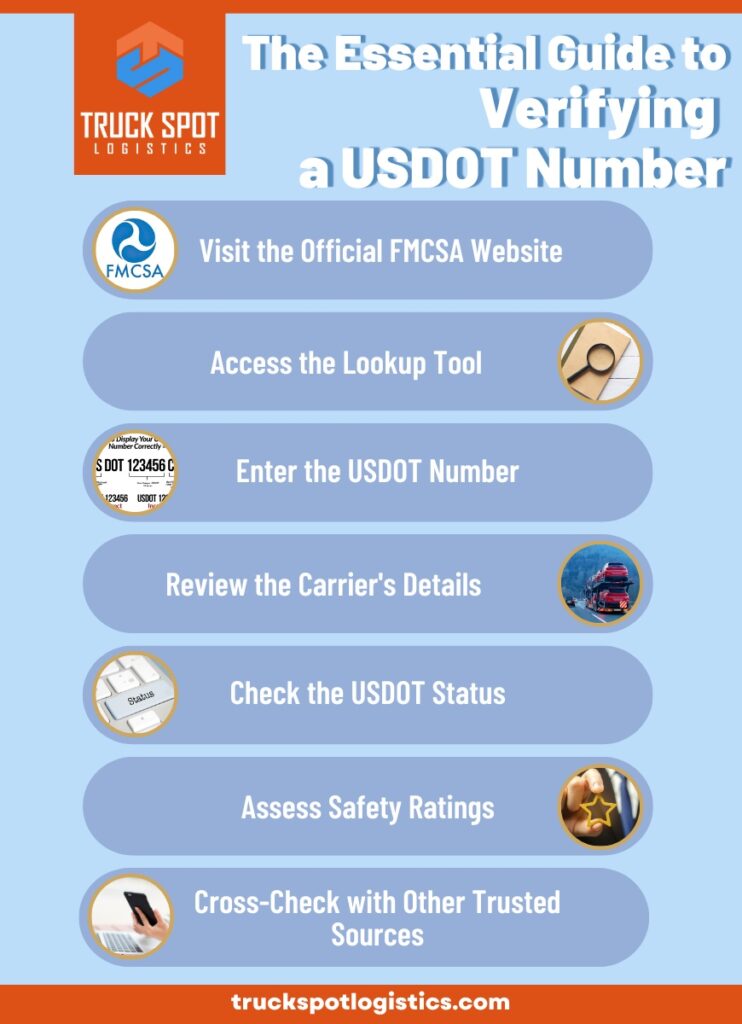
Verifying a USDOT Number is a crucial step in ensuring you’re dealing with a legitimate transporter. Here’s a straightforward guide to help you through the process:
| Field | What to Look For | Red Flag |
| Operating Status | Must show “AUTHORIZED” | “Not Authorized” or “Revoked” |
| MC/MX Number Status | Must be active | Inactive or missing MC number |
| Cargo Insurance | Must show active coverage | Expired or no insurance on file |
| Safety Rating | “Satisfactory” or “None” (unrated) | “Unsatisfactory” or “Conditional” |
| Out-of-Service Rate | Below industry average | Significantly above average |
| Number of Inspections | More inspections = more data available | Zero inspections (unverified history) |
Remember, while the USDOT Number is a primary indicator of legitimacy, it’s always a good practice to take that extra step. Making sure you’re informed will help you make the best decisions in choosing an auto transporter.
We hope this step-by-step guide provides a clear path for individuals and businesses looking to verify USDOT Numbers.
Why Verify a USDOT Number?
USDOT verification protects against three specific risks: uninsured carriers, operating authority fraud, and safety violations. Each has direct financial consequences for the vehicle owner.
What Information Does a USDOT Lookup Show?
A FMCSA Company Snapshot provides the following verified data about any carrier:
| Data Field | Description |
| Legal name and DBA | Registered business name and any trade names |
| Physical address | Verified business address on file with FMCSA |
| Operating status | Whether the carrier is currently authorized to operate |
| MC number and status | Motor carrier authority status for for-hire transport |
| Insurance on file | Active cargo and liability insurance records |
| Safety rating | FMCSA-assigned safety rating (Satisfactory / Conditional / Unsatisfactory) |
| Vehicle inspections | Total inspections and out-of-service violations |
| Driver inspections | Driver compliance history and out-of-service rate |
| Crash history | Reported crashes in the past 24 months |
| Hazmat authorization | Whether the carrier is authorized to transport hazardous materials |
Key insight: A carrier with zero inspections on record is not necessarily safe – it may simply be too new or too small to have been inspected. For auto transport, prioritize carriers with at least 10–20 inspections on record and an out-of-service rate below the national average.
Conclusion
Verifying a USDOT number takes under 2 minutes at safer.fmcsa.dot.gov and is the single most important step before booking any auto transport service. A valid USDOT number, active MC authority, and current cargo insurance are the minimum requirements for a legally operating carrier. Beyond FMCSA verification, cross-check the carrier on Central Dispatch and BBB before committing.
TruckSpot Logistics works exclusively with FMCSA-licensed carriers holding active USDOT and MC numbers with verified cargo insurance. Get a free quote and compare vetted carriers before making a decision.
FAQs
How do I check a USDOT number?
To check a USDOT number, go to safer.fmcsa.dot.gov and click “Company Snapshot.” Enter the USDOT number in the search field. The result shows the carrier’s operating status, MC number, insurance on file, safety rating, and inspection history. Verification is free and takes under 2 minutes. Always confirm the company name in the SAFER record matches the name on your transport contract exactly.
What is the difference between a USDOT number and an MC number?
A USDOT number is a safety tracking identifier assigned to all commercial carriers over 10,001 lbs GVWR operating in interstate commerce. An MC number grants operating authority specifically to for-hire carriers transporting regulated commodities or passengers across state lines. Auto transport carriers must have both an active USDOT number and an active MC number. A USDOT number alone does not authorize a carrier to legally transport your vehicle for hire.
What should I look for when verifying a carrier’s USDOT number?
When verifying a USDOT number in the FMCSA SAFER database, check five fields: operating status (must show “Authorized”), MC number status (must be active), cargo insurance (must show current coverage), safety rating (avoid “Unsatisfactory” or “Conditional”), and out-of-service rate (should be below the national average of approximately 20% for vehicles). Also confirm the legal company name in SAFER matches the name on your transport contract.
What if a transporter does not have a USDOT number?
A carrier without a USDOT number is operating illegally if it transports vehicles across state lines in commercial vehicles over 10,001 lbs GVWR. An unlicensed carrier has no verified insurance on file with FMCSA, meaning damage claims have no federal enforcement mechanism. Do not book transport with any carrier that cannot provide a USDOT number. You can verify whether any company has ever been registered with FMCSA.
Can a transporter operate with an expired or inactive USDOT number?
No. Carriers are required to update their USDOT registration every two years under FMCSA’s biennial update requirement. A USDOT number that has not been updated becomes inactive and the carrier loses operating authority. Operating with an inactive USDOT number is a federal violation subject to civil penalties. Always verify the operating status in SAFER before booking – “Not Authorized” or “Out of Service” means the carrier cannot legally transport your vehicle.
Does a valid USDOT number guarantee quality service?
A valid USDOT number confirms that a carrier has met minimum federal registration and insurance requirements – it does not guarantee service quality, pickup timeliness, or careful vehicle handling. After USDOT verification, additionally check the carrier on Central Dispatch (centraldispatch.com) for industry reviews from brokers, and the BBB (bbb.org) for consumer complaint history. A carrier with a valid USDOT but multiple unresolved complaints warrants further scrutiny before booking.
Are all vehicles required to have a USDOT number?
USDOT numbers are required for commercial vehicles operating in interstate commerce that meet any of the following criteria: gross vehicle weight rating (GVWR) over 10,001 lbs, vehicles transporting hazardous materials in quantities requiring placarding, or vehicles designed to transport 9 or more passengers for compensation. Personal vehicles and intrastate-only carriers operating below these thresholds are generally exempt, though individual states may have additional registration requirements.
How do I report a carrier operating without a valid USDOT number?
Report carriers operating without a valid or active USDOT number to the FMCSA National Consumer Complaint Database at nccdb.fmcsa.dot.gov, or by calling the FMCSA hotline at 1-888-DOT-SAFT (1-888-368-7238). You can also file a complaint with your state’s Department of Transportation if the carrier operates intrastate. Provide the carrier’s company name, contact information, and any documentation of the unlicensed operation when filing.
What is a “Satisfactory” safety rating and what does it mean for me?
FMCSA assigns three safety ratings: Satisfactory (carrier meets federal safety standards), Conditional (carrier has some safety deficiencies but is allowed to operate), and Unsatisfactory (carrier has serious safety violations and should not be used). Many carriers show “None” – meaning unrated – which is not negative; it simply means FMCSA has not yet conducted a compliance review. Avoid carriers rated “Unsatisfactory” or “Conditional” for auto transport.






[…] carriers and brokers, and checking a USDOT number takes under two minutes. Our walkthrough on how to check a USDOT number shows exactly where to look, and our guide to understanding auto transport billing explains how […]
[…] number and operating authority you can check in under two minutes. Our step-by-step walkthrough on how to check a USDOT number shows exactly where to […]
[…] carrier authority, or both, along with their insurance status and safety record. Our walkthrough on how to check a USDOT number shows exactly where to look. Any company that won’t give you its number when asked is one to […]