


13 MIN

Sep 3, 2026
How Much Does It Cost to Ship a Semi Truck? (2026 Rates by Distance)
Buying a rig at auction, sending one in for repairs, or moving a fleet to a new terminal – whatever put you here, the question is the same: what does it actually cost to ship a semi truck? Driving it yourself isn’t always an option. The truck might not run, it might be a thousand miles away, or that miles-and-drivetrain wear is the last thing you want on a unit you just paid for. So the real number matters, and it’s rarely as simple as a flat fee.
Hiring a heavy-haul carrier solves the problem, but only if you understand how the price is built before you book. This guide walks through the whole picture: real per-mile rates, what pushes a quote up or down, how semis actually get loaded and hauled, when oversize permits come into play, and how to get an accurate number instead of a guess. If you already know your two ZIP codes and the cab type, our heavy equipment shipping service can turn those details into a real quote.
What You Need to Know Before We Dive In
Quick Navigation
How Much Does It Cost to Ship a Semi Truck?
For most trucks moving inside the continental U.S., expect somewhere between $1,000 and $5,000. That’s a wide band on purpose – a 300-mile hop for a running day cab and a 2,000-mile cross-country haul for a sleeper with a crane load sit at opposite ends of it.
Carriers don’t pull a flat fee out of the air. They quote by the mile, then adjust for the truck itself and the route. Here’s how the per-mile math and typical timing tend to shake out:
| Regional – under 500 mi (e.g., Atlanta → Nashville) | $2.50 – $3.50 | $800 – $1,500 | 1 – 3 days |
| Mid-range – 500–1,500 mi (e.g., Chicago → Dallas) | $2.00 – $2.50 | $1,500 – $3,000 | 3 – 5 days |
| Cross-country – 1,500+ mi (e.g., Los Angeles → Atlanta) | $1.75 – $2.25 | $3,500 – $5,000+ | 5 – 7+ days |
Transit times are on-road estimates once a carrier is assigned. Add a few days to dispatch the right heavy-haul truck, especially for tall or non-running units.
Treat these as starting points, not fixed prices. The only number that reflects your actual truck is a real quote built on your pickup and delivery ZIPs, the cab type, and the truck’s condition. If you want to understand how carriers arrive at any transport figure, our breakdown of how to calculate vehicle shipping cost walks through the same logic on a smaller scale.
Skip the guesswork – get a free semi truck shipping quote and see the price for your exact truck instead of a range. Enter your pickup and delivery ZIPs and the cab type, and we’ll price the actual haul.
Why Long Hauls Cost Less Per Mile
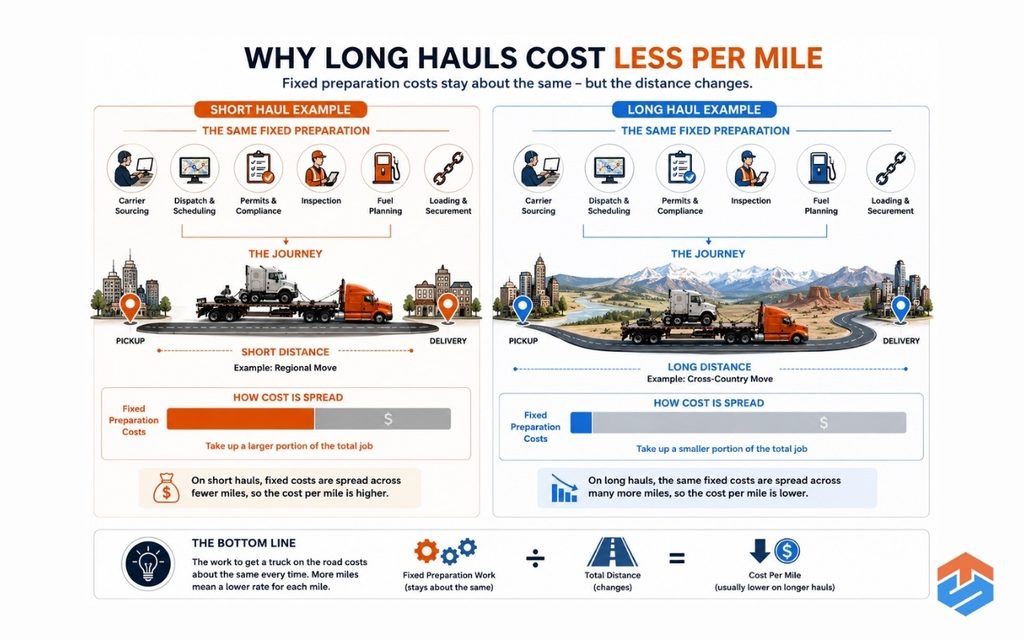
At first glance, it seems backwards: the longer the trip, the less each mile costs. This comes down to fixed overhead. The time to load, secure, and permit the truck – plus the driver getting to your vehicle – is roughly the same whether the haul is 200 miles or 2,000 miles. On a short move, that overhead gets spread across just a few miles, so the per-mile rate climbs. On a cross-country move, that same fixed cost becomes almost negligible. That’s why a 1,000-mile move typically runs $2,000–$2,500 – not double the cost of a 500-mile move.
What Actually Changes the Price
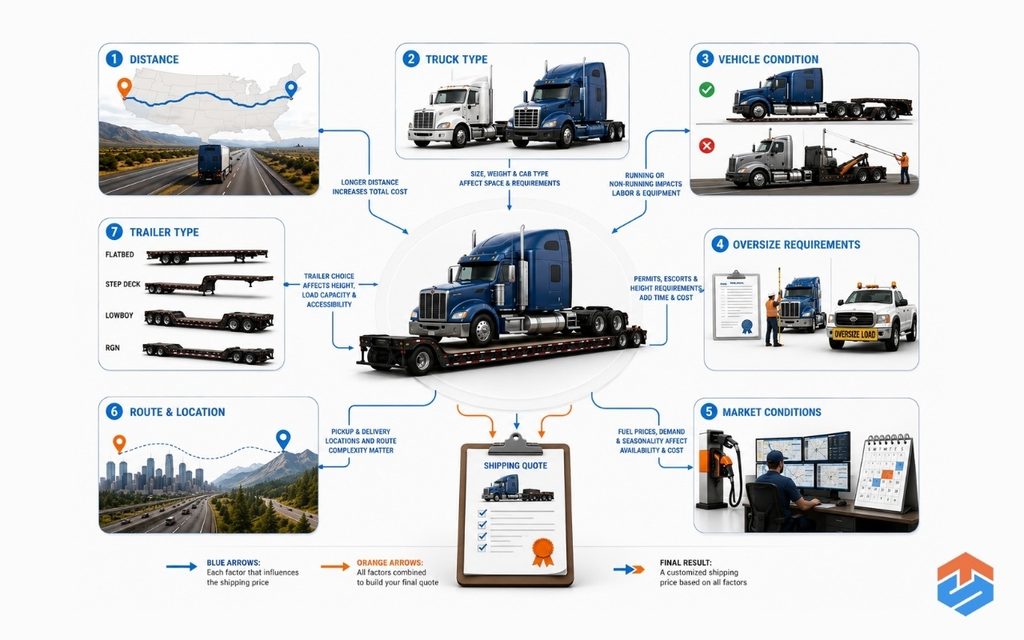
The baseline is distance. The factors determine where your quote falls within the range.
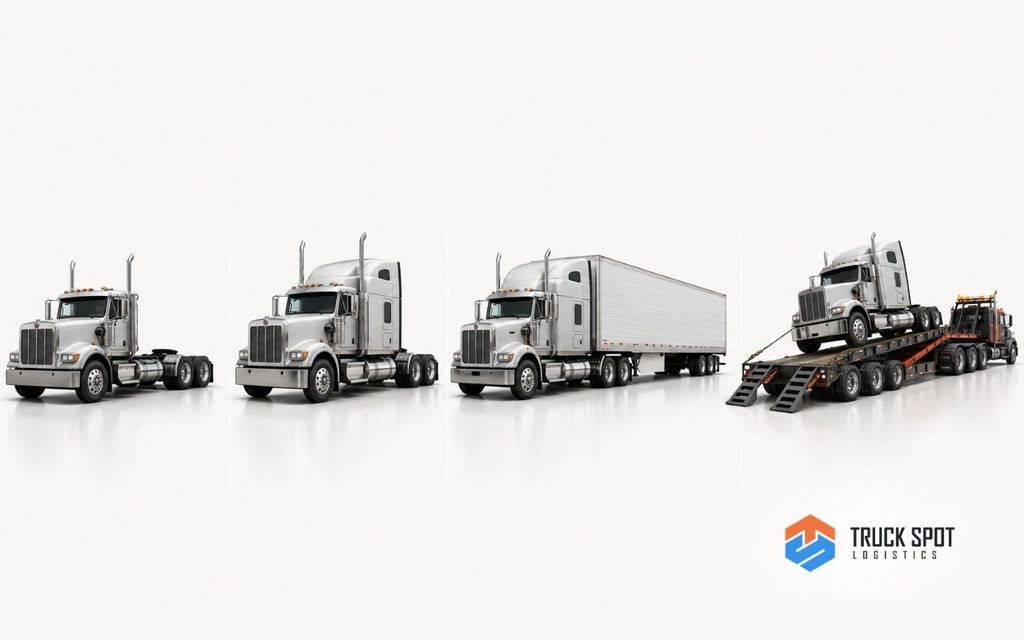
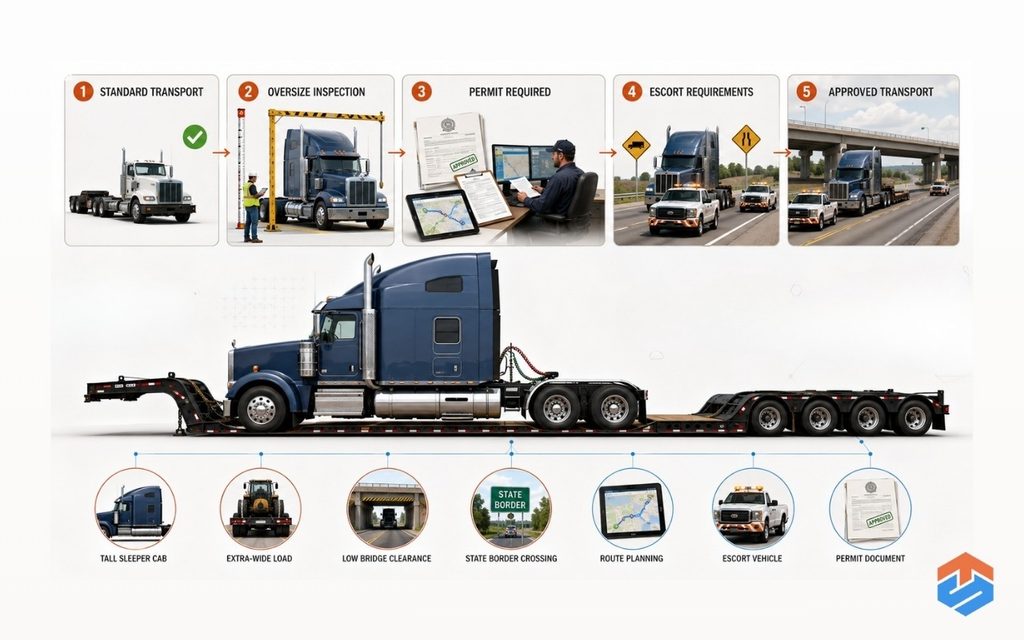
Day cab vs. sleeper cab. The single biggest cost driver. Short and low, a day cab loads onto a regular flatbed or step deck with little fuss. A loaded sleeper, particularly a tall condo sleeper, can take the load beyond regulations, and force the carrier to load onto a lowboy or RGN trailer and, in some cases, into permit territory: same route, very different bill.
Running or not. A truck that can move under its own power, be it an operator or a dolly, moves in and out of the trailer. A dead one will need to be winched, forklifted, or craned, which would add to your estimate. Non-running semis are one of the most common loads that carriers carry – repairs, repos, auction purchases – and are more expensive to load.
Just a tractor or tractor and trailer. The moving of the tractor only is simple. Throw in the trailer, and you will either have a second unit or an entire rig being hauled, which alters the trailer type and the cost. Make up your mind before asking for a quote.
Dimensions and weight. A Fueled Semi can transport hundreds of gallons of diesel fuel for thousands of pounds. But height and width are more significant than weight; they are the two factors that cause a load to tip over into oversize.
Route and access. Major metro-to-metro roads are competitive and less expensive per mile. Long-distance pickup, mountain line, and toll corridors are more expensive, just because carriers do not run the lines as frequently, and they do charge tolls.
For the full picture on moving oversized machinery, our guide to shipping heavy equipment out of state covers the permit and routing side in more depth.
How Semi Trucks Actually Get Moved
There’s no single method. The right one depends on the truck’s condition and how far it’s going.
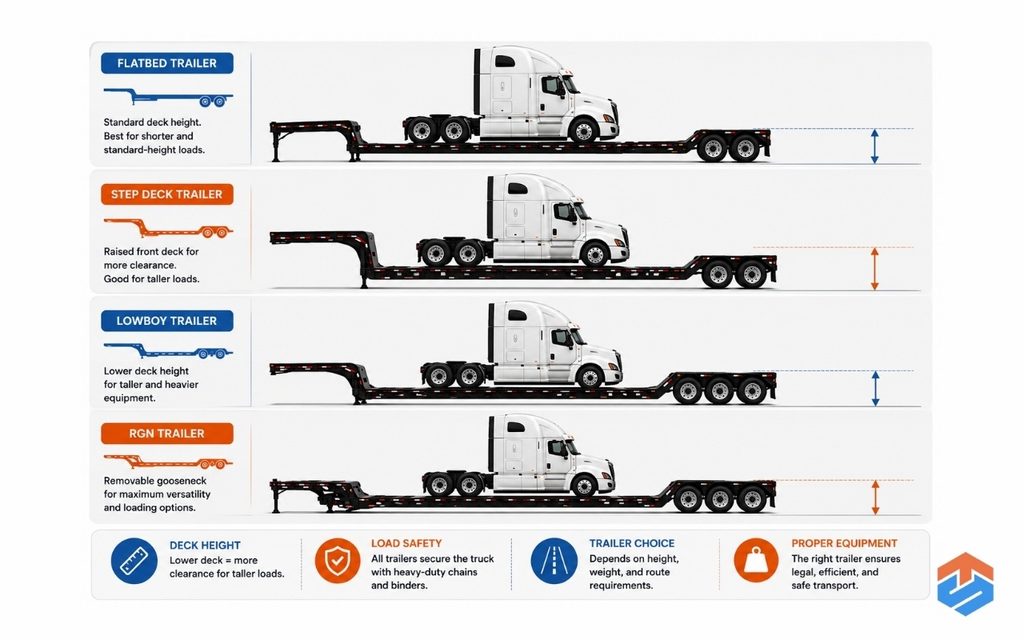
Flatbed, step deck, lowboy, or RGN. This is the standard for real transport. The truck is loaded onto a heavy-haul trailer and rides with its wheels off the road, which spares the drivetrain and tires on long trips. Short, low day cabs often fit a flatbed or step deck; tall sleepers usually need a lowboy or RGN to stay under height limits. If you’re new to this category, our overview of flatbed vehicle shipping explains how the loading works.
Driveaway. A hired CDL driver drives the truck to its destination. It’s the cheapest route for a fully operable, road-legal truck – but every one of those miles goes on the odometer and the drivetrain, and it does nothing for a truck that doesn’t run. Professional trailer transport exists precisely to avoid that wear on anything valuable or long-distance.
Tow and decking. For non-runners, or when a carrier is moving several cabs at once, trucks can be towed off the fifth wheel or “decked” – stacked and secured – on a specialized setup. It’s efficient for volume but calls for the right equipment and an experienced operator.
For lighter, faster single-unit moves, some owners look at hot shot transport, though full-size semis generally need the heavier trailers above.
When You Need an Oversize Permit
A semi on a trailer is generally taller and sometimes wider than when it is on the road. If the loaded dimensions exceed a state’s legal limits (typically height first, because of sleeper cabs), then the carrier will be required to pull overloaded loads and, in the widest or tallest loads, will need pilot (escort) cargoes. They’re both expensive and affect the route, as in some instances, the permitted loads may not be permitted to run on certain roads or at night.
These are not documents that you file; they are documents filed by a competent carrier. It’s easier to understand when a sleeper quote is high if you know the reason. For the regulatory details, the federal rules are published by the FMCSA that state oversize permitting is based upon.
Time: How long does it take?
Here are two clocks: the one to send off a carrier and the one on the road. It takes a few days to get a heavy haul truck for your lane, in particular if you have to use one of these units that are either tall or non-running. Transit time is about one to three days for regional moves (weather and permit permitting) and up to a week or so for coast-to-coast moves. Anything that promises a “hard date” before your truck has even been given to a driver is a guess. No confident fantasy is as good as a realistic window.
Ensuring Your Semi Truck is Road-Ready
Very little preparation is required to protect the truck and keep loading smooth.
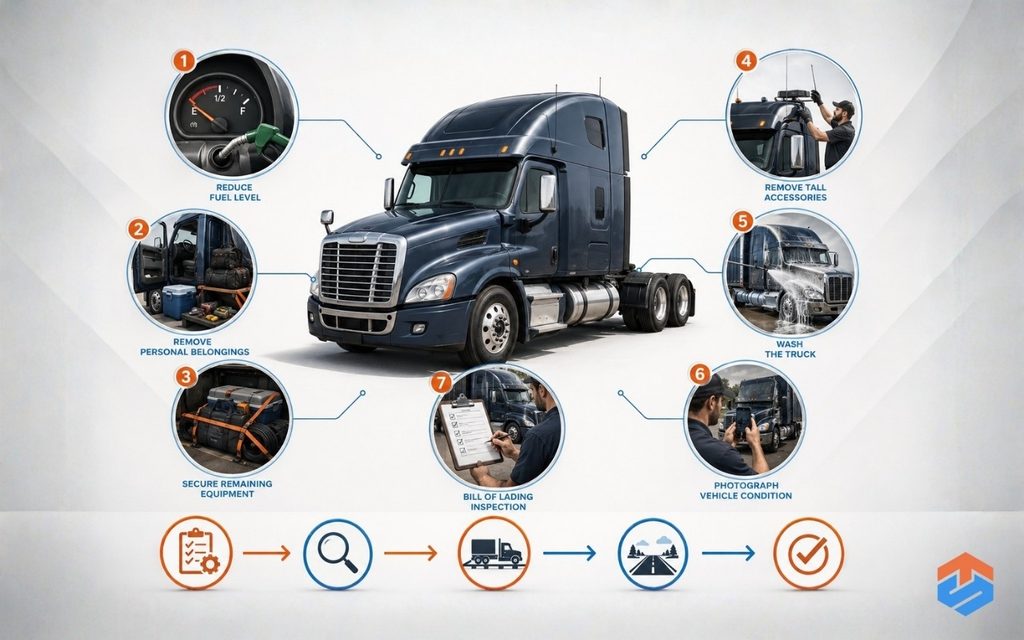
Drain the fuel to about 25% until it is up to about a 1/4 tank full. A full semi will have enough fuel to put weight on the vehicle during loading and may pose a fire hazard, so most carriers will request that you run it low. Remove personal belongings or loose equipment from around obstacles, or secure loose equipment before leaving. Take out aftermarket accessories – antennas, light bars, anything that can be knocked off or is raised above the chassis. Next, clean the outside, and take photos of each panel from all sides.
That last step matters more than people think. A clean, well-documented truck is your evidence if anything gets disputed later. Insist on a detailed Bill of Lading at pickup and check it against the truck at delivery – our piece on handling vehicle transport damage explains how those claims actually work.
Getting a Quote You Can Trust
Semi transport is a specialized corner of the industry, and the cheapest number on the page is often the least reliable. A lowball quote frequently means the load sits unassigned until the price quietly climbs, or it goes to whoever will take it regardless of equipment.
Get more than one quote and compare what’s actually included – permits, load assistance, insurance – not just the headline figure. Confirm the carrier or broker is legitimate before you commit; a quick USDOT lookup tells you whether they’re authorized to operate, and our guide to checking a USDOT number shows you where to look. It’s also worth understanding how auto transport billing and deposits work so a normal deposit doesn’t feel like a red flag when it isn’t one.
When you’re ready for a firm number on your specific truck, TruckSpot Logistics arranges semi and heavy equipment shipping nationwide, and our car shipping service covers everything lighter. Give us the cab type, the two ZIP codes, and whether it runs – that’s all it takes to get a real quote instead of a range.
Semi Truck Shipping Cost FAQs
How much does it cost to ship a semi truck?
Most domestic moves fall between $1,000 and $5,000. Where you land depends mainly on distance, whether it’s a day cab or a sleeper, and whether the truck runs. Carriers quote by the mile – about $1.75 to $3.50 – with the rate dropping on longer hauls.
How much does it cost to ship a semi truck 1,000 miles?
A 1,000-mile move typically runs around $2,000 to $2,500 for a standard running truck, based on a per-mile rate near $2.00 to $2.50. A tall sleeper, a non-running unit, or a remote pickup can push that higher.
What factors affect semi truck shipping cost the most?
Distance, cab type (day cab vs. sleeper), and operability move the needle most. Sleeper height can force a pricier trailer or oversize permits, and a non-running truck needs special equipment to load – both add cost.
Can you ship a non-running or inoperable semi truck?
Yes, and it’s one of the most common reasons people ship semis. It costs more because a dead truck has to be winched, forklifted, or craned onto the trailer instead of driving on. Tell the carrier upfront so they bring the right gear.
Do I need a permit to ship a semi truck?
Sometimes. A truck loaded on a trailer can exceed legal height or width – usually height, on sleeper cabs – which triggers oversize permits and occasionally escort vehicles. The carrier files the permits; you see it reflected in the quote.
Is open or enclosed transport used for semi trucks?
Semis use open heavy haul trailers (flatbeds, step decks, lowboys or RGNs). Proper loading and securement is the level of protection at this size, and enclosed transport is impractical.
Do you want to send just the tractor or both the tractor and the trailer?
Both will work, but make a decision beforehand when requesting quotes. To ship the single tractor is easier and cheaper; to ship the trailer as well requires a second trailer unit or a combined haul, which alters the equipment and costs.
How long does it take to move a semi truck?
Allow several days to coordinate the proper carrier, and about 1-3 days for moves within the region and up to about 1 week coast to coast. Non-running / oversize trucks may require longer scheduling as they require the use of certain equipment.
Is my semi truck insured during transport?
Reputable carriers carry cargo insurance, but coverage limits vary. Ask for the certificate, confirm it covers your truck’s value, and document the truck’s condition on the Bill of Lading so any claim has a clear baseline.
How do I get an accurate semi truck shipping quote?
Have three things ready: the pickup and delivery ZIP codes, the cab type, and whether the truck runs. Get more than one quote, compare what’s included rather than just the price, and verify the carrier’s USDOT authority before you book.