



7 MIN

Jun 7, 2023
The Challenges and Solutions of Cross-Country ATV Transport
Cross-country ATV transport is the process of shipping an all-terrain vehicle via a licensed carrier on an open or enclosed trailer across state lines or coast to coast. Shipping an ATV costs $300–$600 for regional routes under 500 miles and $600–$1,200 for cross-country transport using open transport. Enclosed transport costs 30–50% more and is recommended for high-value, show, or custom ATVs. Standard transit time is 3–7 days for mid-range routes and 7–14 days coast-to-coast. ATVs must be drained to one-quarter fuel tank, battery disconnected, and all loose parts secured before carrier pickup – carriers are not responsible for preparation.
The Journey of Cross-Country ATV Transport
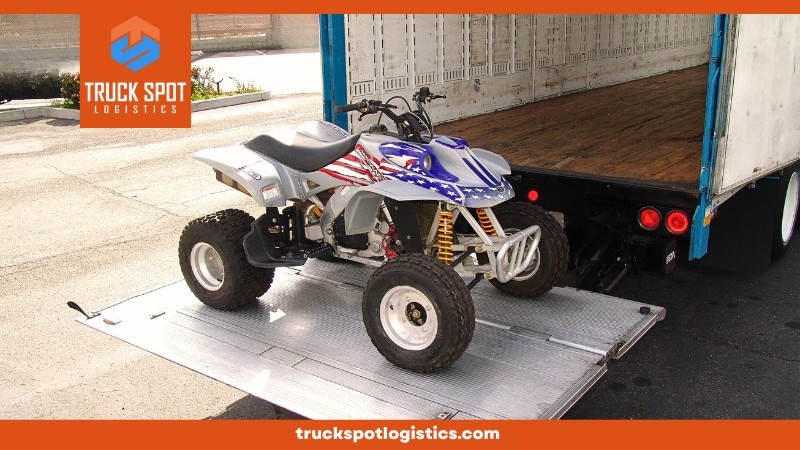
The transportation of All-Terrain Vehicles (ATVs) from coast to coast isn’t a task to be taken lightly. This adventure commences with thorough planning and culminates with the delivery of your ATV to its destination, all while ensuring its utmost safety and compliance with legal requirements.
Firstly, one must consider the nature of the ATV itself. These rugged, off-road machines are built for durability and performance, often bearing substantial weight and size. Their transport needs to cater to these specifics to prevent damage.
Next, there is a matter of selecting a reliable transport service. Just as you would compare the rates of hotels or flights, the comparison of ATV shipping rates is a vital part of the process. It’s crucial to find a transporter that delivers an ideal balance of cost-effectiveness and quality service. Platforms like TruckSpot Logistics serve as a valuable tool here, providing easy access to quotes from some of the best auto transport companies.
Legal compliance is another crucial element in this journey. Transporting ATVs across state lines means adhering to federal regulations set by organizations like the Federal Motor Carrier Safety Administration (FMCSA).
Finally, receiving your ATV marks the end of this journey. Some transport services provide tracking options, allowing you to stay updated about your vehicle’s whereabouts. Upon delivery, a thorough inspection of the ATV is highly recommended to ensure it arrived in the same condition it was sent off.
So, while the journey of cross-country ATV transport may seem complex, with meticulous planning, informed decisions, and a reliable comparison tool like TruckSpot Logistics, it can be a smooth and successful venture.
How Much Does Cross-Country ATV Transport Cost?
ATV shipping costs depend on distance, transport type, ATV size and weight, and season. The table below shows 2026 cost ranges for standard ATVs:
| Route | Distance | Open Transport | Enclosed Transport |
| Regional (under 500 miles) | – | $300–$600 | $450–$850 |
| Mid-range (500–1,500 miles) | – | $500–$850 | $750–$1,200 |
| Cross-country (1,500+ miles) | – | $700–$1,200 | $1,000–$1,700 |
| Florida → California | ~2,750 miles | ~$800–$1,100 | ~$1,100–$1,500 |
| Texas → New York | ~1,750 miles | ~$650–$950 | ~$950–$1,300 |
Factors that affect ATV shipping cost:
ATV size and weight: Standard sport ATVs (400–600 lbs) ship at base rates. Full-size utility ATVs, side-by-sides (UTVs), and models over 1,000 lbs take more trailer space and cost 15–30% more. UTVs with roll cages or wide tracks may require a dedicated flatbed rather than a shared multi-vehicle trailer.
Transport type: Enclosed transport costs 30–50% more than open. Open transport is sufficient for most ATVs. Enclosed is recommended for high-value, custom, or show ATVs where paint and bodywork protection justifies the premium.
Season: Peak shipping season (May–September) increases rates 10–20%. Off-season moves (November–February) typically offer the lowest available rates on most routes.
Route and delivery location: Rural or off-highway delivery adds $100–$250 due to limited carrier availability. High-demand corridors (Florida–Northeast, California–Texas) have more carriers and lower rates.
How to Prepare Your ATV for Cross-Country Transport
ATV preparation is the shipper’s responsibility – carriers secure the load to the trailer but are not responsible for damage caused by improperly prepared vehicles. Complete the following before carrier arrival:
For non-operational ATVs that cannot be ridden onto the trailer: notify the carrier before pickup. Winch loading adds $75–$150 to the base rate and must be arranged in advance.
Major Challenges and Their Solutions for ATV Shipping
As you navigate the journey of cross-country ATV transport, several challenges may arise. Let’s discuss these hurdles and provide practical solutions.
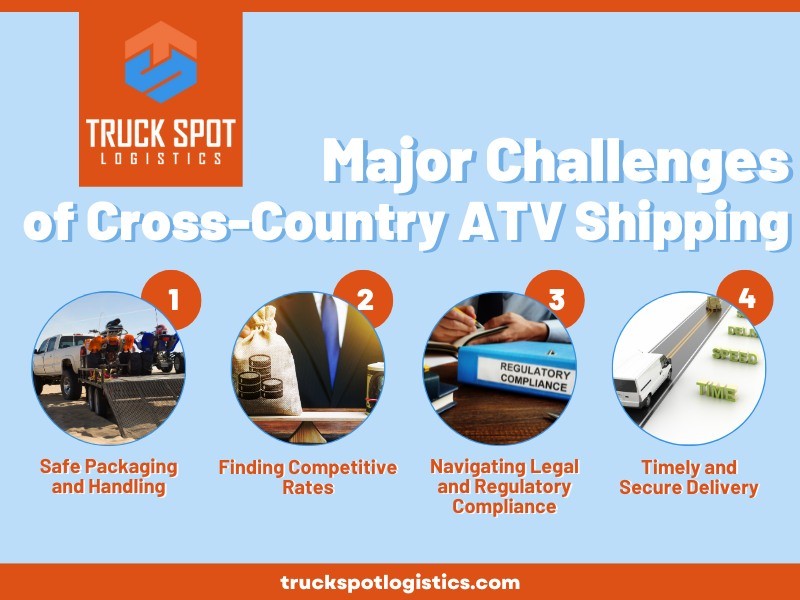
Challenge 1: Safe Packaging and Handling
ATVs are robust vehicles, designed to conquer rough terrains, and they often come with substantial weight and delicate parts. Safe packaging and handling, therefore, are of prime importance to prevent any damage during transit.
Solution: Consider hiring professional ATV transport services that are well-versed in the intricacies of handling ATVs. These professionals understand how to securely package and handle your ATV, ensuring its safe arrival at the destination.
Challenge 2: Finding Competitive Rates
With a myriad of ATV transport services available, finding a reliable one that doesn’t break the bank can be a daunting task.
Solution: Platforms like TruckSpot Logistics make this task easier by providing a comprehensive comparison of ATV shipping rates from the top ATV transport companies. This can save you significant time and effort and help you find the most cost-effective solution.
Challenge 3: Navigating Legal and Regulatory Compliance
Transporting ATVs across states or across the country means dealing with a complex web of state and federal laws. Non-compliance can lead to legal issues and penalties.
Solution: Ensuring your chosen transport service is compliant with Federal Motor Carrier Safety Administration (FMCSA) regulations is essential. Reliable transport services will have a Department of Transportation (DOT) number and an active FMCSA license. Tools like the FMCSA’s Safety and Fitness Electronic Records (SAFER) System can be used to verify this information.
Challenge 4: Timely and Secure Delivery
Ensuring your ATV reaches its destination securely and on time can be a significant concern, especially when dealing with cross-country transport.
Solution: Choose a company with a strong track record for on-time deliveries and secure handling. Checking the company’s reviews on platforms like the Better Business Bureau, Trustpilot or Transport Reviews can provide insights into their reliability.
By understanding these challenges and their solutions, you can ensure a more streamlined and hassle-free ATV transport experience.
The Value of Thorough Preparation for ATV Transport
Just like a successful off-road adventure, the smooth transportation of an ATV relies heavily on thorough preparation. Here’s why it’s so important:
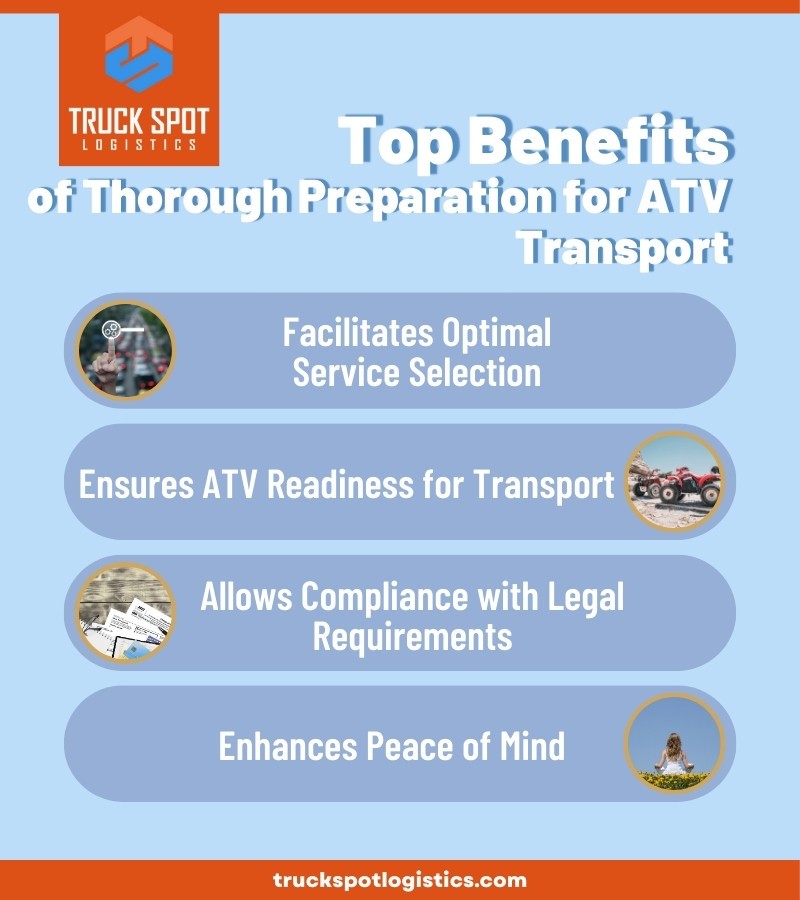
It’s clear that a little prep work goes a long way when it comes to cross-country ATV transport. Each step you take – from hunting down the best transport service to getting your ATV ready for the trip, and staying on top of all the legal stuff – takes you closer to a smooth and stress-free experience.
Cross-country ATV transport is straightforward with the right carrier and proper preparation. The three most common mistakes are: not documenting ATV condition on the Bill of Lading at pickup (which makes damage claims unenforceable), failing to remove accessories that shift during transport, and not verifying carrier FMCSA credentials before booking. For open transport, book 2–3 weeks before the required delivery date; during peak season (May–September), book 3–4 weeks out. Compare at least 3 itemized quotes from FMCSA-verified carriers before committing.
Truck Spot Logistics connects shippers with FMCSA-licensed carriers experienced in ATV and UTV transport, offering open and enclosed options with door-to-door service across all 48 contiguous states. Get a free quote with your ATV model and required delivery date.
FAQs
How much does cross-country ATV shipping cost?
Cross-country ATV transport costs $700–$1,200 for open transport and $1,000–$1,700 for enclosed transport on routes over 1,500 miles. Regional hauls under 500 miles cost $300–$600 open and $450–$850 enclosed. Full-size UTVs and side-by-sides cost 15–30% more than standard sport ATVs due to size and weight. Rates are 10–20% higher during peak season (May–September). Comparing 3 quotes from FMCSA-verified carriers reduces cost by 15–25%.
How long does cross-country ATV transport take?
Cross-country ATV transport takes 7–14 days from booking to delivery for routes over 1,500 miles. Mid-range hauls of 500–1,500 miles take 4–8 days. Regional routes under 500 miles take 2–4 days. Pickup window after booking is 1–5 business days. During peak season (May–September), pickup windows may extend to 5–7 days due to higher demand. Expedited pickup guaranteeing a specific date adds $100–$200 to the base rate.
Is open or enclosed transport better for ATV shipping?
Open transport costs 30–50% less than enclosed and is sufficient for most standard ATVs on typical routes. Enclosed transport is recommended for high-value, custom, or show ATVs where paint and bodywork protection justifies the premium – generally ATVs valued over $10,000–$15,000 or those with custom finishes. Open transport exposes the ATV to weather and road debris during transit. For ATVs used regularly in the field, open transport is the standard choice.
How do I prepare my ATV for shipping?
Clean the ATV so pre-existing damage is visible, then photograph all sides with a timestamp. Drain fuel to one-quarter tank. Disconnect the battery. Remove all loose accessories – racks, bags, lights – as they are not covered by carrier insurance. Disable aftermarket alarms. Tighten all body panels. Document all pre-existing damage on the Bill of Lading at pickup before signing. Non-operational ATVs requiring winch loading must be disclosed at booking – adds $75–$150 to the base rate.
Do I need special insurance to ship my ATV cross-country?
Your ATV is covered by the carrier’s cargo insurance during transit – minimum $100,000 per load for FMCSA-licensed carriers. However, this is total coverage across all vehicles on the trailer, not per unit. For ATVs valued over $10,000–$15,000, confirm per-unit coverage limits with the carrier before booking, or check whether your personal homeowner’s or powersports insurance policy provides supplemental coverage during transport. Personal items stored on the ATV are excluded from cargo coverage.
Can I ship a UTV or side-by-side the same way as an ATV?
Yes – UTVs and side-by-sides ship through the same carriers and process as ATVs, but cost 15–30% more due to larger dimensions and higher weight. Wide-track UTVs and models with roll cages may require a dedicated flatbed rather than a shared multi-vehicle trailer. Confirm with the carrier that they have UTV-specific tie-down equipment – standard ATV straps may not fit UTV frame geometry. Provide exact dimensions and weight at booking to avoid surcharges at pickup.