


12 MIN

Jun 5, 2026
How to Ship a Car to Another State: 2026 Moving Guide
Moving to another state brings enough stress on its own – packing boxes, organizing logistics, dealing with closing dates on a new house. You do not necessarily need to add a grueling 2,000-mile drive in your personal vehicle alongside a moving truck. The vast majority of people relocating more than 500 miles choose to ship their vehicle, and they often end up paying less than they initially anticipated.
Whether you are relocating for a new job, following family, or simply looking for a change of scenery, auto transport to another state solves a massive logistical headache. Here is exactly how the car shipping process works, from the initial cost breakdown to getting the keys handed back to you in your new driveway.
Before we dive in – here’s what matters most:
Quick links to navigate this article:
Should You Ship Your Car or Drive It? The Real Cost Comparison
This is the number one question people ask when planning an interstate move. Driving your car is almost always cheaper for shorter moves, but for distances over 500 miles, auto transport saves significant time and prevents heavy wear and tear on your vehicle.
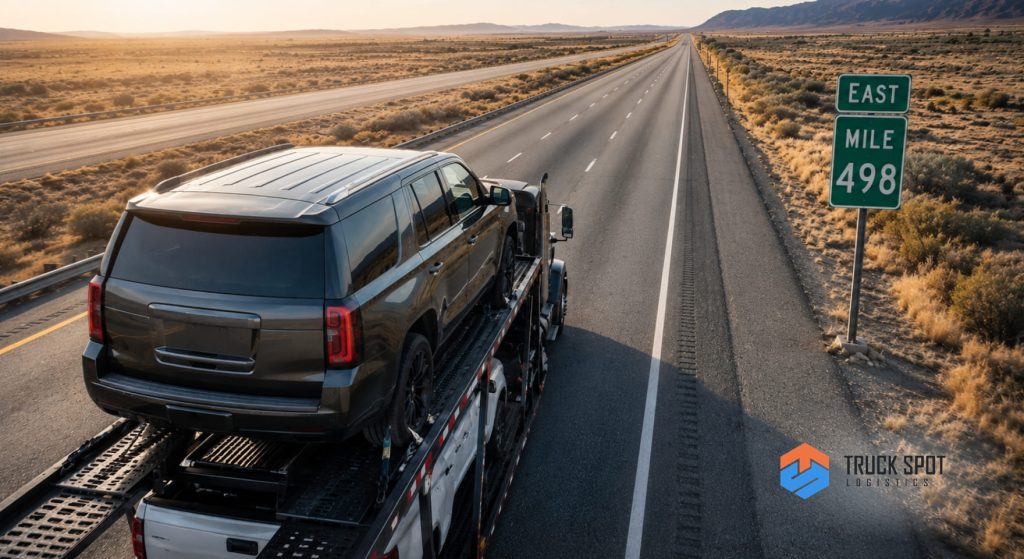
People consistently underestimate the hidden costs of a long road trip. Here is the real breakdown for a standard 1,000-mile move:
| Factor | Shipping Your Car | Driving Yourself |
| Average cost (1,000 miles) | $700–$1,000 | $300–$500 (fuel + food + hotel) |
| Time investment | 3–7 days (without you) | 2–3 full days of driving |
| Mileage added to your car | 0 miles | 1,000+ miles |
| Vehicle wear and tear | None | Tires, oil life, brakes |
| Personal fatigue | None | High |
| Road breakdown risk | None | Present |
The breakeven rule: If your move is over 500 miles and you do not have the time to drive or a second driver to split the wheel time, shipping wins on total value. When you factor in the IRS standard mileage rate – which accounts for depreciation and maintenance – that 1,000-mile drive actually costs your vehicle hundreds of dollars in lost resale value and mechanical wear.
From a Reddit r/cars thread on a 1,500-mile relocation: the overwhelming majority of commenters who shipped their cars agreed they only regretted one thing – not doing it for their previous moves. Driving multiple days through unpredictable weather while managing a stressful move is rarely worth the few hundred dollars saved.
How Much Does It Cost to Ship a Car to Another State?
Pricing in the auto transport industry operates on a load board system, meaning rates fluctuate based on supply, demand, and diesel prices. You can use standard distance tiers to estimate your budget before requesting a formal quote.

Current average rates for a standard sedan via open transport:
| Distance | Estimated Cost | Delivery Timeline |
| Up to 500 miles | $400–$700 | 1–3 days |
| 500–1,000 miles | $700–$1,000 | 3–5 days |
| 1,000–2,000 miles | $900–$1,200 | 5–7 days |
| 2,000+ miles (coast-to-coast) | $1,100–$1,600 | 7–10 days |
While distance is the biggest pricing factor, several other variables affect your final quote:
Vehicle size and weight. Transporting a large SUV or heavy-duty pickup truck costs $150 to $300 more than a compact sedan because it occupies more space and weight capacity on the trailer.
Trailer type. Opting for an enclosed trailer to protect a luxury or classic vehicle will increase your cost by 30% to 50% compared to standard open transport.
Seasonality. According to the U.S. Census Bureau, the majority of interstate moves happen during the summer. This peak season (June through August) drives auto transport prices up by 20% to 30%.
Delivery method. Standard door-to-door shipping is the most convenient option, but if you live on a street where a semi-truck cannot safely maneuver, meeting the driver at a nearby large parking lot – or opting for terminal-to-terminal shipping – can save $100 to $200. See our door-to-door auto transport guide for more detail.
Schedule flexibility. Giving the broker a 3-to-5-day flexible pickup window allows them to negotiate better rates with carriers on the load board, directly reducing your cost.
Want a precise number for your route and vehicle? Use our car shipping cost calculator for an instant estimate.
When Should You Book Your Car Shipment During a Move?
One of the most common mistakes people make is mismanaging the shipping timeline relative to their move. Your car shipment schedule needs to be integrated with your overall moving plan.
The ideal booking window: Start requesting quotes and finalize your booking 4 to 6 weeks before your desired pickup date. At an absolute minimum, allow 2 to 3 weeks. If you are moving during peak summer months, push that to 5 to 6 weeks in advance. Booking within one week of your move forces the broker to raise the bounty on the dispatch board to attract a driver quickly, significantly inflating your final cost.
Coordinating with your move:
What if your moving dates change? Real estate transactions are unpredictable. If your closing date shifts, call your broker immediately. Most reputable brokers will allow you to adjust your pickup window without any financial penalty, provided a specific carrier driver has not already been officially dispatched to your location. Early communication solves this problem every time.
Step-by-Step: How the Car Shipping Process Works
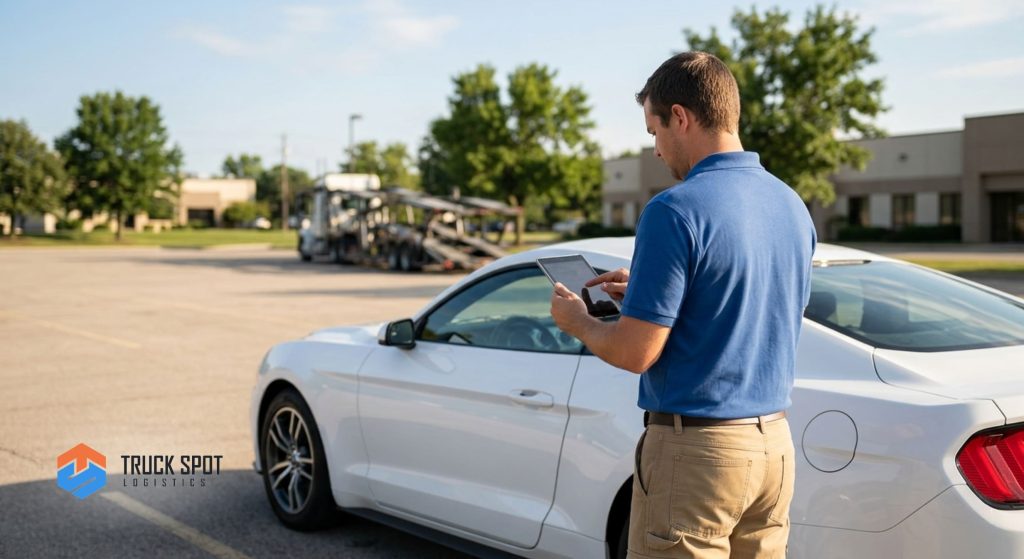
If you have never shipped a vehicle before, the logistics can feel unclear. The process is straightforward once you understand the sequence.
Step 1: Get quotes and compare. Request quotes from at least 2 to 3 different brokers on the same day. Auto transport pricing is based on a live load board, meaning rates fluctuate daily. Getting quotes simultaneously ensures you are comparing current, accurate market prices – not stale estimates from last week.
Step 2: Vet the company. Never book without verifying credentials. Check any broker or carrier through the FMCSA SAFER system. Confirm their operating authority reads “Active” and that the broker holds the federally required $75,000 surety bond. Read our car shipping scams guide before handing over any deposit.
Step 3: Gather your documents. You will need your driver’s license, vehicle registration, and title (or lease agreement for leased vehicles). Having these ready before the driver arrives prevents delays at pickup.
Step 4: Prepare the car for transport. A clean, prepped vehicle ensures a smooth pickup and protects you legally. See the full preparation checklist in the section below.
Step 5: Pickup and signing the BOL. When the driver arrives, both of you will inspect the exterior of the vehicle together. Take 360-degree timestamped photos before loading. You will then sign the pickup Bill of Lading (BOL), which is the official condition report and your primary legal protection throughout the shipment.
Step 6: Track your shipment. Your broker or carrier will provide the driver’s direct contact information. Checking in every couple of days keeps you informed on the delivery window and lets you plan your schedule accordingly.
Step 7: Delivery and final inspection. Do not sign the delivery BOL until you have thoroughly inspected the car in good lighting. If you find any new damage, write it on the BOL before signing. Pay the driver the remaining balance – typically required in cash or via cashier’s check.
What Documents Do You Need to Ship a Car to Another State?
Many moving guides skip past the paperwork details, but arriving at pickup without the right documents can cause the carrier to refuse loading. Here is exactly what you need:
| Document | Required? | Details |
| Driver’s license | ✅ Mandatory | Used to verify the owner’s identity at pickup |
| Vehicle registration | ✅ Mandatory | Confirms the vehicle is legally registered |
| Vehicle title | ✅ If owned outright | Lease agreement required instead for leased vehicles |
| Proof of insurance | ✅ Recommended | Carrier may request your personal coverage details |
| Lien release / lender approval | ✅ If financed | Some lenders require written permission for interstate transport |
A note on financed vehicles: If you are currently paying off an auto loan, call your bank or lender before booking. Ask directly whether there are any restrictions on interstate transport. Most lenders have no objection but may require formal written notification of your new out-of-state address and shipping details. This call takes five minutes and prevents a serious delay.
Not sure what your carrier’s insurance covers? Read our car shipping insurance guide before handing over the keys.
How to Prepare Your Car for Interstate Shipping
Preparing your vehicle properly protects it during transit, ensures compliance with Department of Transportation regulations, and speeds up the pickup process. Complete this checklist in the 24 hours before the driver arrives:
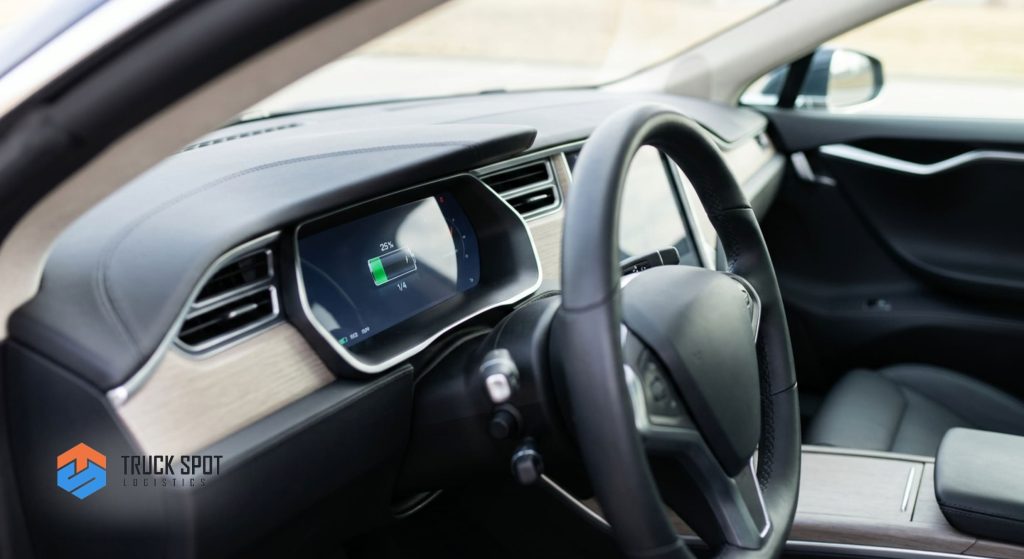
For the complete vehicle preparation process, see our car shipping preparation checklist.
Shipping Two Cars During a Move – Is It Cheaper?
Relocating a family with two or more vehicles creates a real logistical problem. Driving both cars separately requires two drivers, two separate road trips, and double the fatigue. Leaving a car behind means organizing a separate pickup trip later.
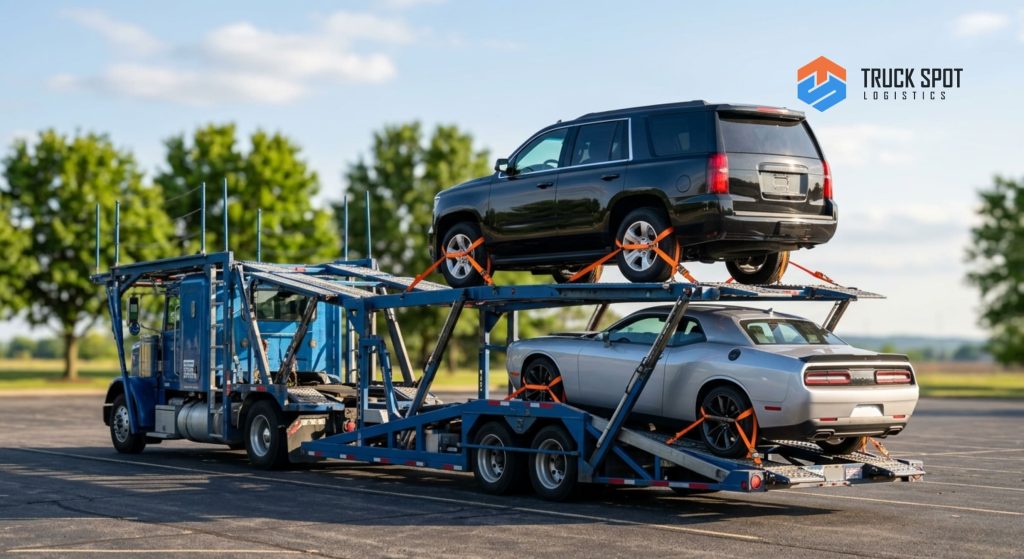
Can you ship both cars, and is there a discount?
Yes – shipping two vehicles is entirely possible and common. Whether both cars can go on the same trailer depends on the specific carrier’s route and available space. Many brokers offer a multi-vehicle discount when you book both cars simultaneously, typically $50 to $150 off the total.
Practical tip: Always book both vehicles through the same broker. Coordinating pickup and delivery windows across two separate companies during a move adds unnecessary complexity you do not need.
The hybrid approach: A popular strategy for couples moving out of state is shipping one vehicle while the other partner drives the second. The smaller or lower-mileage car gets shipped via open transport, while the larger SUV – packed with fragile personal items – is driven. This balances cost savings with logistics convenience.
Get a multi-vehicle quote and ask about bundled pricing for two cars on the same route.
Open vs. Enclosed Transport for a Move – Which Makes Sense?
When you request a quote, you will choose between open and enclosed transport. Keep the decision practical based on what you drive.
For a standard daily driver – a Honda Accord, Toyota RAV4, Ford F-150, or similar – open transport is the right choice. Your car will be exposed to the elements and road dust, exactly as it would be if you drove it yourself. Open transport represents 90% of the industry’s capacity and is the most cost-effective option for residential moves.
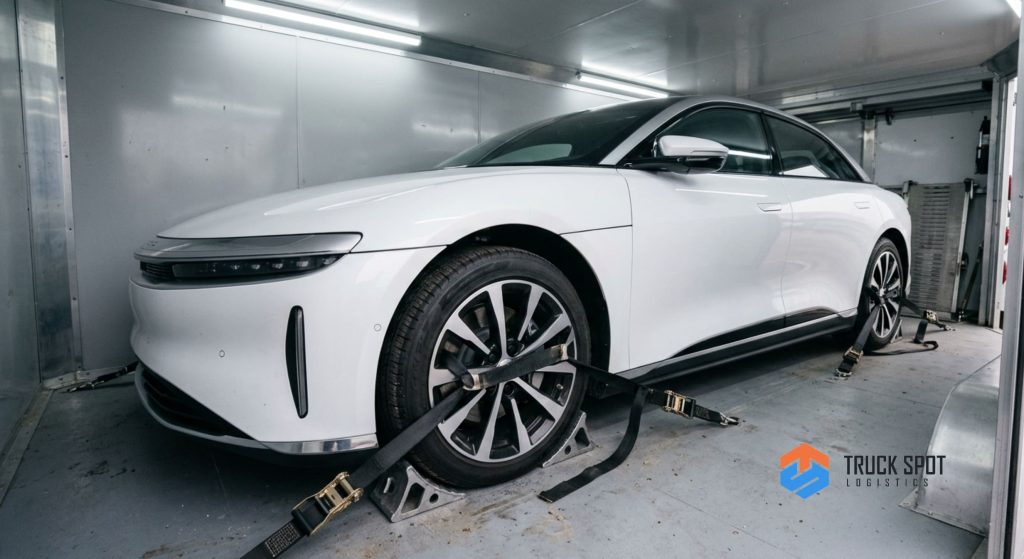
Pay the 30–50% premium for enclosed transport only if:
Moving to a new state is already an expensive undertaking. Do not overpay for enclosed transport if your daily commuter does not strictly require it. For a detailed side-by-side comparison, see our open vs. enclosed auto transport guide.
Conclusion
Shipping your car when moving to another state is not complicated – but it rewards people who plan ahead. The customers who pay the least and have the smoothest experience are the ones who book 4 to 6 weeks out, prepare their vehicle properly, verify the carrier’s credentials before paying a deposit, and inspect the car carefully before signing the Bill of Lading at delivery.
For any move over 500 miles, the math almost always favors shipping over driving when you account for the full cost: fuel, hotels, meals, vehicle wear, and the value of your own time during an already stressful relocation. The flat rate of open auto transport is not just a convenience – it is often the financially rational choice.
The most important decision is choosing a verified, legitimate company. Check their MC number on the FMCSA SAFER database, confirm active operating authority, and never pay a large deposit before a carrier is assigned.
Get your free car shipping quote from Truck Spot Logistics and lock in your rate before your moving window fills up.
FAQ About How to Ship a Car to Another State
How much does it cost to ship a car to another state?
Shipping a car to another state typically costs $400–$700 for distances under 500 miles and $1,100–$1,600 for cross-country moves over 2,000 miles. Prices depend on vehicle size, transport type (open vs. enclosed), season, and route demand. Open transport is the standard and most affordable option for most residential moves.
How long does it take to ship a car to another state?
Transit time ranges from 1–3 days for moves under 500 miles to 7–10 days for coast-to-coast shipments. Add 1–3 days for carrier dispatch after booking. Busy summer months and rural delivery locations can extend these timelines. Carriers provide estimated windows – exact delivery dates cannot be guaranteed.
How far in advance should I book car shipping when moving?
Book 4–6 weeks before your desired pickup date. During peak summer moving season (June–August), book at least 5–6 weeks out to avoid surge pricing. Booking within one week of your move forces brokers to raise the load board bounty to attract a carrier quickly, significantly increasing your final cost.
What documents do I need to ship a car to another state?
You need a valid driver’s license, current vehicle registration, and the vehicle title or lease agreement. Proof of insurance is recommended. If the car has an active loan, confirm with your lender that interstate transport is permitted – some lenders require written notification before the vehicle crosses state lines.
Can I leave personal items in my car when shipping it?
Most carriers prohibit personal items or allow only lightweight belongings under 100 lbs stored in the trunk below the window line. Items left in the car are not covered by the carrier’s cargo insurance. If the vehicle is overweight due to packed belongings, the carrier may refuse pickup or charge an additional fee.
Should I ship my car or drive it when moving to another state?
For moves over 500 miles, shipping is often the better financial choice when you factor in fuel, hotels, meals, and vehicle wear and depreciation. Driving saves money on shorter moves, especially with a second driver. For cross-country relocations, the total cost of a multi-day drive quickly approaches the flat rate of open auto transport.
Do I need to be present at pickup and delivery?
Yes, either you or a designated adult over 18 must be present at both pickup and delivery to sign the Bill of Lading. You can authorize a trusted representative – a neighbor, family member, or property manager – if you cannot be there personally. Notify your broker in advance if someone else will be signing.
What happens if my car is damaged during shipping?
Document any new damage immediately at delivery before signing the Bill of Lading. Photograph the damage with the transport truck visible in the frame. Note the damage in writing on the delivery BOL and call your broker the same day. Claims are filed against the carrier’s cargo insurance – not the broker – and typically take 30–90 days to resolve.
Is it safe to ship a car to another state?
Professional auto transport is a federally regulated industry. All carriers operating legally in the U.S. must be registered with the FMCSA and carry active cargo insurance. Verify any carrier’s DOT number and operating authority through the FMCSA SAFER database before booking. The vast majority of interstate vehicle shipments arrive without damage.