



7 MIN

Feb 7, 2024
Winter Motorcycle Care 101: TruckSpot Logistics for Your Motorcycle Needs
Winter is hard on motorcycles – cold temperatures drain batteries, thicken fluids, and corrode metal. Whether you’re storing your bike until spring or riding through the cold months, the right preparation makes all the difference.
This guide covers everything: maintenance essentials, storage best practices, safe winter riding, and how TruckSpot Logistics can move your motorcycle safely when the roads aren’t rideable.
We’ll cover essential maintenance tips, winter storage considerations, and even how to find reliable motorcycle transport for long-distance relocations using TruckSpot Logistics. So, bundle up, grab a mug of hot cocoa, and let’s conquer winter together!
The Chilling Reality: Winter’s Impact on Your Motorcycle
Understanding what winter does to your bike helps you prioritize the right maintenance. Here are the five main threats:
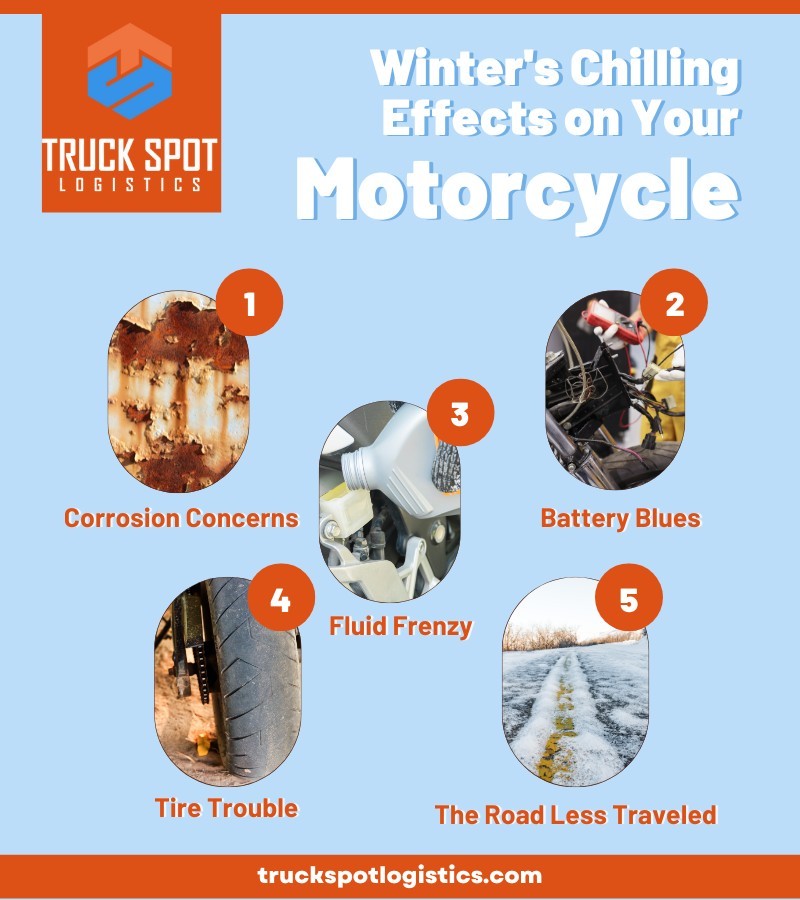
Winter’s impact on your motorcycle is real, but it doesn’t have to spell doom and gloom. By understanding the challenges and taking proactive steps with winter motorcycle care, motorcycle maintenance, and the right gear, you can ensure your two-wheeled companion emerges from the cold season ready to hit the road again.
Taming the Beast: Essential Winter Motorcycle Care Maintenance Tips
Whether you’re storing the bike or continuing to ride, these maintenance steps protect your motorcycle through the cold months.
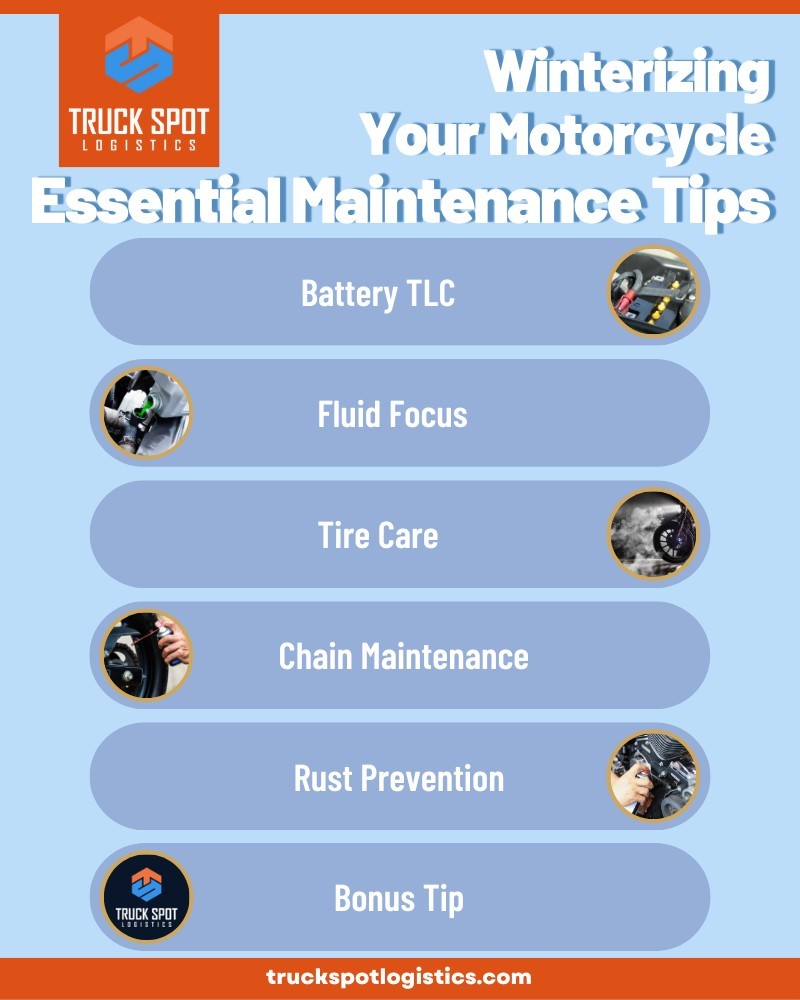
Bonus Tip: For those planning longer relocations during winter, remember TruckSpot Logistics can be your ally! Find reliable and safe transport for your motorcycle through their network of pre-licensed and insured auto transport companies. Let them handle the logistics while you focus on conquering the winter elements or enjoying your new location.
Storing Your Steed for Winter: A Cozy Den for Your Bike
As winter’s icy grip tightens, many motorcycle enthusiasts choose to tuck their beloved steeds away for a cozy hibernation. But before you relegate your bike to the corner of the garage, turning it into a dusty relic, remember, proper winter motorcycle storage is crucial for its well-being come spring. Here’s how to create the perfect winter den for your motorcycle, ensuring it emerges happy and healthy when the riding season returns:
By following these simple tips, you can transform your garage or storage space into a cozy den for your motorcycle, ensuring it emerges from winter as happy and healthy as ever. Remember, a little preparation goes a long way, and your bike will thank you for it come spring when you’re ready to hit the road again!
Hitting the Road (Safely): Winter Riding Tips for the Brave
The wind whips through your helmet, snowflakes swirl around you, and your visor battles the frost – winter motorcycle riding isn’t for the faint of heart! But for those who crave the thrill of the open road year-round, embracing the cold can be an exhilarating experience. However, before you strap on your helmet and defy the elements, remember: winter riding demands extra caution and preparation. Here are some essential winter riding tips to keep you safe and sound on your frosty adventures:
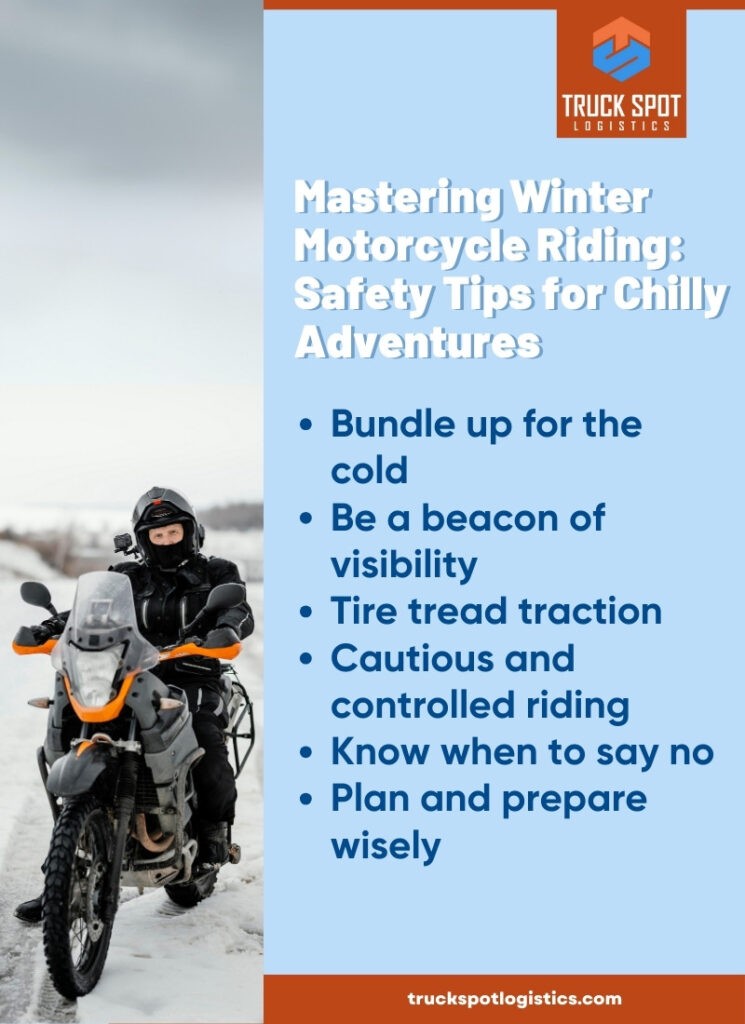
Winter riding can be a rewarding and exhilarating experience, but it requires respect for the elements and proper preparation. By following these winter riding tips, investing in the right cold weather motorcycle gear, and making informed decisions, you can ensure a safe and enjoyable journey on two wheels, even when the temperatures plummet. So, embrace the challenge, gear up, and hit the road – winter awaits your adventurous spirit!
TruckSpot Logistics: Your Ally for Winter Motorcycle Transport
If winter makes riding impractical or you need to relocate your motorcycle, professional transport is the safest option. TruckSpot Logistics connects you with pre-licensed, insured carriers across the entire USA.
For winter transport, enclosed trailers are the recommended option – they protect your bike from snow, ice, road salt, and temperature fluctuations during transit. TruckSpot Logistics makes it easy to compare quotes from multiple carriers, review their insurance coverage, and book with confidence.
Whether you’re shipping south for the winter season or relocating for work or personal reasons, TruckSpot Logistics handles the logistics so you don’t have to manage a trailer in icy conditions. See our full Motorcycle Shipping Guide for step-by-step instructions on preparing your bike for transport.

So, ditch the trailer hitch woes and embrace the ease of professional motorcycle transport this winter. Partner with TruckSpot Logistics for a stress-free experience, and don’t forget to explore our treasure trove of resources, including our insightful “How To Ship Motorcycle Guide” for additional tips and tricks.
As the snowflakes swirl and the wind howls, remember: winter doesn’t have to spell the end of your motorcycle adventures. Whether you choose to store your steed for a cozy hibernation or brave the elements with the right preparation, this guide has equipped you with the knowledge and essential tips to navigate the cold season with confidence.
Remember, winter motorcycle care, proper maintenance, and adapting your riding style are key to a smooth and enjoyable experience. Invest in the right cold weather motorcycle gear, plan your rides carefully, and don’t be afraid to seek help from professionals like TruckSpot Logistics for winter motorcycle transport.
So, embrace the challenge, bundle up, and hit the road (safely, of course!). Remember, spring is just around the corner, and with the right preparation, your motorcycle will be ready to roar back to life, ready for new adventures.
Until then, happy riding (or storing!), and stay warm, fellow motorcycle enthusiasts!
FAQs
How do I protect my motorcycle battery in winter?
Remove the battery and store it indoors at room temperature, connected to a smart battery tender. Cold temperatures reduce a battery’s effective capacity by up to 50%, and a discharged battery can freeze and crack in sustained sub-freezing conditions. A smart tender maintains the correct charge level without overcharging, extending battery life significantly. If you plan to start the bike occasionally during winter, keep the battery installed but still connected to a tender between rides.
What type of tires should I use for winter riding?
For riding in wet or cold conditions above freezing, choose tires with a minimum tread depth of 3/32 inch and a compound rated for low temperatures – many summer tires harden significantly below 45°F (7°C) and lose grip. For roads with regular ice or compacted snow, motorcycle studded tires provide substantially better traction. Avoid all-season car tire logic – motorcycle tires are different, and there is currently no true all-season motorcycle tire on the US market. Always check that your tire pressure is at the correct PSI before each cold ride.
What cold weather motorcycle gear is essential?
The minimum essential cold weather gear includes: a waterproof, windproof outer jacket and pants; a moisture-wicking base layer to manage sweat; insulated, waterproof gloves or heated glove liners; waterproof boots with ankle support; and a helmet with a Pinlock or similar anti-fog visor insert. For temperatures below 40°F (4°C), heated gear (jacket liner, glove liners, or grip warmers) significantly improves safety by preventing numbness and maintaining dexterity. The NHTSA also recommends high-visibility outerwear and reflective elements for all winter riding.
When should I use a fuel stabilizer?
Add fuel stabilizer any time your motorcycle will sit unused for 30 days or more. Standard gasoline begins breaking down after 30 days, and ethanol-blend fuels (E10, E15) can degrade in as little as 3 weeks, absorbing moisture and leaving varnish deposits that clog carburetors and injectors. Fill the tank completely before adding stabilizer – a full tank limits the air space where condensation forms. After adding stabilizer, run the engine for 5–10 minutes to ensure the treated fuel circulates through the entire fuel system, including the carb or injector rail.
How often should I check tire pressure in winter?
Check tire pressure before every ride during winter. Tire pressure drops approximately 1 PSI for every 10°F (5.6°C) decrease in ambient temperature. A motorcycle that sat overnight in 30°F temperatures will have measurably lower pressure than when it was last ridden in 60°F weather. Under-inflated tires compromise cornering stability, increase braking distance, and wear unevenly. Always check pressure when the tires are cold – a pressure reading taken after riding will be higher than the actual cold pressure.
What are the benefits of professional motorcycle transport in winter?
Professional motorcycle transport in winter eliminates the risks of trailering in snow and ice, avoids salt and road debris exposure on your bike during a long haul, and removes the need for you to drive in hazardous conditions. Enclosed carriers provide full protection from weather, temperature fluctuations, and road debris. Licensed and insured carriers also carry liability coverage for any damage that occurs during transit. For relocations over 300 miles during winter months, professional transport is generally safer, less stressful, and often more cost-effective than DIY trailering.
What factors matter most when choosing a motorcycle transport company?
The five most important factors are: (1) active USDOT license and valid operating authority – verifiable at the FMCSA website; (2) adequate cargo insurance, with limits that cover your bike’s full replacement value; (3) enclosed transport availability for winter shipments; (4) verifiable customer reviews, particularly around damage claims handling; and (5) transparent, itemized pricing with no hidden fees. TruckSpot Logistics pre-screens all carriers on its platform for licensing and insurance, and allows you to compare quotes and reviews before booking.
Can I store my motorcycle outside in winter?
Outdoor winter storage is significantly harder on your motorcycle than indoor storage and is not recommended if an indoor option is available. If outdoor storage is your only option: use a high-quality, waterproof, UV-resistant motorcycle cover that fits securely; apply a corrosion inhibitor spray to all metal surfaces; keep the battery on a tender (or remove it if no power is available); and elevate the bike on its center stand or paddock stands to reduce tire flat-spotting. Inspect the bike at least monthly for moisture ingress, pests, or cover damage. Expect more corrosion maintenance when the riding season resumes.