




8 MIN

May 10, 2023
Auto Transport from the Dealerships: A Comprehensive Guide
Auto transport from a dealership is the process of shipping a newly purchased vehicle from the seller’s location to the buyer using a licensed carrier – without the buyer having to drive it or arrange delivery through the dealership. Auto transport from a dealership is the process of shipping a newly purchased vehicle from the seller’s location to the buyer using a licensed carrier – without the buyer having to drive it or arrange delivery through the dealership. Based on carrier quotes as of Q1 2026, shipping a car from a dealership costs $500–$1,500 for most CONUS routes depending on distance and transport type. For new or high-value vehicles, enclosed transport ($1,000–$2,200 cross-country) provides protection from road debris and weather that open transport does not. Dealers typically coordinate the carrier pickup – confirm with the dealer whether pickup access is restricted or requires advance scheduling before booking.
The strategies and advice in this video are designed to enhance your overall car buying experience, whether you’re dealing with a dealership or bidding at an auction. Keep these tips in mind as they can be a game-changer in making smart, informed decisions in your vehicle purchasing journey.
Let’s get started!
Auto Transport Options from a Dealership
So, you’ve picked out the perfect car at the dealership, and now you need to get it home. With so many auto transport options out there, making the right choice can be tough. Don’t worry, we’ve got you covered. Let’s break down the most common dealership auto transport options to help you make the best decision.
Dealership auto transport uses the same carrier network as standard private transport. The choice of method depends on vehicle value, timing requirements, and budget.
| Transport Option | Cost (Cross-Country) | Best For | Key Consideration |
| Open transport | $900–$1,500 | Standard vehicles, everyday cars | Vehicle exposed to weather and road debris |
| Enclosed transport | $1,500–$2,200 | New, luxury, classic, or high-value vehicles | 40–60% more than open; full weather protection |
| Door-to-door | +$100–$200 vs terminal | Maximum convenience | Carrier picks up from dealer, delivers to home |
| Terminal-to-terminal | Base rate | Cost savings | You arrange transport to/from terminal locations |
| Expedited shipping | +$150–$300 | Urgent delivery | Guarantees specific pickup date within 1–2 days |
New vehicles from dealerships: For brand-new cars with zero or low miles, enclosed transport is strongly recommended – a single paint chip from road debris on a new vehicle is typically not covered under dealer warranty. The cost difference ($400–$700 extra for cross-country enclosed vs open) is substantially less than a paint correction or warranty claim dispute.
Dealer pickup coordination: Most dealerships have experience with carrier pickups and can accommodate a transport driver. However, some high-volume dealers or those with restricted lot access require advance scheduling. Confirm with the dealer’s transport coordinator before booking – provide the carrier company name and expected pickup window at least 24 hours in advance.
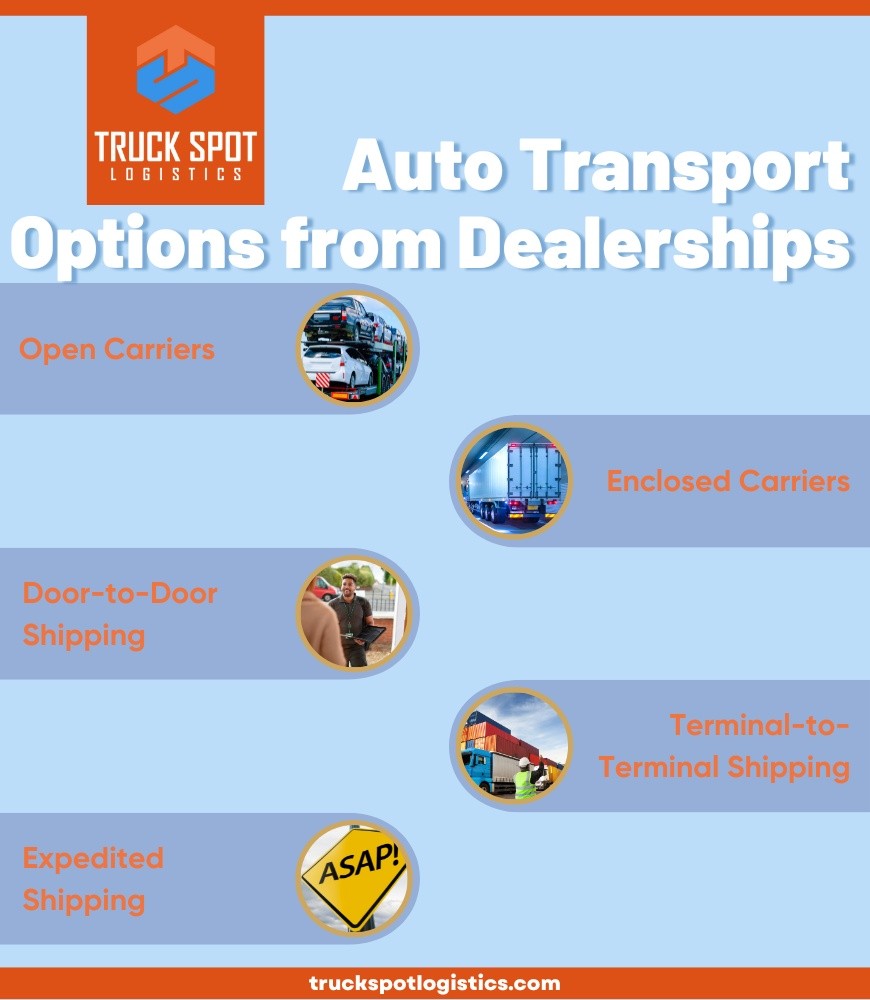
Open vs Enclosed Carriers
Open Carriers
Open carriers are the go-to choice for most folks. Your car will be loaded onto a big, multi-level trailer along with other cars, and it’ll be exposed to the elements during its journey. While open carriers are the most affordable option, keep in mind that your car might get a little dusty or dirty along the way. This method works well for everyday cars that can handle a bit of weather.
Enclosed Carriers
If you’ve splurged on a luxury ride, a classic beauty, or a sleek sports car, you might want to consider an enclosed carrier for some extra TLC. These carriers have trailers that are completely covered, so your car will be protected from the elements and any road debris. Sure, enclosed carriers can be pricier, but they’re worth it for those who want their prized wheels arriving in mint condition.
Door-to-Door vs Terminal-to-Terminal Shipping
Door-to-Door Shipping
Looking for the ultimate in convenience? Door-to-door shipping is the way to go. With this option, the auto transport company will pick up your car straight from the dealership and deliver it right to your front door (or any other location you choose). While it might cost a bit more than other options, the hassle-free experience is hard to beat.
Terminal-to-Terminal Shipping
If you’re trying to save some cash, terminal-to-terminal shipping is a solid choice. With this option, you’ll drop off your car at a designated terminal near the dealership and then pick it up at another terminal close to your final destination. While it’s easier on your wallet, keep in mind that you’ll need to figure out transportation to and from the terminals. Plus, your car might be parked in an outdoor lot until you’re ready to pick it up.
Expedited Shipping
Need your new ride ASAP? Expedited shipping might be the perfect solution. This service fast-tracks your car’s transport, so it arrives at your destination as quickly as possible. While expedited shipping comes with a higher price tag, it’s a game-changer when you need your car in a hurry.
By understanding these dealership auto transport options, you’ll be well-equipped to choose the best method for getting your new car safely to its new home.
How Much Does It Cost to Ship a Car from a Dealership?
Dealership auto transport costs follow the same pricing structure as standard car shipping, with one additional consideration: new vehicles justify enclosed transport more often than used vehicles.
| Route | Open Transport | Enclosed Transport |
| Regional (under 500 miles) | $500–$800 | $800–$1,300 |
| Mid-range (500–1,500 miles) | $700–$1,100 | $1,100–$1,800 |
| Cross-country (1,500+ miles) | $900–$1,500 | $1,500–$2,200 |
| New York → Los Angeles | ~$1,100–$1,400 | ~$1,700–$2,200 |
| Florida → New York | ~$800–$1,100 | ~$1,300–$1,800 |
What affects the final price:
Dealership-Specific Considerations
Shipping a car from a dealership differs from private transport in three practical ways:
1. Coordination with the dealer’s transport department Most dealerships have a fleet or transport coordinator who manages carrier pickups. When booking auto transport, provide the carrier with the dealership’s full address, the name of the transport contact, phone number, and the dealer’s available pickup hours. Some dealerships require 24–48 hours advance notice before a driver arrives. Without this coordination, the driver may arrive and find the vehicle unavailable or inaccessible.
2. New car condition documentation For brand-new vehicles, conduct a pre-delivery inspection (PDI) at the dealership before the carrier arrives. Document every detail of the vehicle’s condition – all four exterior panels, the undercarriage, glass, wheels, and interior – with timestamped photos. This documentation is critical because new vehicles from dealers sometimes have minor transport scratches from the factory-to-dealer carrier that the dealer may not disclose. Having your own photos ensures any damage claim at final delivery is traceable to the correct carrier.
3. Title and registration timing When purchasing from a dealership, the title may not yet be transferred before transport. Most carriers accept a bill of sale or dealer transfer paperwork in place of a title for newly purchased vehicles – confirm this with the carrier at booking. If a lien exists (financed vehicle), a lien release or lender authorization letter may be require
Factors Affecting Auto Transport Costs from Dealerships
When it’s time to ship your new car from the dealership, you might be wondering how much it’ll cost. Auto transport prices can vary quite a bit, and there are several factors that play a role in determining those costs. To help you plan and make the best choices for your budget, let’s dive into the main factors that can influence the price of shipping your vehicle.
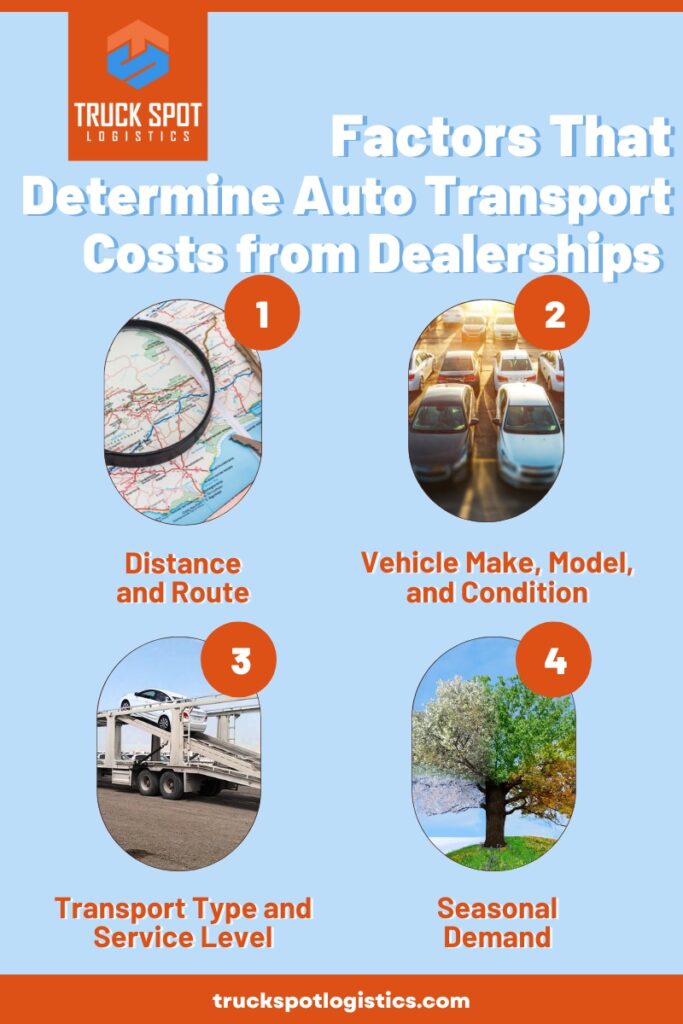
By understanding the factors that affect auto transport costs from dealerships, you’ll be better prepared to budget and make the best choices for your unique situation. And don’t forget, using a service like Truck Spot Logistics can help you compare quotes and find the most competitive prices for your specific needs.
Benefits of Using Auto Transport for Dealership Purchases
So, you’re thinking about using an auto transport service to ship your new car from the dealership. You’re on the right track! There are some solid perks to choosing this option, and it can make the whole process easier and more enjoyable. Let’s dive into the top benefits of using auto transport services when buying a car from a dealership.
By choosing auto transport services when buying a car from a dealership, you’re making the process more convenient and time-saving while ensuring the safety and protection of your new ride. Plus, you’ll have access to a wider range of dealerships and vehicles, helping you find the perfect car for you.
Shipping a car from a dealership is straightforward when the dealer pickup is coordinated in advance and the vehicle condition is documented before the carrier loads it. For new vehicles, enclosed transport is strongly recommended despite the 40–60% premium – a single paint chip on a zero-mile car typically costs more to correct than the difference between open and enclosed shipping. Book 2–3 weeks before the required delivery date and confirm pickup logistics with the dealership’s transport coordinator before the carrier is dispatched.
Truck Spot Logistics connects buyers with FMCSA-licensed carriers for dealership pickups across all 48 contiguous states. Get a free itemized quote with your dealership location and delivery address.
FAQs
Can I ship a car directly from the dealership?
Yes – FMCSA-licensed carriers can pick up directly from any dealership in the US and deliver door-to-door to the buyer’s location. Most dealerships are familiar with carrier pickups and can accommodate a driver with advance notice of 24–48 hours. Provide the carrier with the dealership’s full address, transport coordinator contact, and available pickup hours at booking to avoid delays.
How much does it cost to ship a car from a dealership?
Shipping a car from a dealership costs $500–$800 for regional routes under 500 miles and $900–$1,500 cross-country using open transport. Enclosed transport costs 40–60% more on any route: $800–$1,300 regional and $1,500–$2,200 cross-country. SUVs and trucks cost 15–25% more than sedans. Rates increase 15–25% during peak season (May–August). Door-to-door delivery adds $100–$200 versus terminal-to-terminal on the same route.
How do I find a reliable auto transport company for dealership pickup?
Verify any carrier at safer.fmcsa.dot.gov – confirm active USDOT number, active MC authority, and cargo insurance of at least $100,000. Request a certificate of insurance before signing. Check reviews on Central Dispatch (centraldispatch.com) and BBB (bbb.org). Confirm the carrier has experience with dealership pickups specifically – some carriers unfamiliar with dealer lot access requirements cause delays. Get at least 3 itemized quotes before booking.
Is my vehicle insured during transport from a dealership?
FMCSA-licensed carriers carry minimum cargo insurance of $100,000 per load. For new vehicles from dealerships, confirm per-vehicle coverage limits – on a shared 8-car carrier, total coverage of $100,000 divides to approximately $12,500 per vehicle. For vehicles valued over $30,000, request confirmation of per-vehicle coverage or consider supplemental transport insurance. Document the vehicle’s condition with timestamped photos at the dealership before the carrier loads it – undocumented pre-transport condition cannot support a damage claim at delivery.
What documents do I need to ship a car I just bought from a dealership?
Required documents for shipping a newly purchased dealership vehicle: bill of sale or purchase agreement (in place of title if not yet transferred), vehicle registration if available, proof of insurance, and government-issued ID. For financed vehicles, a lien release or lender authorization letter may be required by the carrier. Confirm title transfer status with the dealership before booking – carriers need to verify legal ownership before accepting the vehicle.
What should I do if I’m unsatisfied with my transport experience?
Contact the carrier directly and provide documented evidence of any issue – photos, signed Bill of Lading, and the transport agreement. If the carrier does not resolve within 30 days, file a complaint with the FMCSA at fmcsa.dot.gov. For damage claims, file in writing within 24–48 hours of delivery with timestamped delivery photos and your signed delivery Bill of Lading. A signed clean delivery receipt significantly weakens any damage claim – do not sign before completing the inspection.