


12 MIN

Jul 7, 2026
How to Ship a Car to College – Student Auto Transport Guide 2026
Heading off to college is exciting – but figuring out how to get your car there without driving 1,500 miles through three time zones is a different story. Whether you’re a freshman moving cross-country or a returning student switching campuses, shipping your car to college is often the smartest, most cost-effective option. You avoid putting unnecessary miles on the odometer, reduce wear on tires and brakes, skip a solo road trip that can take two or three days, and arrive at campus rested and ready.
This guide walks you through everything – real costs, transport options, step-by-step preparation, campus logistics, and how to lock in the best student pricing in 2026.
Before You Begin: Five Things That Matter Most
Most guides jump straight into logistics. But for students shipping a car to college, a handful of realities tend to catch people off guard – and knowing them upfront saves time, money, and frustration.
The seller is the key variable. Unlike shipping your own car, a vehicle you bought online depends entirely on a stranger’s schedule and cooperation. The seller has to be available for pickup, have the car ready, and communicate clearly with the carrier. If they’re slow to respond or unavailable during the driver’s pickup window, your entire timeline shifts. Always confirm seller availability before booking transport.
You do not need the title to ship. This is one of the most common misconceptions. Transport companies only need the VIN number to complete the shipment. The title is not required for transport – it becomes necessary later when you register the vehicle at the DMV. Don’t let a delayed title hold up your shipping booking.
Get a pre-purchase inspection before you pay. If you’re buying the car online and haven’t seen it in person, a third-party pre-purchase inspection is the single most important step you can take before sending any money. It’s your only independent evidence of the vehicle’s condition prior to transport. If a damage dispute arises after delivery, the inspection report is what separates a winnable claim from a guessing game. Services like Carfax can provide vehicle history, and independent mechanics in the seller’s area can do an in-person inspection for $100–$150.
The pickup Bill of Lading is your legal protection. The Bill of Lading (BOL) is a legally binding document signed by the driver at pickup that records your car’s exact condition – every scratch, dent, and chip – before it leaves the seller’s hands. Without a properly completed pickup BOL, no damage claim is possible after delivery. Make sure the seller (or whoever hands the car to the driver) reviews and signs it carefully. This document is everything.
Verify any transport company through the FMCSA SAFER database before paying a deposit. The FMCSA SAFER database is a free federal tool that shows whether a carrier or broker holds a valid operating license, active insurance, and a clean compliance record. Look up any company by name, USDOT number, or MC number before you hand over a dollar. Our guide on how to check a USDOT number walks you through the process in under two minutes.
Quick links to navigate this article:
Why Ship Instead of Drive?
Many students default to driving simply because it’s familiar. But when you run the numbers, professional car shipping often wins on both cost and convenience – especially for long-distance moves.
Consider a move from Chicago, IL to Los Angeles, CA – roughly 2,000 miles. Driving that distance means approximately 30 hours behind the wheel, two nights in a hotel ($180–$250 total), $120–$150 in fuel, and a solid chance of putting wear-induced stress on an older vehicle. Factor in time off work or missed orientation events, and the “free” road trip starts to look expensive.
Shipping that same car cross-country typically costs $900–$1,200 on an open carrier, takes 7–10 days for delivery, and requires zero driving from you. You fly or take the train, arrive fresh, and pick up your car on or near campus.
Additional reasons students choose auto transport:
Preserve resale value. Two thousand fewer miles on the odometer matters when you sell or trade in. A car that’s been driven cross-country four times during college years takes a measurable hit in market value.
Safety. Long solo drives – especially late at night through unfamiliar territory – carry real risk. Fatigued driving causes more accidents than most people realize.
Convenience. You can fly with extra luggage instead of cramming everything into the back seat. Your hands are free, your time is your own.
Reliability. Older vehicles sometimes don’t make long trips without a breakdown. Shipping eliminates that uncertainty entirely.
Typical Costs for Student Car Shipping
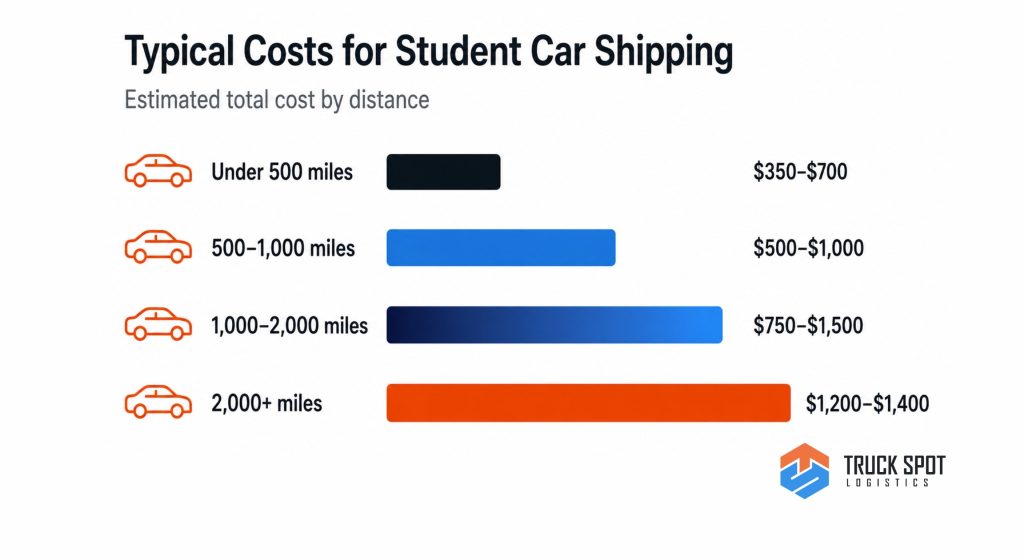
Car shipping rates are calculated on a per-mile basis, and the rate per mile drops as distance increases. Here’s what you can expect in 2026 for a standard sedan on an open carrier:
Under 500 miles – approximately $1.40 per mile, total estimate $350–$700. 500–1,000 miles – approximately $1.00 per mile, total estimate $500–$1,000. 1,000–2,000 miles – approximately $0.75 per mile, total estimate $750–$1,500. 2,000+ miles (cross-country) – approximately $0.60–$0.65 per mile, total estimate $1,200–$1,400.
These figures apply to a standard sedan on open transport. Larger vehicles – SUVs, trucks, minivans – typically add $100–$300 to the base quote. Enclosed transport adds 30–40% on top of the open-carrier rate.
Factors that affect your final quote:
Season. Summer (June–August) is peak college-moving season, so prices run 10–20% higher than average. Book early to offset this.
Route popularity. Heavily trafficked lanes – New York to Florida, California to Texas – tend to be cheaper than rural or remote routes because carriers fill up easily on those corridors.
Vehicle condition. Non-running vehicles require special loading equipment and cost more to ship. If your car starts and drives, you’ll pay standard rates.
Pickup/delivery flexibility. Terminal-to-terminal shipping (dropping off and picking up at a carrier depot) is typically $50–$150 cheaper than door-to-door service.
How fast you need it. Expedited shipping – guaranteed pickup within 24–48 hours – can add $150–$300 to your quote compared to standard flexible scheduling.
The most accurate way to check your actual rate is to use an instant calculator. TruckSpot Logistics offers a free vehicle shipping quote tool where you enter your pickup and delivery ZIP codes and get a real estimate in under a minute – no obligation required.
Open vs. Enclosed Transport: Which One Is Right for You?
The two main options for shipping a car to college are open transport and enclosed transport. Understanding the difference helps you choose based on your budget and the type of vehicle you’re sending.
Open Auto Transport
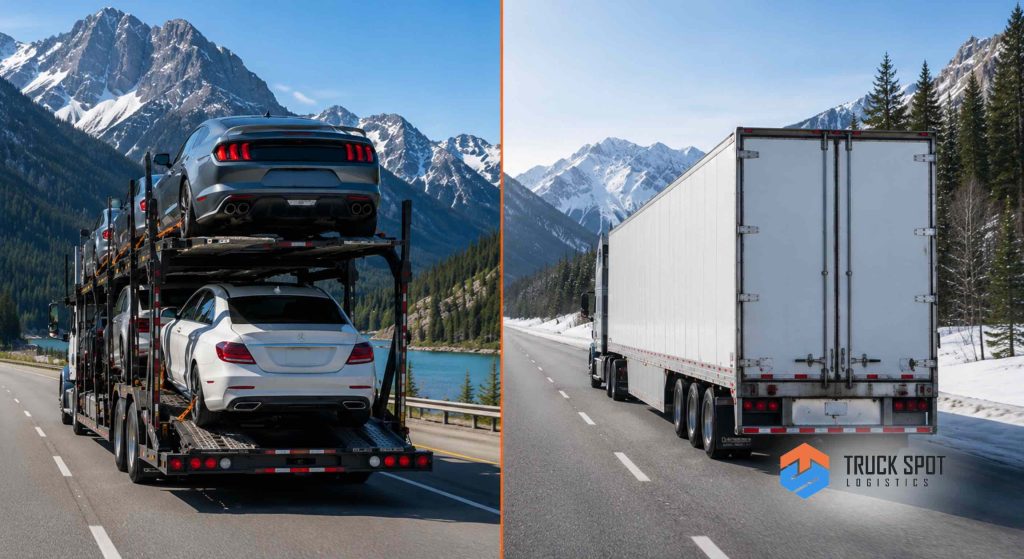
Open carriers are the large two-deck trailers you see on highways, typically carrying 6–10 vehicles at once. This is by far the most common and affordable method – roughly 95% of vehicles shipped domestically use open transport.
Your car is exposed to the elements: rain, wind, road grime, and the occasional bug. But it’s secured with professional straps and transported safely. For standard cars and everyday vehicles, that exposure rarely causes any damage. Open transport is the go-to choice for students shipping a regular commuter car.
You can learn more about how this method works in the open auto transport guide on the TruckSpot blog.
Enclosed Auto Transport
Enclosed carriers are fully covered trailers that protect your vehicle from weather, debris, and UV exposure. They typically carry 2–6 vehicles and cost 30–40% more than open transport.
Enclosed shipping makes sense if you’re transporting a luxury vehicle, a classic or vintage car, a sports car with low ground clearance, or any vehicle where cosmetic condition is a high priority. If you’re a student shipping a newer BMW, a Porsche, or a restored classic, enclosed is worth the premium. The enclosed auto transport guide breaks down exactly how the process works.
Quick comparison:
Open transport costs less, has very high availability, works best for standard everyday cars, and offers no weather protection. Enclosed transport costs 30–40% more, is more limited in availability, works best for luxury and classic vehicles, and provides full protection from the elements. Transit times are roughly similar for both.
How to Book: Brokers, Carriers, and Timing
When you search for auto transport online, you’ll find both brokers and direct carriers. Understanding the difference is important.
Brokers act as intermediaries. They post your shipment on a load board – the industry-standard network used by most carriers in the US – and connect you with a licensed carrier. Brokers don’t own trucks; they match supply with demand. Most consumers end up working with a broker without fully realizing it, and that’s perfectly fine when you choose a reputable one.
Carriers own the trucks. Booking directly can sometimes save money, but carriers serve specific routes and may not cover your exact corridor.
For students, working with a broker that regularly handles college moves often produces the best experience. They understand campus-area logistics, flexible pickup windows, and can communicate with campus transportation offices on your behalf if needed.
Verifying a Company’s License
Before handing over your car to anyone, verify they’re legitimately licensed. The Federal Motor Carrier Safety Administration (FMCSA) maintains a public database where you can look up any carrier or broker by their USDOT or MC number. This takes 60 seconds and protects you from scams. The TruckSpot guide on how to check a USDOT number walks you through it step by step.
How Far in Advance Should You Book?
The sweet spot is 2–4 weeks before your desired pickup date. During peak summer months – late July through early September – booking 4–6 weeks out is wise, as carriers fill quickly on popular college routes. Booking too early (more than 6–8 weeks) can work against you because quotes may expire. Booking last-minute (under one week) usually means paying a premium for expedited service.
Student Discounts and How to Find Them
Many auto transport companies offer student discounts ranging from 10–15% off the base rate, though these aren’t always advertised prominently. Here’s how to make sure you get them:
Ask directly. When collecting quotes, simply mention you’re a college student moving to campus. Some companies apply a discount automatically; others require you to ask.
Show your student ID. Some brokers require proof of enrollment – have a copy of your student ID or an enrollment verification letter ready at booking.
Check university partnerships. Some large universities have negotiated preferred rates with specific carriers through their transportation or relocation offices. Check your school’s website or call the transportation department directly.
Bundle shipments. If multiple students in your dorm or friend group are shipping cars from the same city, ask about group discounts. Some carriers will cut rates for two or more vehicles on the same route.
Use terminal-to-terminal if near a depot. Dropping your car at a carrier’s terminal rather than scheduling door pickup often reduces the quote by $50–$150 and is worth considering if there’s a depot within reasonable distance of your home.
Plan for your car to arrive at college approximately 10 days before the semester starts. This gives you a buffer for any transit delays and ensures you have transportation ready for orientation week, move-in logistics, and last-minute errands before classes begin.
Step-by-Step Car Preparation Checklist
Proper preparation protects your vehicle and makes the pickup and delivery process smooth. Work through this checklist in the days leading up to your scheduled pickup.
1–2 Weeks Before Pickup
Confirm your booking and get all details in writing: pickup window, delivery estimate, pricing, and insurance coverage. Arrange a designated person to receive the vehicle at the destination if you won’t be there yourself – a parent, older sibling, or trusted friend. Check whether your campus requires a parking permit before your car arrives, and if so, apply immediately.
2–3 Days Before Pickup
Empty the car completely. Remove all personal items – clothes, electronics, books, gym equipment. Transport companies’ cargo insurance does not cover personal belongings, and excess weight can affect your quoted price. The FMCSA advises keeping vehicles free of personal items during transport.
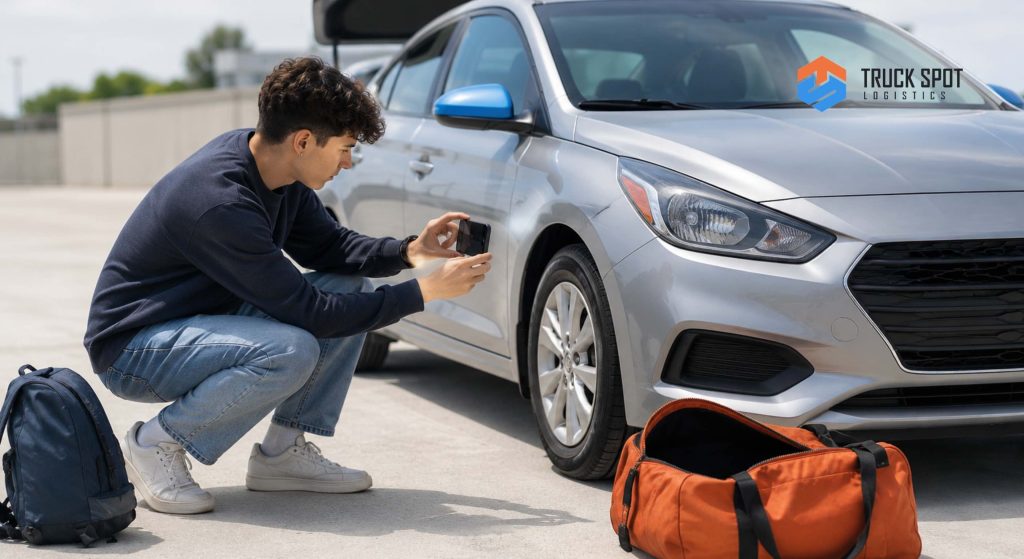
Take detailed photos. Photograph every panel, bumper, wheel, and the interior from multiple angles. Use timestamps if your camera app supports it. These photos are your baseline for any potential damage claims – don’t skip this step.
Remove or retract any exterior accessories: antenna extensions, spoilers, bike racks, or custom roof cargo carriers that could be damaged in transit or interfere with loading.
Disable or remove toll transponders – E-ZPass, SunPass, and similar devices – to avoid being charged if the carrier drives through a toll lane.
Check that your battery is fully charged and in good working order. The carrier needs to load and unload the vehicle under its own power.
Day of Pickup
Leave a quarter tank of gas – enough for loading and unloading but not so much that you’re paying to transport extra weight. Disable any aftermarket alarms that require a key fob to reset; an alarm going off mid-transport is a headache for the driver. Check tire pressure and confirm the car is mechanically sound – no fluid leaks, no warning lights. Then review the Bill of Lading carefully with the driver before signing anything.
Required Documents
Auto transport doesn’t require a mountain of paperwork, but a few key documents are essential.
Bill of Lading (BOL)
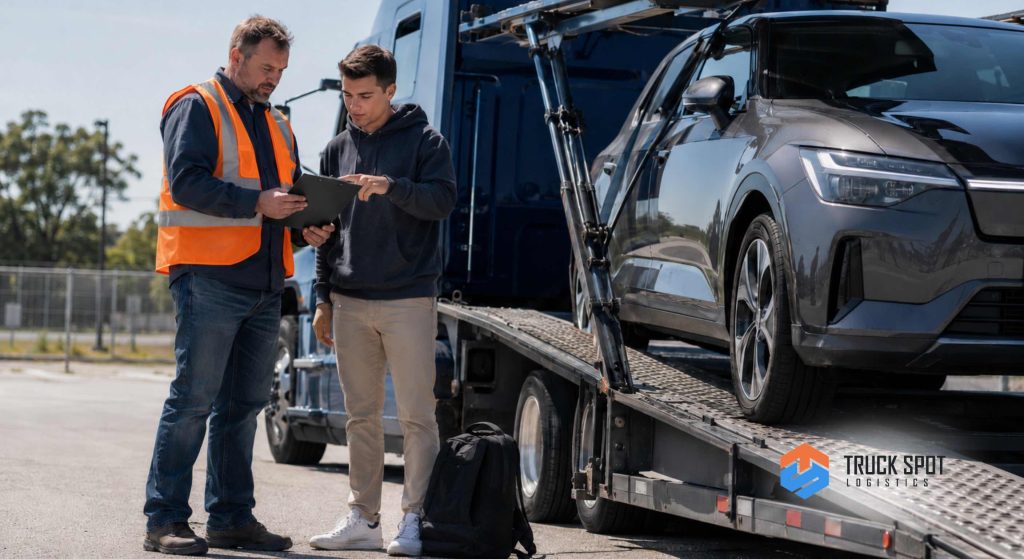
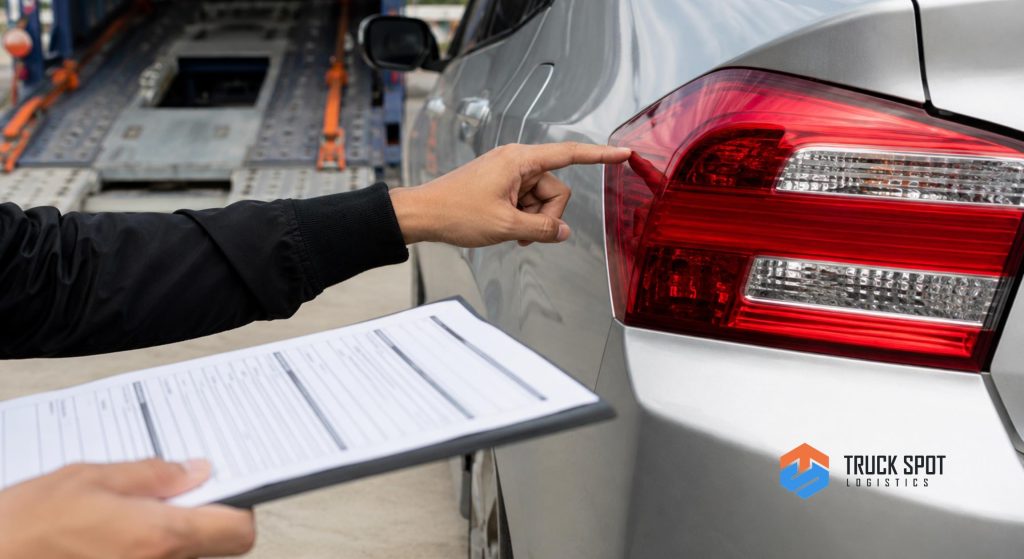
The Bill of Lading is the most important document in the entire process. It’s a legally binding receipt that records your vehicle’s condition at the time of pickup – every scratch, dent, and chip is noted. The driver signs it at pickup; you or your representative sign it again at delivery.
Always review the Bill of Lading carefully at both ends of the shipment. Walk around the car with the driver, compare the vehicle’s condition to the pre-transport notes on the BOL, and note any new damage before signing. If you sign without noting new damage, proving the carrier caused it becomes significantly harder. The TruckSpot guide on documents needed during auto transport covers this in detail.
Proof of Ownership
Have your vehicle title or a copy available. Some carriers and brokers request this at booking or pickup to confirm you have legal authority to authorize the transport.
Valid ID
A driver’s license or state-issued ID is standard. If someone else is receiving the vehicle on your behalf, they should also have valid ID and a written authorization letter from you.
Insurance Documents
Keep a copy of your personal auto insurance policy. The carrier is required by federal law to carry cargo insurance as a condition of operating under FMCSA authority, but knowing your own coverage limits helps if a claim situation arises. The USA.gov vehicle services page is a useful reference for understanding consumer rights in interstate vehicle transport.
Campus Considerations: Parking, Drop-Off, and Permits
Getting your car to the campus city is only half the equation. College campuses – especially urban universities or those with strict residential parking policies – add another layer of logistics.
Check Campus Parking Rules Early
Many universities restrict freshman vehicle parking or require permits that sell out quickly. Before you even book transport, visit your university’s transportation or parking services website. Key things to verify: whether freshmen are allowed to keep cars on campus, whether there’s a waitlist for residential parking permits, and what off-campus parking options are affiliated with the university.
Coordinate the Drop-Off Location
Large car carrier trucks – especially 75-foot open transporters – cannot always access tight campus roads, low-clearance parking garages, or narrow residential streets. When booking, discuss drop-off logistics with your transport company. With door-to-door service, the carrier drives as close to your campus address as safely possible. In some cases this is your dorm parking lot; in others it may be a few blocks away depending on road access. Terminal delivery is cheaper but requires your own transportation to reach the pickup depot.
The TruckSpot guide on door-to-door auto transport explains exactly what to expect on delivery day.
Have Someone Available to Receive the Vehicle
If you’re flying in separately, arrange for a trusted person to be present when the carrier delivers. They need to inspect the vehicle and sign the Bill of Lading. Give them a copy of your pre-transport photos and a written authorization letter to act on your behalf.
Insurance and Liability
Auto transport carriers are federally required by the FMCSA to carry cargo insurance as a condition of their operating license. However, coverage limits, deductibles, and exclusions vary significantly between carriers.
Carrier cargo insurance covers damage caused during transit – accidents, loading and unloading incidents, and road debris. Coverage limits typically range from $100,000 to $1,000,000 per load, which sounds like a lot but is spread across all vehicles on the trailer.
What carrier insurance does not cover: personal items left inside the vehicle, pre-existing damage (which is exactly why the BOL inspection matters so much), acts of nature on some policies, and mechanical or electrical issues unrelated to the transport itself.
Your personal comprehensive auto insurance policy may provide supplemental coverage during transport. Call your insurer before shipping to understand exactly what applies. This is especially worth checking for newer or higher-value vehicles.
For a detailed look at what happens when damage occurs and how to navigate a claim, see the TruckSpot article on vehicle transport damage claims.
Best Time to Book and Seasonal Tips
Timing your shipment correctly can save real money and reduce the stress of last-minute scrambles.
Peak Season: June–September
This is the busiest period in auto transport, driven almost entirely by college moves, military relocations, and summer job transitions. Expect prices to run 10–25% higher than fall or winter rates, and expect carrier availability to tighten significantly on popular routes. Book 4–6 weeks out during this window without exception.
Off-Peak: October–March
Fall and winter see lower demand and lower prices. If you’re shipping for a January semester start, you may find rates 15–20% below summer pricing. Winter does introduce weather-related delays on northern routes, so build in a few extra days of buffer.
Weather Considerations
Severe weather – snowstorms, ice storms, flooding – can delay transit and occasionally reroute carriers. This is particularly relevant for routes through the Midwest in winter or the Southeast during hurricane season. A reputable carrier will notify you of delays and provide updated estimated delivery times. The TruckSpot guide on how weather affects vehicle shipping explains what to expect and how to plan around seasonal disruptions.
Avoid Move-In Weekend if Possible
Universities often designate a specific move-in weekend when thousands of students descend on campus simultaneously. Campus access roads become gridlocked, making it difficult or impossible for a large carrier to reach your drop point. Scheduling delivery a few days before or after move-in weekend saves everyone time and frustration.
Common Mistakes to Avoid
A little awareness upfront prevents the most frequent problems students encounter when shipping a car for the first time.
Booking at the last minute. Scrambling the week before classes start leads to paying expedited premiums and settling for carriers you haven’t properly vetted. Book 2–4 weeks out at minimum; 4–6 weeks during summer.
Choosing on price alone. The cheapest quote can be a red flag. Very low prices sometimes indicate a broker who will struggle to find a carrier, leading to repeated delays and rescheduling. Balance price with reviews, verified FMCSA credentials, and responsiveness.
Skipping the FMCSA verification. Always look up a carrier or broker in the FMCSA database before agreeing to anything. It takes 90 seconds and filters out fraudulent operators who have no legal authority to transport your vehicle.
Not photographing the car thoroughly. Students frequently skip this step, only to regret it if a scratch or dent appears during transport. Photograph every angle in good lighting before the driver arrives.
Signing the Bill of Lading without inspecting. This is the single most consequential mistake. Once you sign the delivery BOL without noting visible damage, proving the carrier caused it becomes extremely difficult from a legal standpoint.
Leaving personal items in the car. They’re not covered by cargo insurance, and some carrier contracts technically void coverage if undeclared personal items are found inside the vehicle.
Not checking campus parking rules first. Arriving with a car and discovering you can’t get a permit – or that permits are waitlisted for months – creates an immediate and avoidable problem.
For a comprehensive breakdown, see the TruckSpot articles on common mistakes when shipping a vehicle and car shipping mistakes that cost you money.
The Bottom Line
Shipping your car to college is one of the smartest logistical decisions you can make as a student – it saves miles, reduces stress, and often costs less than a solo road trip once you account for all the real expenses. The key is to book 2–4 weeks in advance, verify carrier credentials through the FMCSA, prepare your car thoroughly, document its condition with photos, and review the Bill of Lading carefully at both pickup and delivery.
Whether you’re headed two states over or clear across the country, Truck Spot Logistics handles student vehicle transport with the transparency and reliability that makes the whole process straightforward. Use the quote calculator to see your rate in under a minute, and don’t forget to ask about student discounts when you call.
FAQ About How to Ship a Car to College
Can I pack personal belongings in my car during shipping?
Technically, some carriers allow up to 100 lbs. of personal items in the trunk, but this is not universal and is rarely covered by cargo insurance. The safest approach is to ship the car empty and use checked luggage or a separate moving service for your belongings.
How long does it take to ship a car to college?
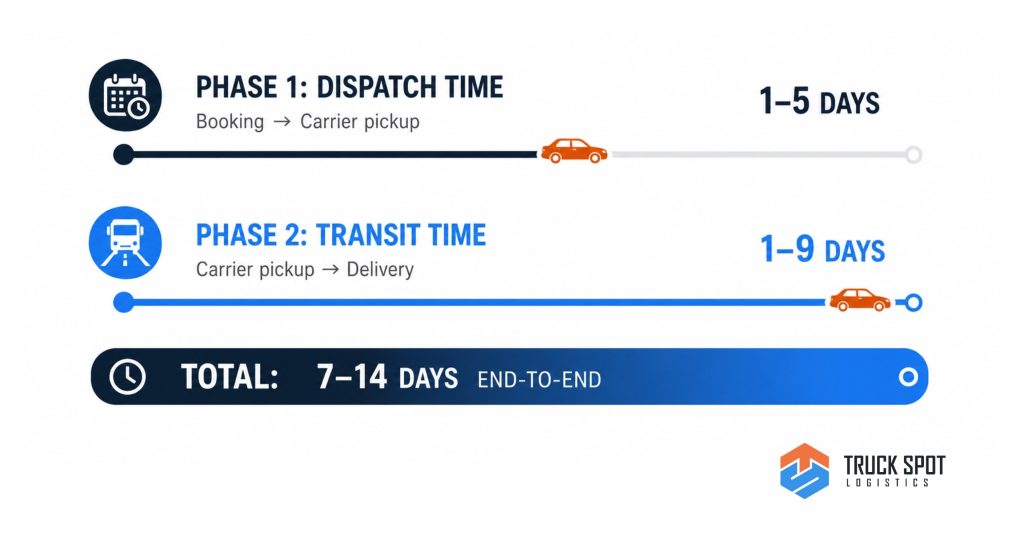
Transit times depend on distance. Short routes under 500 miles can take 2–4 days. Mid-range routes of 500–1,500 miles typically run 5–8 days. Cross-country shipments of 1,500–3,000 miles generally take 7–14 days. Add a day or two of buffer during peak summer season.
What if my car is damaged during shipping?
Note the damage on the Bill of Lading before signing at delivery, take photos immediately, and file a claim with the carrier in writing as soon as possible. Most carriers have a formal claims process with defined response timelines. Your personal auto insurer may also be involved if the carrier’s cargo coverage is insufficient.
Do I need to be present at pickup and delivery?
Someone needs to be present at both ends to inspect the vehicle and sign the Bill of Lading. It doesn’t have to be you – a parent, sibling, or trusted friend with your written authorization can handle it. Arrange this in advance rather than scrambling at the last minute.
What if my college is in a rural area?
Door-to-door service is designed for exactly this situation. The carrier will deliver as close to your address as safely accessible. In very remote areas, you may need to meet the driver at a nearby large parking lot or truck stop. Discuss access options with the broker at the time of booking.
Is it cheaper to ship a small car vs. an SUV?
Yes – vehicle size directly affects the quote. A compact or mid-size sedan takes less space on the carrier and weighs less than a full-size SUV or truck. SUVs and trucks typically add $100–$300 to the base rate. The TruckSpot SUV shipping guide covers size-specific considerations in detail.
How do I get an accurate quote?
The most accurate quotes require your exact pickup ZIP code, destination ZIP code, vehicle make/model/year, and preferred transport dates. Use TruckSpot’s free vehicle shipping quote calculator to get an instant estimate, then follow up with a call to discuss student discounts and campus delivery specifics.