



13 MIN

Aug 24, 2026
Fall Car Shipping Checklist – How to Prepare Your Vehicle for Transport
Fall changes more about car shipping than the leaves do. Mornings get cold enough to affect tire pressure and battery performance, daylight shrinks fast enough to affect pickup and delivery inspections, and the season doubles as a deadline for two very different groups: snowbirds racing the first hard freeze south and college students shipping a car home at the end of a semester. None of that makes fall a bad time to ship a car – it just means the prep list looks a little different than it does in July.
This checklist walks through exactly what to do before your carrier arrives, in the order that actually matters, plus the fall-specific wrinkles that don’t show up on a generic list – cold-weather battery and tire issues, shorter booking windows before the holidays, and weather delays that pick up as the season goes on. If you’re ready to see pricing for your route, our car shipping service has an instant quote tool built to handle exactly this kind of seasonal timing.
What You Need to Know Before We Dive In
Quick Navigation
Why Fall Is a Different Car Shipping Season
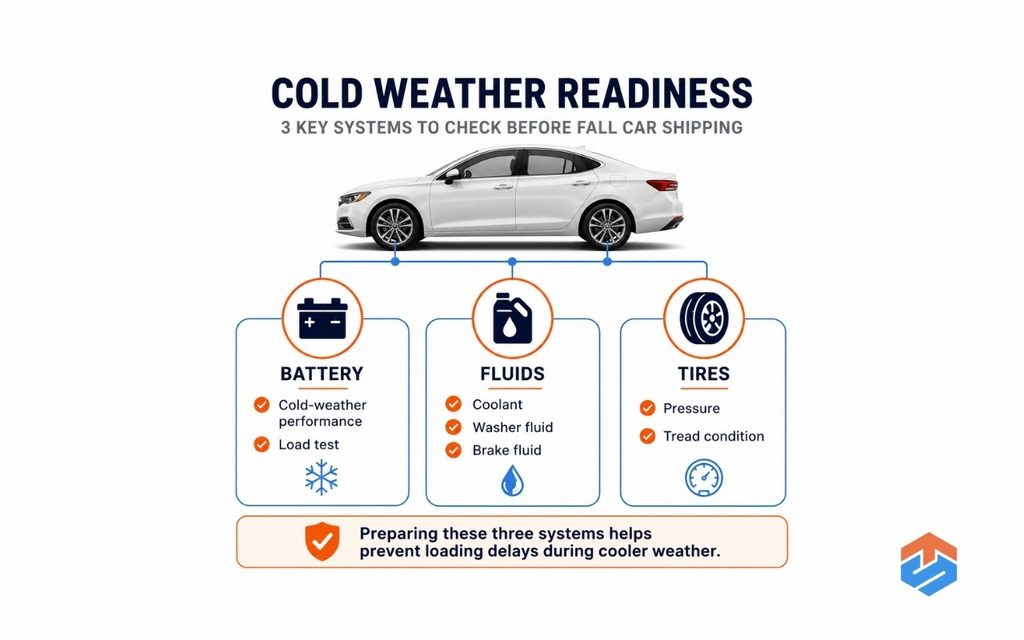
Every season affects car shipping a little differently, and fall’s effect is mostly about temperature swings and shrinking daylight rather than heat or holiday traffic. AAA designates October as Car Care Month specifically because it’s the last easy window to catch a weak battery or worn tire before winter conditions turn a minor issue into a roadside breakdown – and the same seasonal timing applies directly to a car that’s about to sit strapped to an open trailer for several days.
Two numbers are worth keeping in mind while you prep. First, tire pressure drops by roughly 1 PSI for every 10°F the temperature falls – a tire set correctly on a 70°F September afternoon can read noticeably low after an overnight drop into the 40s. Second, according to AAA’s own cold-weather research, a car battery loses about a third of its cranking strength at 32°F and more than half at 0°F, which is exactly why battery-related roadside calls climb every fall. Neither issue is dangerous for a car that’s about to be driven onto and off a trailer once or twice, but a battery too weak to start the car at pickup can delay loading and, in rare cases, get a shipment turned away.
There’s also a daylight factor that’s easy to overlook: Daylight Saving Time ends November 1, 2026, which cuts evening daylight by a full hour overnight. If your pickup or delivery window falls in late October or November, ask your carrier for an earlier time slot – inspecting a car’s condition in fading light is exactly how small dents and scuffs get missed on the Bill of Lading.
Step 1: Lock In Your Transport Type and Company
Before any of the physical prep steps below, you’ll need to decide between open and enclosed transport and get your shipment booked. Open transport is the standard choice for a normal sedan, crossover, or SUV, and it’s what the vast majority of vehicles ship on year-round. Enclosed transport costs more but fully shields a vehicle from road debris and weather, which is worth considering if you’re shipping a classic, a luxury vehicle, or anything with a finish you don’t want exposed to fall rain and road grit. Our guides to open auto transport and enclosed auto transport cover the tradeoffs in more depth.
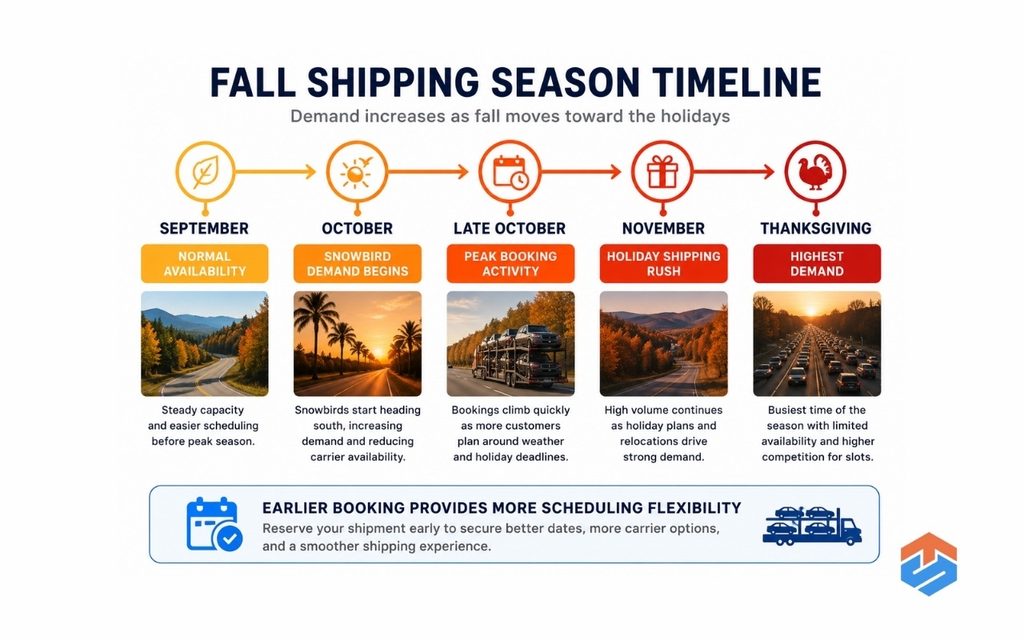
Book earlier than you would in a slower month. Fall carrier availability tightens for two separate reasons at once: snowbirds moving vehicles south ahead of the first freeze, and holiday-season household moves that push into November and December. In our experience, the busiest fall booking windows tend to be the two weeks on either side of Halloween and the run-up to Thanksgiving – both worth avoiding if your dates have any flexibility.
Step 2: Wash the Car and Document Its Condition
Wash the exterior within 24 to 48 hours of pickup so the vehicle’s condition reflects reality when the driver inspects it. This matters more in fall than most people expect – road grime, fallen leaves, and the sap and pollen that come with cooler weather can all hide the same small scratches and chips that dust does in summer, and an open carrier means your car will pick up a fresh layer of road film during transit regardless.
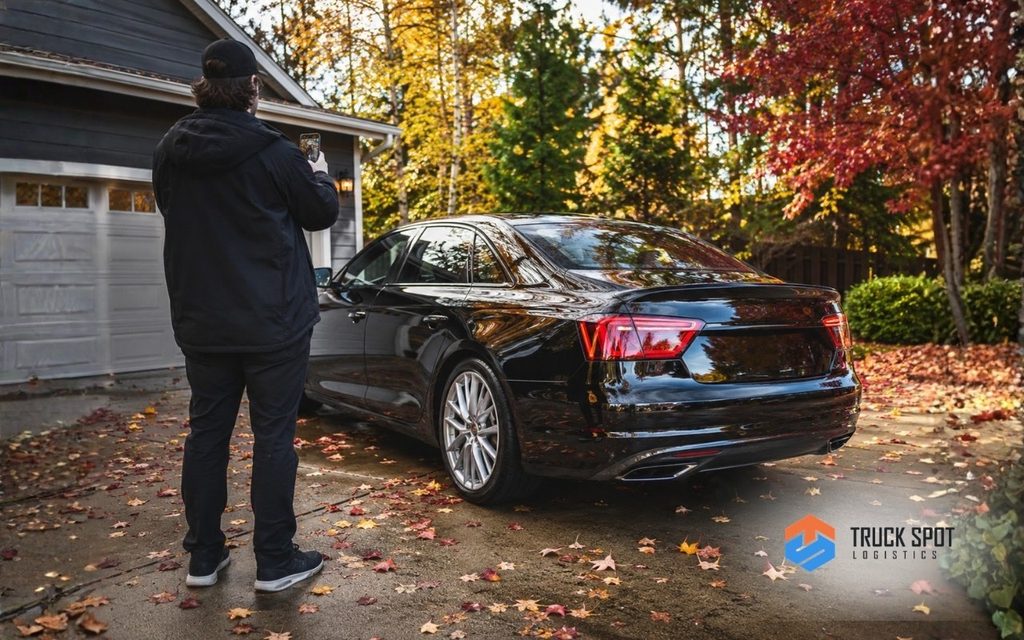
Once it’s clean, photograph the car from all four sides, plus close-ups of any existing dents, scratches, or paint chips. Time-stamp the photos and keep them somewhere you can pull up quickly. At pickup, walk around the vehicle with the driver as they complete the Bill of Lading, and confirm every mark you photographed is actually recorded before you sign anything.
Step 3: Check Fluids for Cold-Weather Readiness
Top off engine coolant, brake fluid, and power steering fluid, and switch to a winter-rated windshield washer fluid if you haven’t already – the summer formula can freeze in the reservoir once nighttime temperatures drop into the 30s. Check for leaks while you’re at it; a car that’s dripping oil or coolant on an open carrier can damage the vehicles loaded beneath it, and carriers are within their rights to decline a vehicle with an active leak.
Step 4: Test the Battery Before the Weather Does It For You
A battery that’s been marginal all summer often fails for good the first genuinely cold night of the year, and pickup day is not when you want to discover that. If your battery is more than three years old, have it load-tested rather than just checked for charge – a weak battery can hold enough voltage to pass a basic test but still fail to crank a cold engine.
If you’re shipping an electric or hybrid vehicle, battery management works differently, and cold weather cuts usable range and can complicate loading if the vehicle can’t maintain enough charge to move under its own power. Our guide to towing and shipping an electric car covers what to check before an EV ships in cooler weather.
Step 5: Check Tire Pressure as Temperatures Drop
Check tire pressure when the tires are cold – first thing in the morning or after the car has sat for a few hours – since driving warms the air inside the tire and produces a falsely high reading. Inflate to the number on your driver’s-side door jamb, not the number printed on the tire itself. Underinflated tires make a car harder to load and unload safely, and a driver may ask you to add air before they’ll drive it onto the trailer. The NHTSA recommends checking tire pressure monthly year-round, but it’s worth doing it specifically before a fall shipment given how much a single cold snap can shift the reading.
Step 6: Remove Personal Items and Loose Accessories
Auto transport carriers aren’t licensed to move household goods, and personal items left in the car aren’t covered by the carrier’s cargo insurance. Clear out the cabin, trunk, and glove compartment completely, including anything that could shift and cause damage during loading. Remove or secure exterior accessories too – roof racks, bike racks, spoilers, and antennas can create clearance problems or get damaged by wind on an open trailer. Our piece on how carriers load and secure cargo explains why loose items are treated so strictly.
Step 7: Disable Alarms, Toll Tags, and Aftermarket Electronics
Disable your car alarm before pickup, or leave the driver clear instructions for disarming it if it can’t be fully turned off. An alarm that triggers repeatedly during transit can drain the battery and cause problems on a multi-car load. Remove or deactivate toll transponders – E-ZPass, SunPass, FasTrak, and similar devices – so you don’t get charged for tolls the carrier’s truck drives through on your behalf.
Step 8: Set Your Fuel Level
Leave the tank at roughly a quarter full. That’s enough for the driver to load, reposition, and unload the vehicle, plus enough for you to reach a gas station after delivery, without adding unnecessary weight that federal and state trucking weight limits have to account for.
Step 9: Gather Documents and a Spare Key
Have your vehicle registration, proof of insurance, and a valid photo ID ready on pickup day, along with a spare set of keys for the driver – never your only set. Someone needs to be present at both pickup and delivery to walk the vehicle with the driver and sign the Bill of Lading; if that won’t be you, prepare a written authorization letter for whoever is standing in. Our full breakdown of the documents you need for auto transport covers the less common paperwork some carriers ask for.
Fall-Specific Situations Worth Planning Around
A few scenarios come up specifically in fall that don’t apply the rest of the year.
College Students Shipping a Car Home
Fall semester breaks and end-of-term moves create a predictable spike in student car shipments, often on tighter timelines than a typical relocation. Our dedicated guide to shipping a car to or from college covers the scheduling quirks specific to campus pickups and drop-offs.
Snowbirds Heading South Early
Some snowbirds start moving vehicles – and sometimes RVs – south well before the official winter migration to beat both the cold and the seasonal price increase on Florida and Gulf Coast routes. If you’re coordinating an RV alongside a car, our guide to RV shipping walks through the extra considerations that come with a larger vehicle.
The Pre-Holiday Booking Crunch
Carrier capacity tightens in the weeks before Thanksgiving and again before winter break, as household moves and holiday travel compete for the same trucks. If your timeline is tight, our expedited car shipping option exists for exactly this kind of seasonal squeeze, though booking a few weeks ahead is the cheaper way to avoid needing it.
How Fall Weather Can Affect Your Shipping Timeline
Fall storm systems move faster and more frequently than summer weather in a lot of the country, and they can add a day or two to a transit time that would otherwise run on schedule. This isn’t unique to fall, but it’s worth planning around if your pickup or delivery date is tied to something fixed, like a lease start or a moving truck already booked. Our full explanation of how weather affects vehicle shipping covers which conditions typically cause delays and how carriers reroute around them.
In our experience, the routes most likely to see fall weather delays are the ones crossing the Great Lakes region and the Rockies, where early-season snow can close mountain passes with little warning. If your route crosses either, build a buffer day or two into your plans rather than scheduling something else for the exact morning the truck is due.

Inspection Day – Getting the Bill of Lading Right
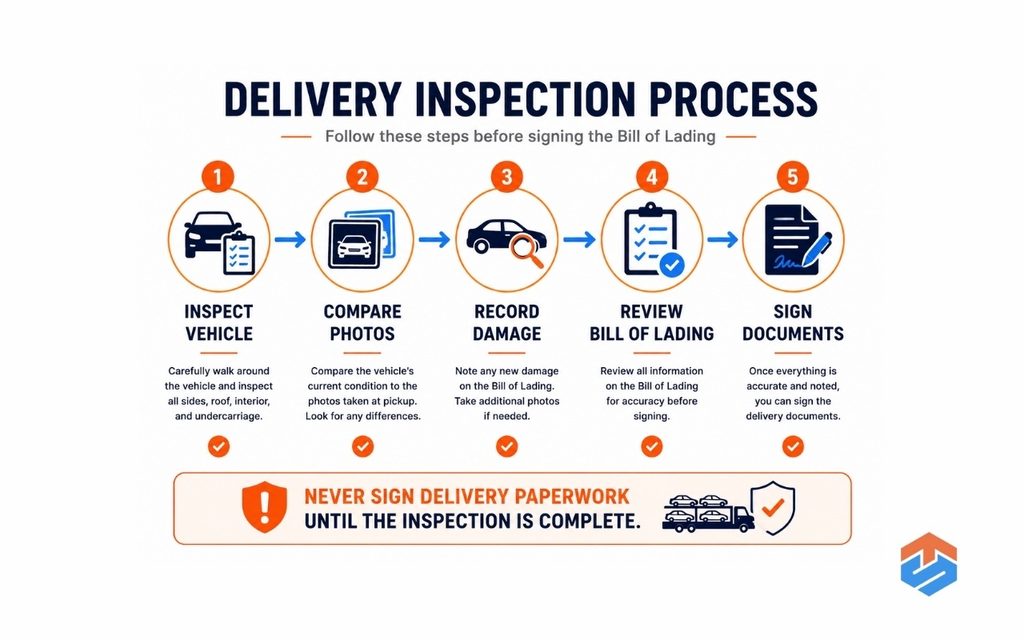
Whether it’s pickup or delivery, the process is the same: walk around the vehicle with the driver, compare what you see to your own photos, and make sure everything is recorded accurately before you sign. At delivery specifically, try to schedule for daylight hours given how much earlier it gets dark once Daylight Saving Time ends – a driver arriving after dark should be asked for a next-morning inspection rather than signing off under a phone flashlight.
If you do spot new damage, note it directly on the Bill of Lading before the driver leaves and before you sign anything. Once a clean delivery form is signed and the truck pulls away, a damage claim becomes far harder to win. Our guide to vehicle transport damage claims walks through the process end to end, and our roundup of common shipping mistakes covers the inspection slip-ups that come up most often.
Insurance – Confirm Coverage Before You Book
Federal law requires every carrier to hold cargo insurance, but coverage limits and deductibles vary by company, so ask for the certificate of insurance before you book rather than after something goes wrong. That coverage is meant for damage caused by the carrier’s negligence or equipment failure – not pre-existing wear, mechanical issues unrelated to transport, or weather events like hail.
It’s also worth a quick call to your own auto insurer before shipping. Personal policies usually don’t extend to a vehicle while it’s on a transport truck, and fall is a common time for policy renewals, which makes it a convenient moment to confirm your coverage either way rather than assuming there’s a backup layer you haven’t actually verified.
Choosing a Company Before the Fall Rush
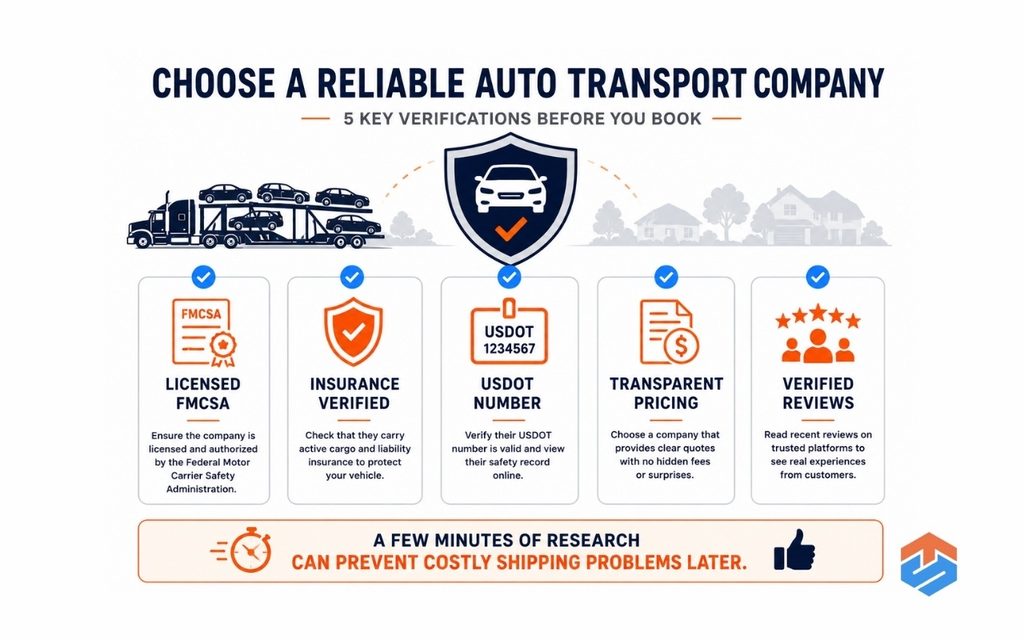
Verify any company you’re considering through the FMCSA SAFER database before paying a deposit – it’s the federal government’s official registry of licensed and insured carriers and brokers, and checking a USDOT number takes under two minutes. Our walkthrough on how to check a USDOT number shows exactly where to look, and our guide to understanding auto transport billing explains how quotes and fees are typically structured so a fall-season price increase doesn’t come as a surprise.
A quick reminder on how the industry is structured: a carrier owns the trucks and physically moves vehicles, while a broker arranges loads with carriers across the country and doesn’t own a fleet itself. Almost every nationwide auto transport company is technically a broker, and that’s normal – what matters is that both the broker and the carrier they assign are properly licensed, with an active USDOT number and MC (Motor Carrier) number they’ll share without hesitation.
Red Flags Worth Walking Away From
If a quote comes in noticeably lower than everything else you’ve seen, treat that as a warning sign rather than a deal, particularly in a season when demand is already elevated – underpriced loads tend to sit unclaimed on the dispatch board because no driver will take them, which can leave you scrambling closer to your date. If you’d rather compare vetted options directly, our roundup of the best car shipping companies is a useful starting point.
Full Fall Checklist at a Glance
Between cold-weather prep and a shifting demand calendar, it’s easy to lose track of what actually needs doing before pickup day. The table below pulls every step from this guide into one quick-reference list, in the order you’d typically tackle them. Use it as a final pass a few days before your scheduled pickup to make sure nothing slipped through.
| Step | What to Do | Why It Matters in Fall |
|---|---|---|
| 1 | Book transport type and company | Availability tightens with snowbird and holiday demand |
| 2 | Wash and photograph the car | Fall grime hides damage as well as summer dust |
| 3 | Top off fluids, check for leaks | Winter-rated washer fluid resists freezing overnight |
| 4 | Load-test the battery | Cold weather is the top cause of seasonal battery failure |
| 5 | Check tire pressure when cold | Pressure drops ~1 PSI per 10°F temperature drop |
| 6 | Remove personal items and accessories | Not covered by cargo insurance; risk of shifting damage |
| 7 | Disable alarms and toll tags | Prevents battery drain and surprise toll charges |
| 8 | Set fuel to a quarter tank | Reduces shipping weight without limiting loading maneuvers |
| 9 | Gather documents and a spare key | Required for both pickup and delivery inspections |
The Bottom Line
Fall car shipping isn’t more complicated than any other season – it just rewards a little extra attention to the things temperature and daylight actually affect: battery, tires, fluids, and scheduling around the light you have left in the day. Work through the nine steps above, book with a bit more lead time than you would in a slower month, and the rest of the process runs the same as it does year-round.
Ready to get a quote for your route? Our car shipping service can walk you through timing that accounts for the season you’re shipping in.
FAQ: Fall Car Shipping
Is fall a good time to ship a car?
Yes, and in some ways it’s easier than summer since overall shipping demand is typically lower outside of the snowbird and holiday windows. The main adjustments are cold-weather prep – battery, tires, and fluids – and booking a little earlier around late October and November when carrier capacity gets pulled in multiple directions at once.
Does cold weather actually damage a car during open transport?
Standard fall and early-winter temperatures don’t damage production vehicles during open transport; modern paint and materials handle far more extreme conditions during normal driving. The real risk is indirect – a weak battery that won’t start for loading, or underinflated tires that need air before the driver will load the vehicle – not damage from the cold itself.
Should I ship my car with a lower tire pressure since it’s parked most of the trip?
No – inflate to the manufacturer’s recommended cold pressure listed on the driver’s-side door jamb, not a lower number. Underinflated tires make loading and unloading harder and can be flagged by the driver as a reason to delay pickup.
Can I still ship a car if the battery is weak but not completely dead?
You can disclose it and ask, but it’s not worth the risk. A battery that’s borderline in September is likely to fail by pickup day if temperatures drop suddenly, and a car that won’t start can’t be driven onto the trailer without additional equipment, which usually adds cost and delay.
How much earlier should I book fall car shipping compared to summer?
A week or two of additional lead time is a reasonable cushion, especially if your pickup date falls near Halloween, Thanksgiving, or the start of winter break. Outside of those specific windows, fall booking timelines are similar to the rest of the year.
Will fall weather delay my shipment?
It can, though it’s not guaranteed. Early-season snow in mountain passes and fast-moving storm systems are the most common causes of a day or two of delay. Routes through the Great Lakes region and the Rockies see this most often, so it’s worth building a small buffer into your plans if your route crosses either.
Do I need to do anything different if I’m shipping an electric vehicle in fall?
Mainly just plan around reduced cold-weather range and confirm the vehicle has enough charge to be driven on and off the trailer under its own power at both ends. Our guide to shipping an electric car covers the charge level carriers typically expect.






[…] fall car shipping checklist goes deeper on seasonal […]